 SAMPLED
Mono vs paraphonic vs polyphonic: what you are actually buying
Voice count is the single most misread spec in synth shopping. Here is what each mode can and cannot do.
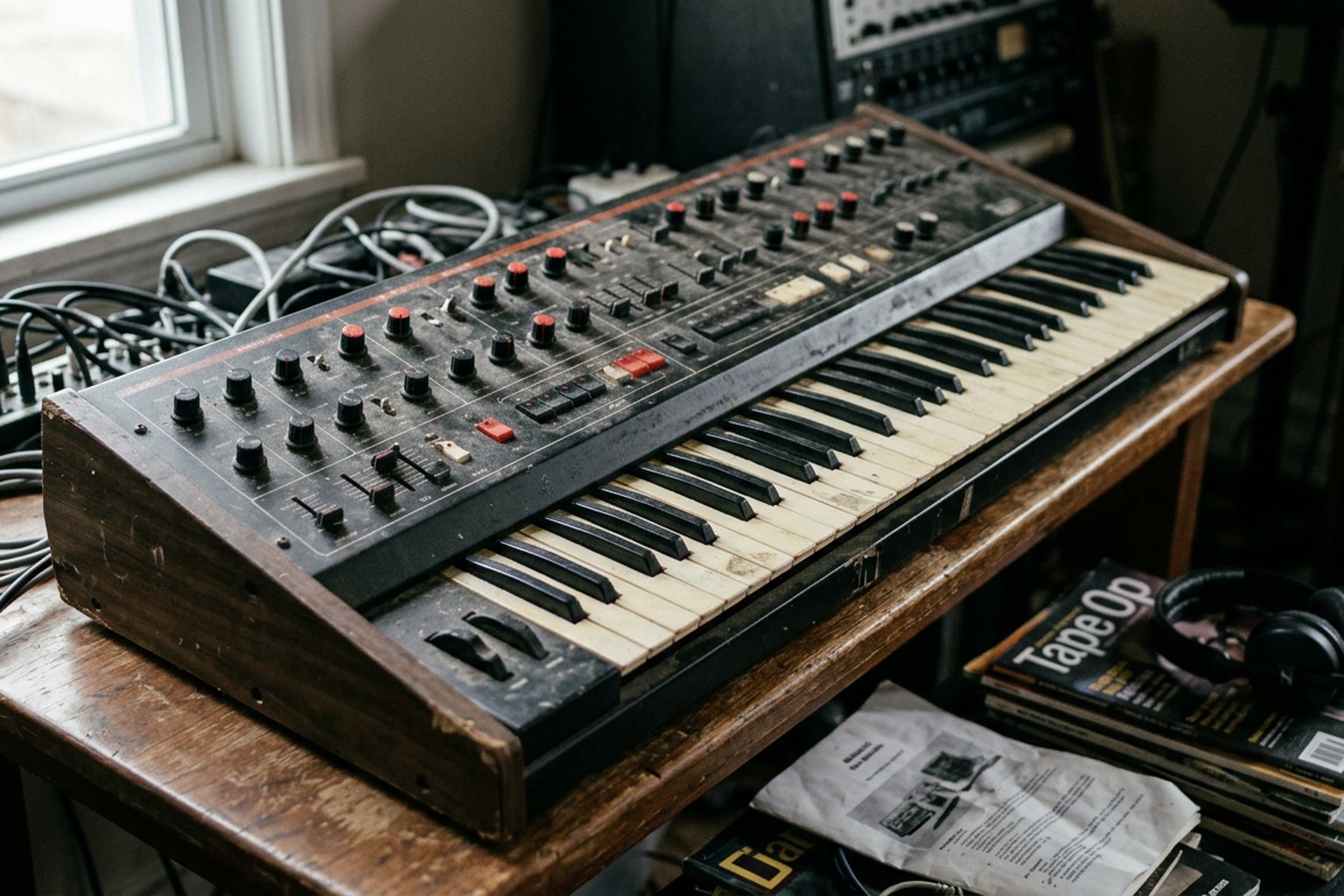
Synthesizer spec sheets love big numbers, but key counts and oscillator counts rarely tell you how an instrument actually behaves under your fingers. A synth with four oscillators might be a crushing bass machine, a chord-capable compromise, or a fully independent multi-note instrument depending entirely on its internal routing. Understanding the technical line between monophonic, paraphonic, and polyphonic architectures is the fastest way to avoid buying an instrument that fights your playing style.
Monophonic: One voice, zero compromise
A monophonic synthesizer generates one note at a time. Press three keys at once on a true mono synth, and the control voltage or digital assigner selects just one key to play, dictated by its key priority circuit (typically last-note, low-note, or high-note priority). While this sounds like a limitation on paper, monophony is a deliberate design choice that frees up circuit board space, power, and dynamic headroom to focus on pure tone density.
Because every available oscillator, filter circuit, and envelope generator concentrates on a single note, mono synths can stack multiple detuned oscillators into a single signal path without overdriving internal summing buses. A classic three-oscillator design like the Minimoog Model D or Moog Subsequent 37 delivers a heavy, focused sound precisely because those oscillators hit a single filter and amplifier envelope together.
Monophonic instruments also excel at performance techniques that depend on single-voice logic: portamento glide between overlapping notes, precise legato retriggering, and fast envelope action. If your production work requires focused basslines, cutting lead lines, or tight arpeggios, a monophonic signal path provides physical weight and note articulation that polyphonic instruments struggle to match.
Paraphonic: Multi-note control with shared plumbing
Paraphony is frequently confused with true polyphony, but the underlying engineering is fundamentally different. In a paraphonic synth, the instrument can route its individual oscillators to separate keys on the keybed, allowing you to play two-, three-, or four-note intervals. However, those oscillators are then summed together and sent through a single, shared filter and amplifier section.
This shared signal path creates distinct musical quirks. Consider a two-oscillator paraphonic synth like the ARP Odyssey or a four-oscillator synth like the Moog Matriarch. When you play a single note, all oscillators stack together on that single pitch. When you play a two-note chord, the synth splits the oscillators, assigning them to separate keys.
The compromise lies in the articulation. Because both notes share one filter envelope and one amplitude envelope, pressing a second note while holding the first triggers the envelope for both notes simultaneously. The original note's filter tail gets cut short, retriggered, or forced to follow the contour of the new key press.
Paraphony is not a defect; it is a distinct mechanical texture. Ambient producers and sound designers frequently use shared envelopes to create continuous drone textures where notes bleed into one another in ways a standard polyphonic synth cannot replicate. However, if you attempt to play traditional two-handed keyboard parts on a paraphonic synthesizer, the shared envelope structure will choke held notes and sound erratic.
Polyphonic: Full voice independence at a price
True polyphony requires complete voice independence across the entire signal path. An eight-voice polyphonic synth contains eight distinct synthesizer circuits under the hood: eight (or sixteen) oscillators, eight filters, eight filter envelopes, and eight amplifier envelopes. When you press an eight-note chord on a Sequential Prophet-5, Roland Juno-106, or Oberheim OB-Xa, every single note carries its own isolated envelope lifecycle from initial attack to final release.
This independence allows for natural decay tails, smooth chord progressions, and complex dynamic playing. You can strike a low bass note, let its long decay linger, and play staccato chord stabs over the top without altering the low note's filter contour or volume level.
The trade-off comes down to manufacturing cost, physical size, and individual voice gain staging. To keep six, eight, or sixteen voice channels from distorting the master summing stage, synth designers usually tune individual polyphonic voices slightly leaner than dedicated monophonic circuits.
True polyphonic synths also rely on voice allocation logic. When you play a ninth note on an eight-voice instrument, the internal voice assigner must decide which active note to cut off—a process known as voice stealing. Depending on whether the instrument uses lowest-note, oldest-note, or softest-note stealing algorithms, rapid chord passages can sound seamless or noticeably truncated.
Architecture breakdown
| Feature | Monophonic | Paraphonic | Polyphonic |
|---|---|---|---|
| Voice Allocation | Single note only | Multi-note (Oscillator limited) | Multi-note (Voice card limited) |
| Filter per Note | Yes (Dedicated to 1 note) | No (Shared across all notes) | Yes (Dedicated per voice) |
| Envelope per Note | Yes (Dedicated to 1 note) | No (Shared across all notes) | Yes (Dedicated per voice) |
| Key Advantage | Maximum low-end weight and precise glide control | Drone textures, low cost multi-note capability | Independent voice tails, natural chord articulation |
| Primary Drawback | Cannot play chords | Shared envelope chokes overlapping notes | Higher cost, potential voice stealing |
Matching architecture to your workflow
Choosing between these three designs comes down to how signal paths interact with your playing style. Buying an eight-voice polyphonic synthesizer when you primarily write single-note basslines means paying for extra voice cards you will rarely utilize, while accepting slightly leaner single-note impact. Conversely, buying a paraphonic synth expecting it to function as an inexpensive pad machine leads to frustration when overlapping melodic lines collapse into each other mid-phrase.
If your music relies on traditional keyboard technique, evolving pad textures, and clean voice leading, invest in a true polyphonic synthesizer. If you need raw low-end impact, aggressive modulation flexibility, or expressive soloing, a dedicated monophonic synth remains the correct tool. If you want a hybrid environment—where you can alternate between thick single-note leads and unusual, drone-heavy chord textures—a paraphonic synth offers a rewarding, highly interactive middle ground.
Quick answers
Can I play chords on a paraphonic synth?
Yes, as long as the instrument has enough independent oscillators to assign one to each key in the chord. However, because all notes pass through a single shared envelope and filter, striking a new note in the chord will retrigger or cut short the filter envelope tail for any notes you are already holding down.
Why do monophonic synths often sound heavier than polyphonic synths?
Monophonic synths do not need to conserve dynamic headroom for multiple simultaneous voices. Instrument designers can drive the single filter circuit and output stage much harder without causing intermodulation distortion, resulting in a denser, punchier low end.
Is paraphony just a cheap shortcut to polyphony?
While paraphony historically allowed manufacturers to offer multi-note playing without doubling the cost of expensive filter and envelope circuits, modern hardware designers use paraphony intentionally. It provides unique drone, sequencing, and envelope-bleeding behaviors that true polyphonic synths cannot replicate.
How do I check if an instrument is paraphonic or true polyphonic?
Examine the block diagram or signal path specifications. If an instrument advertises multi-note playability or multiple voices, but lists only one filter circuit or one set of envelope generators in its architecture, it is operating paraphonically.
Before purchasing any hardware synthesizer, test how its signal path handles envelope retriggering with held notes. Play a low note, hold it down, and tap a higher key repeatedly; if the low note's filter envelope resets or cuts short each time you strike the high key, you are playing a paraphonic circuit or a mono synth in legato mode. Testing that mechanical interaction in person ensures your new hardware matches your performance style, not just the marketing copy on the box.