 SAMPLED
Production and recording · updated 2026-08-16
HEADROOM
The space left between your loudest peak and the point of digital clipping. Leave some for the mastering engineer.
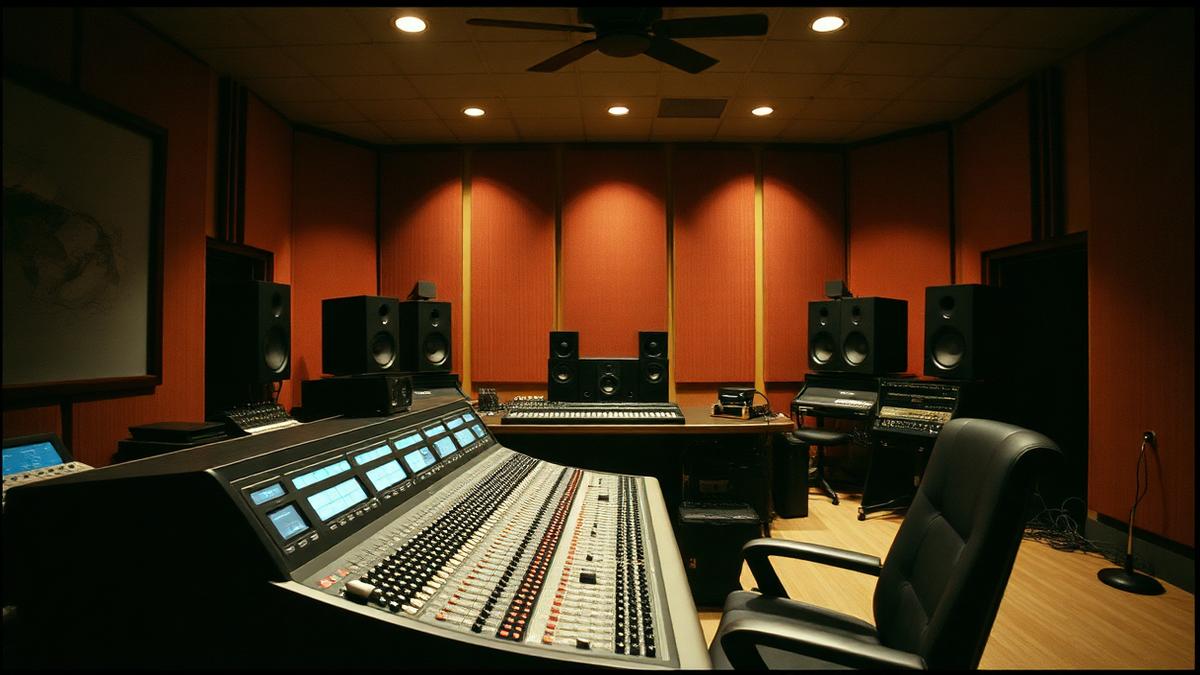
Photo: Gooi & Vecht Studio, Audio 1 control room with Nuendo 6.5 (opens in a new tab) by Marco Raaphorst (opens in a new tab), via Wikimedia Commons — CC BY 2.0 (opens in a new tab)
Key takeaways
- The space left between your loudest peak and the point of digital clipping.
- Leave some for the mastering engineer.
- It gives mastering room to work, prevents inter-sample overs after codec encoding, and keeps buses from clipping when several loud elements land together.
- Leave mixes peaking around −6 dBFS with no limiter on the master before sending them out for mastering.
- Watch out: believing a loud mix bounce means a loud master.
Quick checklist
- Can you define headroom in one sentence without looking?
- Can you point at headroom in a real session, mix or contract?
- Have you tried the practical move above at least once?
- Would you catch the common mistake before it costs you a take?
- Have you opened one of the primary sources below rather than a forum thread?
HEADROOM IN DEPTH
Headroom is the space between your loudest peaks and the ceiling. It gives mastering room to work, prevents inter-sample overs after codec encoding, and keeps buses from clipping when several loud elements land together.
How it works in practice
Leave mixes peaking around −6 dBFS with no limiter on the master before sending them out for mastering.
The mistake people make
Believing a loud mix bounce means a loud master. Squeezing headroom yourself just removes options later without making the final release any louder.
WHERE HEADROOM SITS
Headroom belongs to production and recording in the Sampled music glossary. Studio words: what the gear does, what the engineer is asking for, what the session sheet means.
TERMS THAT DEPEND ON HEADROOM
- Bit depth
How finely each sample is measured. 24-bit gives you the headroom to record quietly and stay clean; 16-bit is the delivery format for CD.
- Preamp
The gain stage that lifts a microphone's tiny signal up to line level before conversion. Every interface has them; outboard preamps buy headroom and character, not necessity.
TEST YOURSELF
0/3 answered · 0 correct
3 quick questions on headroom. Answers are marked instantly — nothing is sent anywhere.
1. Which statement best describes headroom?
2. What is the mistake people most often make with headroom?
3. In practice, which of these applies to headroom?
Ready for the full thing? Take the 25-question terminology test and get a certificate with your name and score.
SOURCES AND CITATIONS
Free, primary references for headroom — standards bodies, manufacturers, government offices and university course material. Each one lists the line of this entry it backs up.
- EBU Tech 3343 loudness guidance (opens in a new tab)
Broadcast standards body · European Broadcasting Union
“The space left between your loudest peak and the point of digital clipping.”— the claim this source supports
Why it counts: The EBU tech document sets the delivery targets broadcasters and platforms actually enforce.
- ITU-R BS.1770 measurement (opens in a new tab)
Treaty-level standards body · International Telecommunication Union
“Leave some for the mastering engineer.”— the claim this source supports
Why it counts: ITU recommendations define the measurement method itself, so the figures here are testable rather than editorial.
RELATED TERMS IN PRODUCTION AND RECORDING
- Sample rate
- Bit depth
- Latency
- Gain staging
- Polar pattern
- Phantom power (48V)
- Comping
- Bounce / render / export
Back to the full music glossary or read our latest articles.