 SAMPLED
Production and recording · updated 2026-08-16
SAMPLE RATE
How many times per second an analogue signal is measured on the way to digital. 44.1 kHz is CD; 48 kHz is the video and streaming default.
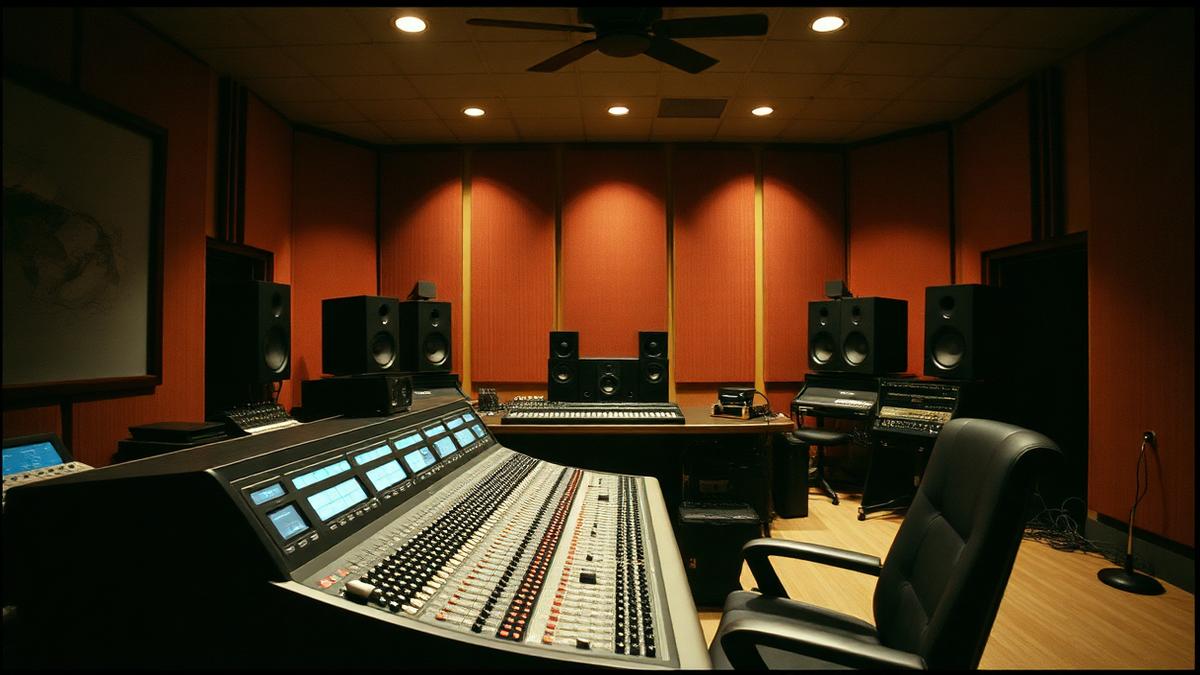
Photo: Gooi & Vecht Studio, Audio 1 control room with Nuendo 6.5 (opens in a new tab) by Marco Raaphorst (opens in a new tab), via Wikimedia Commons — CC BY 2.0 (opens in a new tab)
Key takeaways
- How many times per second an analogue signal is measured on the way to digital.
- 44.1 kHz is CD; 48 kHz is the video and streaming default.
- 44.1 kHz covers the full range of human hearing, 48 kHz is the standard for anything paired with video, and higher rates mainly buy headroom for processing rather than audible bandwidth.
- Deliver 48 kHz if the track may end up in a film, ad or game; converting down later is lossless in practice, converting up buys nothing.
- Watch out: recording at 96 kHz on a laptop that cannot sustain it.
Quick checklist
- Can you define sample rate in one sentence without looking?
- Can you point at sample rate in a real session, mix or contract?
- Have you tried the practical move above at least once?
- Would you catch the common mistake before it costs you a take?
- Have you opened one of the primary sources below rather than a forum thread?
SAMPLE RATE IN DEPTH
Sample rate is how many times per second an analogue signal is measured on the way in. 44.1 kHz covers the full range of human hearing, 48 kHz is the standard for anything paired with video, and higher rates mainly buy headroom for processing rather than audible bandwidth.
How it works in practice
Deliver 48 kHz if the track may end up in a film, ad or game; converting down later is lossless in practice, converting up buys nothing.
The mistake people make
Recording at 96 kHz on a laptop that cannot sustain it. You halve your plugin count and double your file sizes for a difference most listeners cannot identify.
WHERE SAMPLE RATE SITS
Sample rate belongs to production and recording in the Sampled music glossary. Studio words: what the gear does, what the engineer is asking for, what the session sheet means.
TERMS THAT DEPEND ON SAMPLE RATE
- Nyquist frequency
Half the sample rate — the highest frequency a digital system can represent. Above it, content folds back as aliasing, so converters filter it out.
- Aliasing
Digital artefacts created when harmonics go above half the sample rate and fold back down as inharmonic junk.
- Oversampling
Running a process at a multiple of the project sample rate so distortion products land above the audible band before being filtered out.
TEST YOURSELF
0/3 answered · 0 correct
3 quick questions on sample rate. Answers are marked instantly — nothing is sent anywhere.
1. Which statement best describes sample rate?
2. What is the mistake people most often make with sample rate?
3. In practice, which of these applies to sample rate?
Ready for the full thing? Take the 25-question terminology test and get a certificate with your name and score.
SOURCES AND CITATIONS
Free, primary references for sample rate — standards bodies, manufacturers, government offices and university course material. Each one lists the line of this entry it backs up.
- AES5 sampling frequency standard (opens in a new tab)
Professional standards body · Audio Engineering Society
“How many times per second an analogue signal is measured on the way to digital.”— the claim this source supports
Why it counts: AES writes and reviews the engineering standards and peer-reviewed papers this terminology comes from.
- Xiph.org — digital audio primer (opens in a new tab)
Open-source standards group · Xiph.Org Foundation
“44.1 kHz is CD; 48 kHz is the video and streaming default.”— the claim this source supports
Why it counts: Xiph's write-ups are free, technically rigorous and famously careful about the myths around digital audio.
RELATED TERMS IN PRODUCTION AND RECORDING
- Stem
- Click track
- Nyquist frequency
- Buffer size
- Punch-in recording
- Quantisation
- Proximity effect
- Pop filter and plosives
Back to the full music glossary or read our latest articles.