 SAMPLED
Production and recording · updated 2026-08-16
DAW
Digital audio workstation — the software you record, arrange, edit and mix in. Ableton Live, Logic, Pro Tools, FL Studio, Reaper, plus free options.
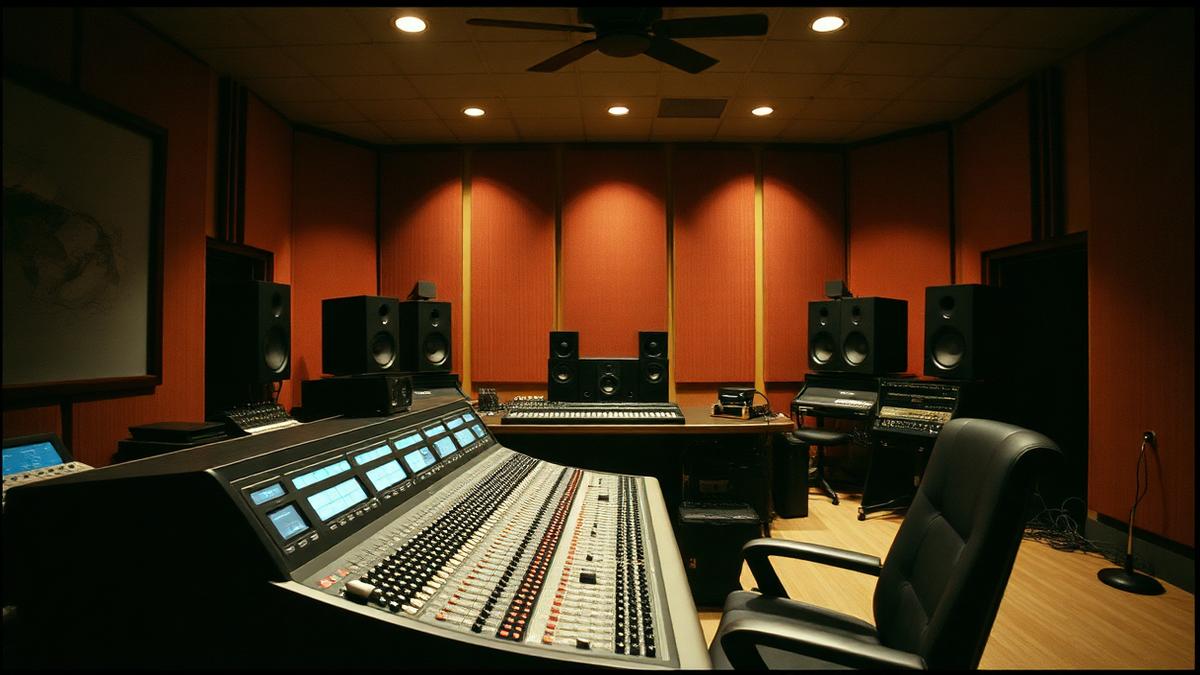
Photo: Gooi & Vecht Studio, Audio 1 control room with Nuendo 6.5 (opens in a new tab) by Marco Raaphorst (opens in a new tab), via Wikimedia Commons — CC BY 2.0 (opens in a new tab)
Key takeaways
- Digital audio workstation — the software you record, arrange, edit and mix in.
- Ableton Live, Logic, Pro Tools, FL Studio, Reaper, plus free options.
- Every major DAW records audio, sequences MIDI, hosts plugins and mixes; the differences are workflow, stock instruments and how each handles tempo and warping.
- Reaper, Cakewalk and Waveform Free all record unlimited tracks at no cost, which makes 'I need a DAW first' a solved problem.
- Watch out: switching DAWs looking for better results.
Quick checklist
- Can you define daw in one sentence without looking?
- Can you point at daw in a real session, mix or contract?
- Have you tried the practical move above at least once?
- Would you catch the common mistake before it costs you a take?
- Have you opened one of the primary sources below rather than a forum thread?
DAW IN DEPTH
A digital audio workstation is the recording studio, tape machine, mixing desk and instrument rack collapsed into one program. Every major DAW records audio, sequences MIDI, hosts plugins and mixes; the differences are workflow, stock instruments and how each handles tempo and warping.
How it works in practice
Reaper, Cakewalk and Waveform Free all record unlimited tracks at no cost, which makes 'I need a DAW first' a solved problem.
The mistake people make
Switching DAWs looking for better results. Time spent learning one program's routing and shortcuts compounds; time spent migrating does not.
WHERE DAW SITS
DAW belongs to production and recording in the Sampled music glossary. Studio words: what the gear does, what the engineer is asking for, what the session sheet means.
TERMS THAT DEPEND ON DAW
- Swing and shuffle
Shifting off-beat subdivisions later in the bar so the groove leans rather than sits square. Most DAWs express it as a percentage.
- Plugin formats (VST/AU/AAX/CLAP)
The interfaces that let third-party processors run inside a DAW. Which ones you can use depends on host and platform.
- ASIO / Core Audio
Low-latency audio driver systems on Windows and macOS respectively. They decide how fast your interface can talk to the DAW.
- Sampler
Any instrument that plays recorded audio back at different pitches and start points. Hardware (MPC, SP-404), software (Kontakt, Simpler) or built into your DAW.
- DAW control surface
Physical faders, knobs and transport buttons that drive your DAW over MIDI or Mackie/HUI protocol. It changes how fast you work, not how anything sounds.
TEST YOURSELF
0/3 answered · 0 correct
3 quick questions on daw. Answers are marked instantly — nothing is sent anywhere.
1. Which statement best describes daw?
2. What is the mistake people most often make with daw?
3. In practice, which of these applies to daw?
Ready for the full thing? Take the 25-question terminology test and get a certificate with your name and score.
SOURCES AND CITATIONS
Free, primary references for daw — standards bodies, manufacturers, government offices and university course material. Each one lists the line of this entry it backs up.
- Reaper (free trial, full featured) (opens in a new tab)
Primary reference · reaper.fm
“Digital audio workstation — the software you record, arrange, edit and mix in.”— the claim this source supports
Why it counts: Published by the organisation responsible for the thing being defined, so it is a first-hand source rather than a summary of one.
- Audacity (free, open source) (opens in a new tab)
Primary reference · audacityteam.org
“Ableton Live, Logic, Pro Tools, FL Studio, Reaper, plus free options.”— the claim this source supports
Why it counts: Published by the organisation responsible for the thing being defined, so it is a first-hand source rather than a summary of one.
RELATED TERMS IN PRODUCTION AND RECORDING
Back to the full music glossary or read our latest articles.