 SAMPLED
Production and recording · updated 2026-08-16
GAIN STAGING
Keeping levels sensible at every step so nothing clips and nothing is buried in noise. Roughly -18 dBFS average on the way in is a safe home base.
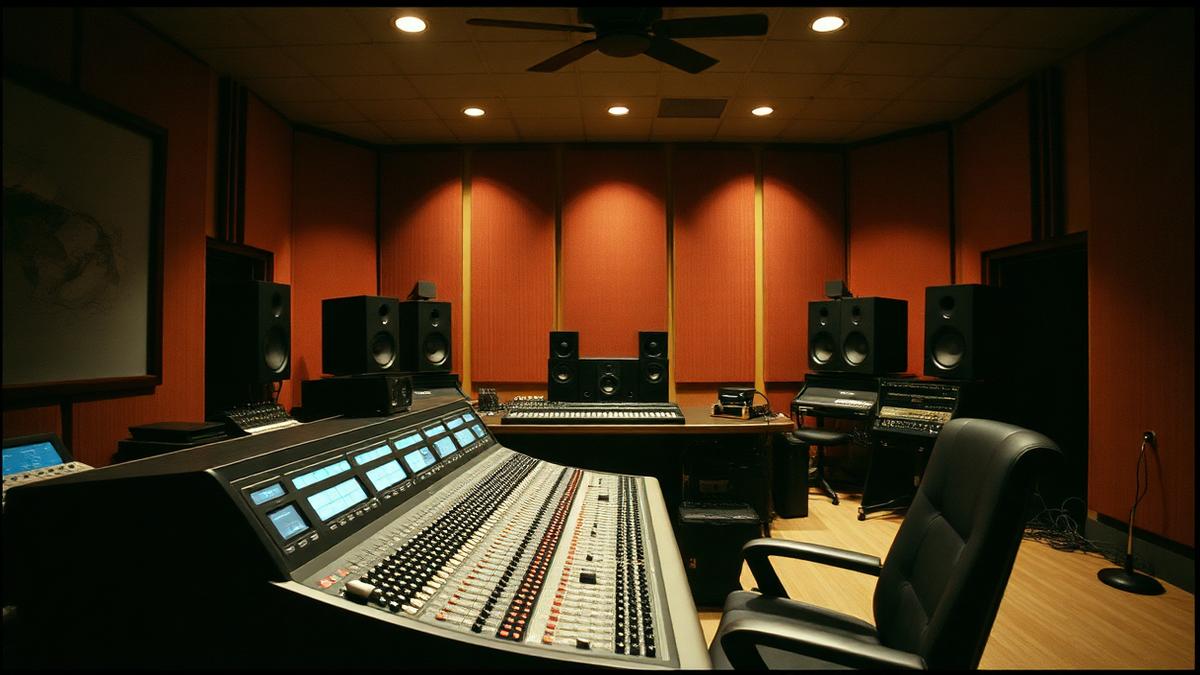
Photo: Gooi & Vecht Studio, Audio 1 control room with Nuendo 6.5 (opens in a new tab) by Marco Raaphorst (opens in a new tab), via Wikimedia Commons — CC BY 2.0 (opens in a new tab)
Key takeaways
- Keeping levels sensible at every step so nothing clips and nothing is buried in noise.
- Roughly -18 dBFS average on the way in is a safe home base.
- Modern floating-point DAWs are forgiving internally, but analogue-modelled plugins have sweet spots calibrated to specific input levels.
- Aim for around −18 dBFS average on individual tracks; most console and tape emulations are voiced to behave correctly there.
- Watch out: fixing level with the fader after slamming the input.
Quick checklist
- Can you define gain staging in one sentence without looking?
- Can you point at gain staging in a real session, mix or contract?
- Have you tried the practical move above at least once?
- Would you catch the common mistake before it costs you a take?
- Have you opened one of the primary sources below rather than a forum thread?
GAIN STAGING IN DEPTH
Gain staging is keeping level sensible at every point in the chain — preamp, converter, channel, bus, master — so nothing clips and nothing is buried in noise. Modern floating-point DAWs are forgiving internally, but analogue-modelled plugins have sweet spots calibrated to specific input levels.
How it works in practice
Aim for around −18 dBFS average on individual tracks; most console and tape emulations are voiced to behave correctly there.
The mistake people make
Fixing level with the fader after slamming the input. If a plugin is already distorting, pulling the fader down just gives you quieter distortion.
WHERE GAIN STAGING SITS
Gain staging belongs to production and recording in the Sampled music glossary. Studio words: what the gear does, what the engineer is asking for, what the session sheet means.
TEST YOURSELF
0/3 answered · 0 correct
3 quick questions on gain staging. Answers are marked instantly — nothing is sent anywhere.
1. Which statement best describes gain staging?
2. What is the mistake people most often make with gain staging?
3. In practice, which of these applies to gain staging?
Ready for the full thing? Take the 25-question terminology test and get a certificate with your name and score.
SOURCES AND CITATIONS
Free, primary references for gain staging — standards bodies, manufacturers, government offices and university course material. Each one lists the line of this entry it backs up.
- EBU R128 loudness recommendation (opens in a new tab)
Broadcast standards body · European Broadcasting Union
“Keeping levels sensible at every step so nothing clips and nothing is buried in noise.”— the claim this source supports
Why it counts: The EBU tech document sets the delivery targets broadcasters and platforms actually enforce.
- AES technical library (opens in a new tab)
Professional standards body · Audio Engineering Society
“Roughly -18 dBFS average on the way in is a safe home base.”— the claim this source supports
Why it counts: AES writes and reviews the engineering standards and peer-reviewed papers this terminology comes from.
RELATED TERMS IN PRODUCTION AND RECORDING
Back to the full music glossary or read our latest articles.