 SAMPLED
Production and recording · updated 2026-08-16
POP FILTER AND PLOSIVES
Bursts of air from p and b sounds overload a capsule. A mesh or foam screen a few inches out diffuses the blast without dulling the take.
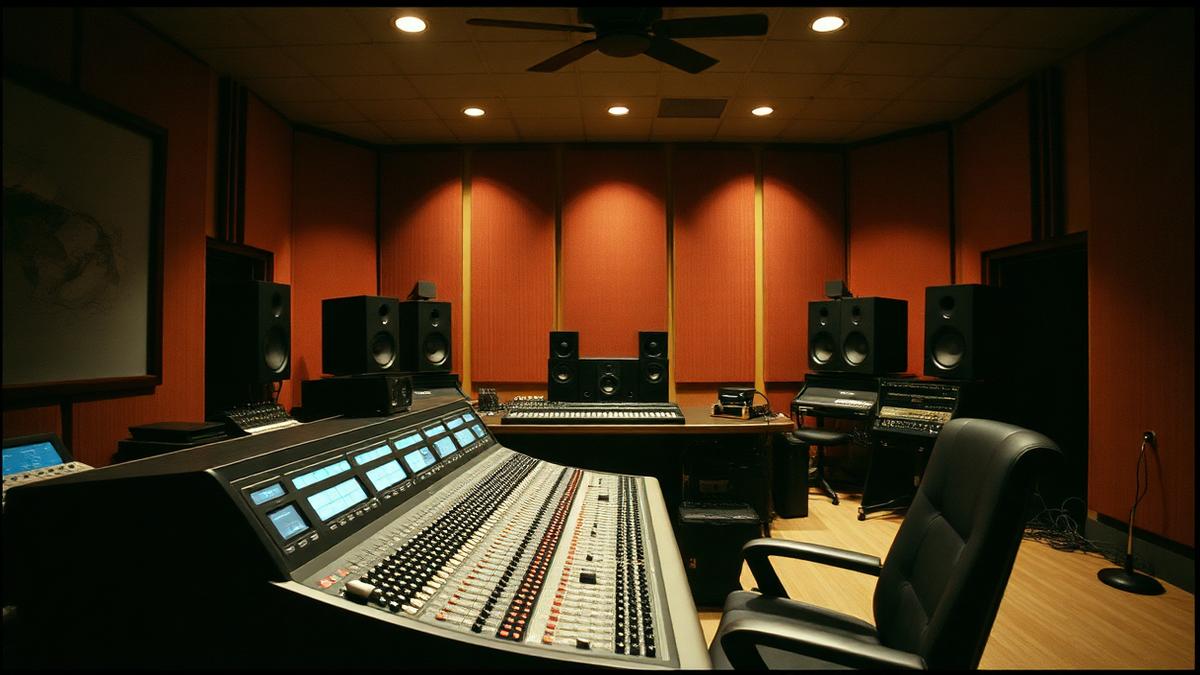
Photo: Gooi & Vecht Studio, Audio 1 control room with Nuendo 6.5 (opens in a new tab) by Marco Raaphorst (opens in a new tab), via Wikimedia Commons — CC BY 2.0 (opens in a new tab)
Key takeaways
- Bursts of air from p and b sounds overload a capsule.
- A mesh or foam screen a few inches out diffuses the blast without dulling the take.
- A pop filter placed a few inches from the mic breaks up that airflow while leaving the tone intact.
- Place the filter about four inches from the capsule and have the singer address the mic slightly off-axis for a second line of defence.
- Watch out: relying on a high-pass filter after the fact.
Quick checklist
- Can you define pop filter and plosives in one sentence without looking?
- Can you point at pop filter and plosives in a real session, mix or contract?
- Have you tried the practical move above at least once?
- Would you catch the common mistake before it costs you a take?
- Have you opened one of the primary sources below rather than a forum thread?
POP FILTER AND PLOSIVES IN DEPTH
Plosives are the blasts of air from P, B and T sounds hitting the capsule, producing a low-frequency thump that no EQ removes cleanly. A pop filter placed a few inches from the mic breaks up that airflow while leaving the tone intact.
How it works in practice
Place the filter about four inches from the capsule and have the singer address the mic slightly off-axis for a second line of defence.
The mistake people make
Relying on a high-pass filter after the fact. It thins the whole take to fix a handful of syllables that a five-dollar screen would have prevented.
WHERE POP FILTER AND PLOSIVES SITS
Pop filter and plosives belongs to production and recording in the Sampled music glossary. Studio words: what the gear does, what the engineer is asking for, what the session sheet means.
TEST YOURSELF
0/3 answered · 0 correct
3 quick questions on pop filter and plosives. Answers are marked instantly — nothing is sent anywhere.
1. Which statement best describes pop filter and plosives?
2. What is the mistake people most often make with pop filter and plosives?
3. In practice, which of these applies to pop filter and plosives?
Ready for the full thing? Take the 25-question terminology test and get a certificate with your name and score.
SOURCES AND CITATIONS
Free, primary references for pop filter and plosives — standards bodies, manufacturers, government offices and university course material. Each one lists the line of this entry it backs up.
- Shure performance library (opens in a new tab)
Primary reference · shure.com
“Bursts of air from p and b sounds overload a capsule.”— the claim this source supports
Why it counts: Published by the organisation responsible for the thing being defined, so it is a first-hand source rather than a summary of one.
- AES technical library (opens in a new tab)
Professional standards body · Audio Engineering Society
“A mesh or foam screen a few inches out diffuses the blast without dulling the take.”— the claim this source supports
Why it counts: AES writes and reviews the engineering standards and peer-reviewed papers this terminology comes from.
RELATED TERMS IN PRODUCTION AND RECORDING
Back to the full music glossary or read our latest articles.