 SAMPLED
Production and recording · updated 2026-08-16
QUANTISATION
Snapping recorded or programmed notes to a rhythmic grid. Partial or 'strength' quantise keeps some of the human timing.
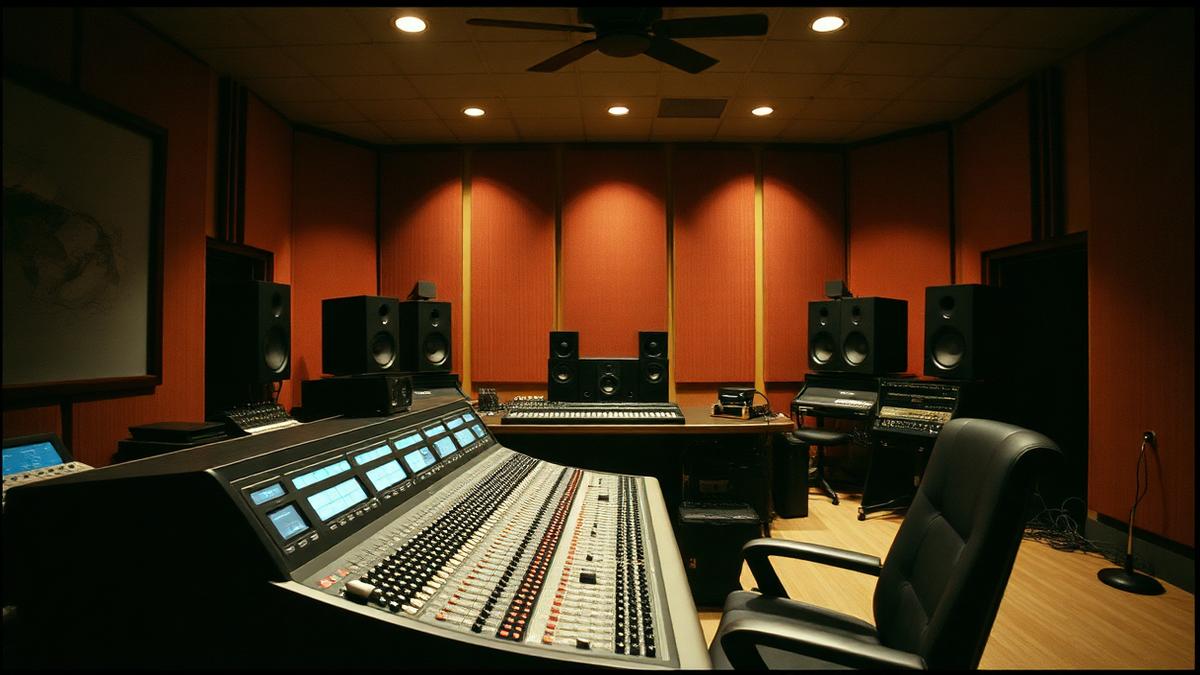
Photo: Gooi & Vecht Studio, Audio 1 control room with Nuendo 6.5 (opens in a new tab) by Marco Raaphorst (opens in a new tab), via Wikimedia Commons — CC BY 2.0 (opens in a new tab)
Key takeaways
- Snapping recorded or programmed notes to a rhythmic grid.
- Partial or 'strength' quantise keeps some of the human timing.
- Strength, swing and groove templates let you pull performances toward the grid partially, keeping the human offsets that make a part feel alive.
- Quantise at 50% strength on live drums: it tightens the obvious misses while leaving the player's feel intact.
- Watch out: quantising the whole kit including ghost notes.
Quick checklist
- Can you define quantisation in one sentence without looking?
- Can you point at quantisation in a real session, mix or contract?
- Have you tried the practical move above at least once?
- Would you catch the common mistake before it costs you a take?
- Have you opened one of the primary sources below rather than a forum thread?
QUANTISATION IN DEPTH
Quantisation snaps recorded or programmed notes to a rhythmic grid. Strength, swing and groove templates let you pull performances toward the grid partially, keeping the human offsets that make a part feel alive.
How it works in practice
Quantise at 50% strength on live drums: it tightens the obvious misses while leaving the player's feel intact.
The mistake people make
Quantising the whole kit including ghost notes. Ghost notes live between the grid lines, and snapping them removes the groove you were trying to keep.
WHERE QUANTISATION SITS
Quantisation belongs to production and recording in the Sampled music glossary. Studio words: what the gear does, what the engineer is asking for, what the session sheet means.
TERMS THAT DEPEND ON QUANTISATION
- Dither
Low-level noise added when reducing bit depth so quantisation error becomes hiss instead of distortion.
TEST YOURSELF
0/3 answered · 0 correct
3 quick questions on quantisation. Answers are marked instantly — nothing is sent anywhere.
1. Which statement best describes quantisation?
2. What is the mistake people most often make with quantisation?
3. In practice, which of these applies to quantisation?
Ready for the full thing? Take the 25-question terminology test and get a certificate with your name and score.
SOURCES AND CITATIONS
Free, primary references for quantisation — standards bodies, manufacturers, government offices and university course material. Each one lists the line of this entry it backs up.
- Ableton — Learning Music (opens in a new tab)
Manufacturer learning resource · Ableton
“Snapping recorded or programmed notes to a rhythmic grid.”— the claim this source supports
Why it counts: A free, hands-on explainer from a DAW maker — useful for hearing the concept rather than only reading it.
- MIDI Association specifications (opens in a new tab)
Specification owner · The MIDI Association
“Partial or 'strength' quantise keeps some of the human timing.”— the claim this source supports
Why it counts: The body that publishes the MIDI specification, so this is the definition hardware and software are built against.
RELATED TERMS IN PRODUCTION AND RECORDING
Back to the full music glossary or read our latest articles.