 SAMPLED
Which Small Fender Amp Should You Buy? Frontman 10G vs Mustang LT25 vs Acoustasonic 40
Three inexpensive Fender combos, three completely different jobs: a no-frills first practice amp, a 25-watt modeling amp with a screen and USB, and a two-channel acoustic-and-vocal PA. Here is how to pick the right one.
Walk into any shop and you will find three small Fender combos sitting within a few feet of each other, all cheap, all wearing the same logo — and all built for different players. People buy the wrong one constantly, then blame the amp.
Here is the honest split:
- The Fender Frontman 10G (opens in a new tab) is the first amp: 10 watts, two knobs' worth of thinking, plug in and play.
- The Fender Mustang LT25 (opens in a new tab) is the practice and recording amp: modeled tones, 30 presets, a screen and USB into your computer.
- The Fender Acoustasonic 40 (opens in a new tab) is the gig amp for acoustic players: a clean two-channel PA for guitar and a microphone.
Below is what each one actually does, who it is for, and the two-question test that gets most people to the right answer in about thirty seconds.
First, the two questions that decide it
1. What instrument is plugged in? Acoustic-electric with a piezo pickup → the Acoustasonic. Electric guitar → keep reading.
2. Where will you play it? Only your room, and you are just starting → Frontman 10G. Your room plus a computer, with real interest in tone → Mustang LT25. In front of people, with a vocal mic → Acoustasonic 40.
Everything after this is the detail behind those answers.
Fender Frontman 10G: the honest first amp
The Frontman 10G bundle (opens in a new tab) is the cheapest sensible entry point in the Fender line: a 10-watt solid-state combo with a 6-inch speaker, a single channel, and a control set you can learn in one minute — gain, volume, treble, bass, and an overdrive switch. The Austin Bazaar bundle ships it with an instrument cable and a 12-pack of picks, which matters more than it sounds: a first amp with no cable is a paperweight, and picks vanish.
| Spec | Frontman 10G bundle |
|---|---|
| Power | 10 watts |
| Speaker | One 6-inch |
| Channel | Single, with a switchable overdrive |
| Controls | Gain, volume, treble, bass |
| Extras | Aux input for backing tracks, headphone output |
| In the box | Amp, instrument cable, 12 picks |
| Weight | Light enough to carry in one hand with a guitar in the other |
Why the simplicity is a feature. A beginner's real enemy is decision paralysis. An amp with four knobs teaches gain staging honestly: turn gain up and the sound gets dirty, turn volume up and it gets loud, and the difference between those two is one of the first genuinely useful things a guitarist learns. A modeling amp with 30 presets hides that lesson behind menus.
What the overdrive switch actually is. Solid-state clipping — not a tube pushed into breakup. Used at low gain it gives a rough crunch that is perfectly usable for practicing rock rhythm parts. Cranked, it is fizzy. That is the trade at this price and every 10-watt amp on the market makes it.
Its real limits. Ten watts through a 6-inch speaker is a bedroom voice. There is no reverb, no effects loop, no way to record it cleanly other than pointing a mic at it. You will outgrow it, and that is fine — that is what a first amp is for.
Buy it if
- You or someone you are buying for is in the first year of playing
- You want a bundle that works the minute the box opens
- You need a cheap, disposable, always-on amp for a dorm, a garage or a second room
Skip it if
- You want to record into a computer
- You care about effects
- You will be playing with other people
Fender Mustang LT25: modeling practice with a screen
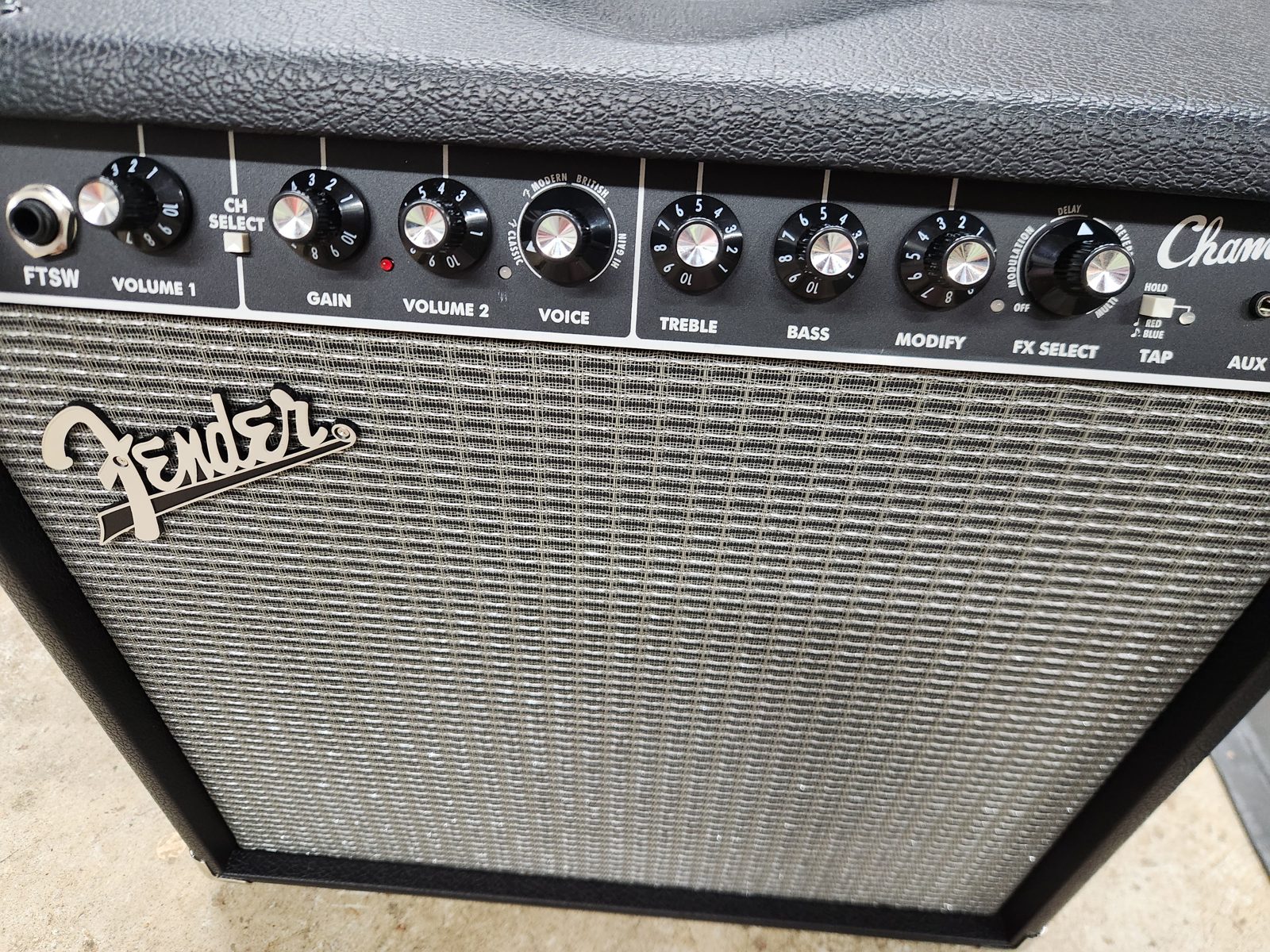
The Mustang LT25 (opens in a new tab) is the step up: 25 watts into a single 8-inch speaker, driven by Fender's digital modeling engine and controlled from a small color display.
| Spec | Mustang LT25 |
|---|---|
| Power | 25 watts |
| Speaker | One 8-inch |
| Presets | 30 onboard, all user-editable |
| Amp models | Fender clean, blackface, tweed and high-gain voicings |
| Effects | Stomp, modulation, delay and reverb slots per preset |
| Display | Small color screen with an encoder knob for editing |
| Recording | USB audio out to a computer |
| Practice tools | Built-in tuner, aux input, headphone output |
| Footswitch | Optional single-button switch for preset changes |
How the preset system works. Each of the 30 presets stores an amp model, its gain and EQ settings, and a chain of effect slots. Turn the encoder to browse, push it to edit, hit save to keep it. Every factory preset is a starting point you can overwrite.
Why the screen changes the experience. Older budget modeling amps hid everything behind knob combinations you had to memorize. Seeing the amp model name and the effects chain on a display is the difference between exploring and giving up.
The USB port is quietly the best part. It sends your amp tone straight into a DAW as digital audio — no mic, no room noise, no neighbors. For anyone recording demos in an apartment, that alone can justify the purchase.
Realistic volume expectations. Twenty-five solid-state watts through an 8-inch speaker is plenty for a bedroom, fine next to a drummer playing brushes, and not enough for a loud band.
Buy it if
- You want many classic tones without buying pedals
- You practice mostly on headphones
- You want a direct USB signal for recording
- You want a light second amp for lessons and writing
Skip it if
- You want one tube tone and nothing else
- You need stage volume
- You play acoustic-electric — this is exactly the wrong amp for a piezo pickup
Fender Acoustasonic 40: the grab-and-go two-channel
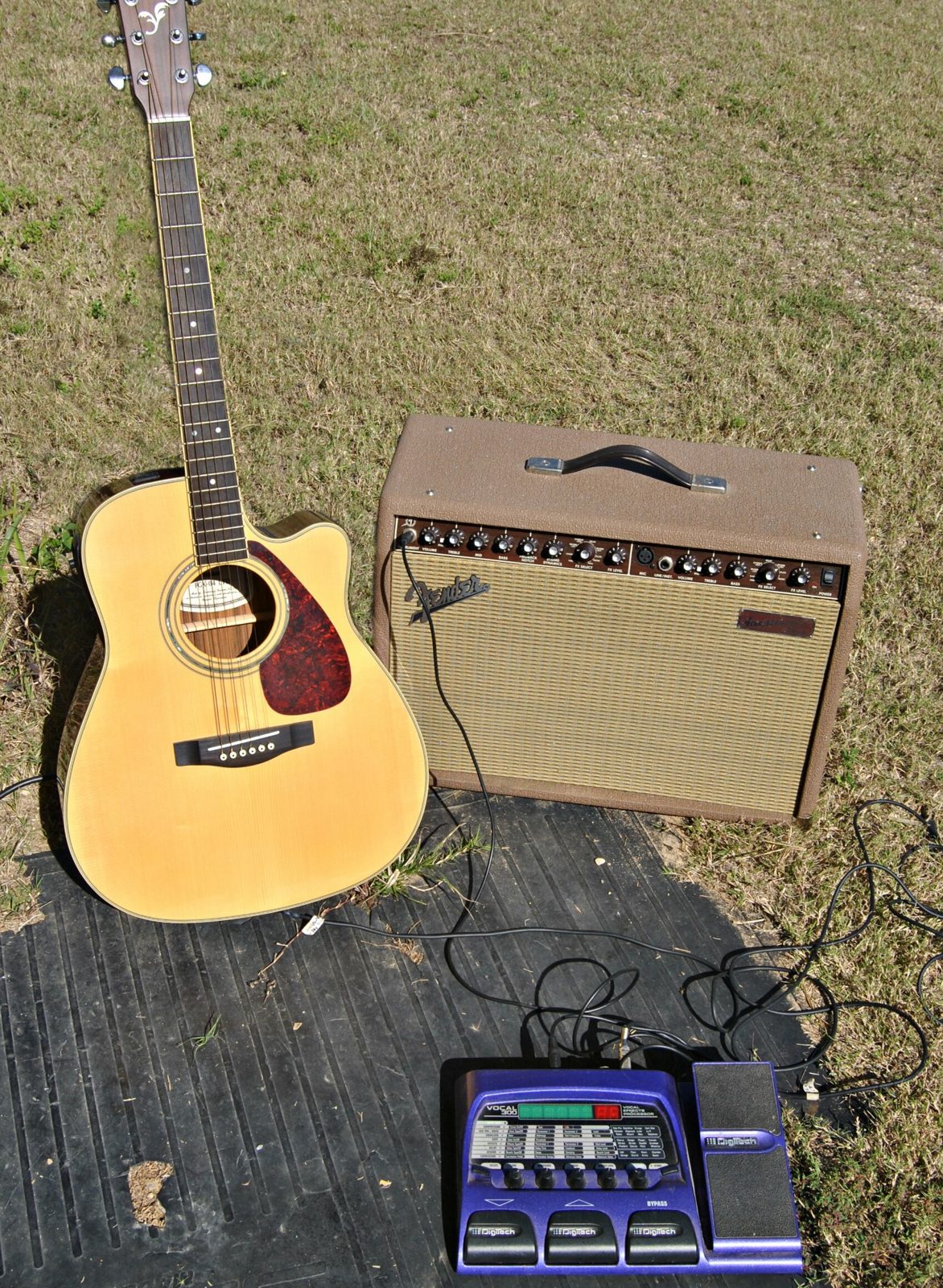
Fender describes the Acoustasonic 40 (opens in a new tab) as portable amplification for acoustic-electric guitar and microphone — a simple, flexible grab-and-go amp for performance and basic public address. That is an honest description of what it is.
| Spec | Acoustasonic 40 |
|---|---|
| Power | 40 watts |
| Speakers | Two 6.5-inch full-range drivers |
| Channels | Two — instrument, plus mic/instrument |
| Mic input | XLR on channel 2 |
| EQ | Independent volume, treble and bass per channel |
| Effects | Chorus and reverb |
| Extras | Aux input for backing tracks, headphone output |
| Cabinet | Sealed, brown vinyl with a wheat grille; single carry handle |
Why an acoustic amp is built differently. An electric guitar amp is a tone-shaping device — distortion, speaker breakup and a mid-heavy voicing are the point. An acoustic amp is a reproduction device: the guitar already made the sound, and the amp's job is to make it louder without adding character, feedback or honk. That means full-range speakers with a wider top end, clean headroom instead of grind, and tighter gain staging so a hollow box near a speaker does not howl.
Why the two-speaker layout matters. Two 6.5-inch drivers spread sound wider than one bigger cone and keep the cabinet shallow enough to carry in one hand. In a small room the coverage is more even — fewer spots where you sound boxy because you stepped to the left.
The mic channel is the real feature. If you play solo, you own a PA now. Guitar into channel one, dynamic mic into channel two, set both volumes, done. One box instead of a mixer, a powered speaker, a stand and two more cables.
The effects are deliberately restrained. Chorus and reverb only. Reverb makes a dry room feel slightly bigger, which flatters both voice and guitar. Chorus thickens fingerpicking. Neither is going to reinvent your sound and neither is supposed to.
Buy it if
- You are a singer-songwriter playing rooms up to about 60 people
- You need guitar plus voice from one box at worship, community or open-mic gigs
- You own an acoustic-electric and currently plug into an electric amp and hate the result
Skip it if
- You want overdrive — this amp is built to refuse
- You play in a band with a drummer, where 40 clean watts runs out of headroom
- You already run into a real PA and just need a monitor
Head to head
| Frontman 10G | Mustang LT25 | Acoustasonic 40 | |
|---|---|---|---|
| Built for | Learning, electric | Practice and recording, electric | Performing, acoustic and vocals |
| Power / speaker | 10 W, 1 x 6-inch | 25 W, 1 x 8-inch | 40 W, 2 x 6.5-inch |
| Voicing | One clean, one overdrive | Modeled, clean to high gain | Flat and clean by design |
| Effects | None | Full multi-effects chain | Chorus and reverb |
| Presets | None | 30, editable | None |
| Mic input | No | No | Yes, XLR |
| Computer connection | No | Yes, USB audio | No |
| Best room | Bedroom | Bedroom, dorm, home studio | Coffee shop, small chapel, patio |
| Typical buyer | First-year player | Hobbyist or home recordist | Gigging solo act |
The shortest rule of thumb: the Frontman teaches you, the Mustang lets you explore and record, the Acoustasonic gets you paid.
Is the Frontman worth it if you already know you will upgrade? Usually yes, for two reasons. It costs less than most single pedals, and a second always-plugged-in amp in another room measurably increases how much people actually practice. Plenty of players keep one long after buying something bigger.
Getting more out of whichever one you pick
Frontman 10G
- Keep gain below halfway for cleans and use your guitar's volume knob to back off further — that habit transfers to every amp you will ever own.
- Run backing tracks into the aux input and practice against them instead of a metronome.
- Use the headphone output at night; it is the reason you will keep playing in an apartment.
Mustang LT25
- Audition all 30 presets with your own guitar before editing anything. Pickup output changes a modeled amp more than it changes a tube amp.
- Save your two or three keepers to low preset numbers so one footswitch press gets you there.
- Record through USB with the speaker turned down — the digital output does not care how loud the room is.
Acoustasonic 40
- Start both tone controls at noon and cut rather than boost. Piezo pickups are naturally bright; pulling treble down fixes the "quacky" complaint faster than adding bass.
- Keep the amp behind you and slightly off-axis to reduce feedback into the soundhole.
- Use reverb sparingly outdoors — open air already eats reflections, and heavy reverb just smears words.
If you are building a small room around any of these, our guides to studio monitors, audio interfaces and budget guitar pedals cover what usually gets bought next.
FAQ
Is 10 watts enough for a beginner? Yes. Ten watts is loud enough to annoy a roommate. The only thing it cannot do is compete with a drummer.
Can I add pedals to the Frontman 10G? Yes — put them in front of the input. Keep the amp's own gain low and let the pedal do the dirt; that is how most players get a usable crunch out of a small solid-state amp.
Can I plug an electric guitar into the Acoustasonic 40? Yes, and it will sound clean and thin. There is no overdrive and no electric-voiced speaker. It works as a pedal platform if you bring your own dirt pedal, but that is not its purpose.
Can I plug an acoustic-electric into the Mustang LT25 or the Frontman? You can, and most people dislike it. Guitar-amp speakers roll off the high end an acoustic pickup depends on, and the amp voicings add midrange color you do not want.
Is 40 watts loud enough to play a coffee shop? For a solo acoustic act, generally yes. Clean acoustic watts go further than distorted electric watts because you are not fighting a drummer.
Is 25 watts loud enough for band practice? With a quiet drummer, maybe. With a normal one, no. Treat the LT25 as a practice and recording amp.
Do I need the footswitch for the LT25? Only if you change presets mid-song. Sitting down and practicing, the encoder is fine.
Can any of these run on batteries? No. All three are AC-powered.
Which is best for streaming or making videos? The LT25, because of the USB audio output. For acoustic streaming, mic the Acoustasonic or take the guitar direct instead.
I play both acoustic and electric. Which first? Buy for the instrument you play in front of people. Practice at home can happen through headphones on either instrument; a gig cannot.
This article contains affiliate links. If you buy through them, Sampled earns a small commission at no extra cost to you.