 SAMPLED
How Did the Akai MPC Change Music? From the MPC60 to MPC Sample
How one drum machine with 16 rubber pads rewrote rhythm in popular music — the MPC60, MPC3000, 2000XL, 1000, Live and where the palm-sized MPC Sample fits in that line.
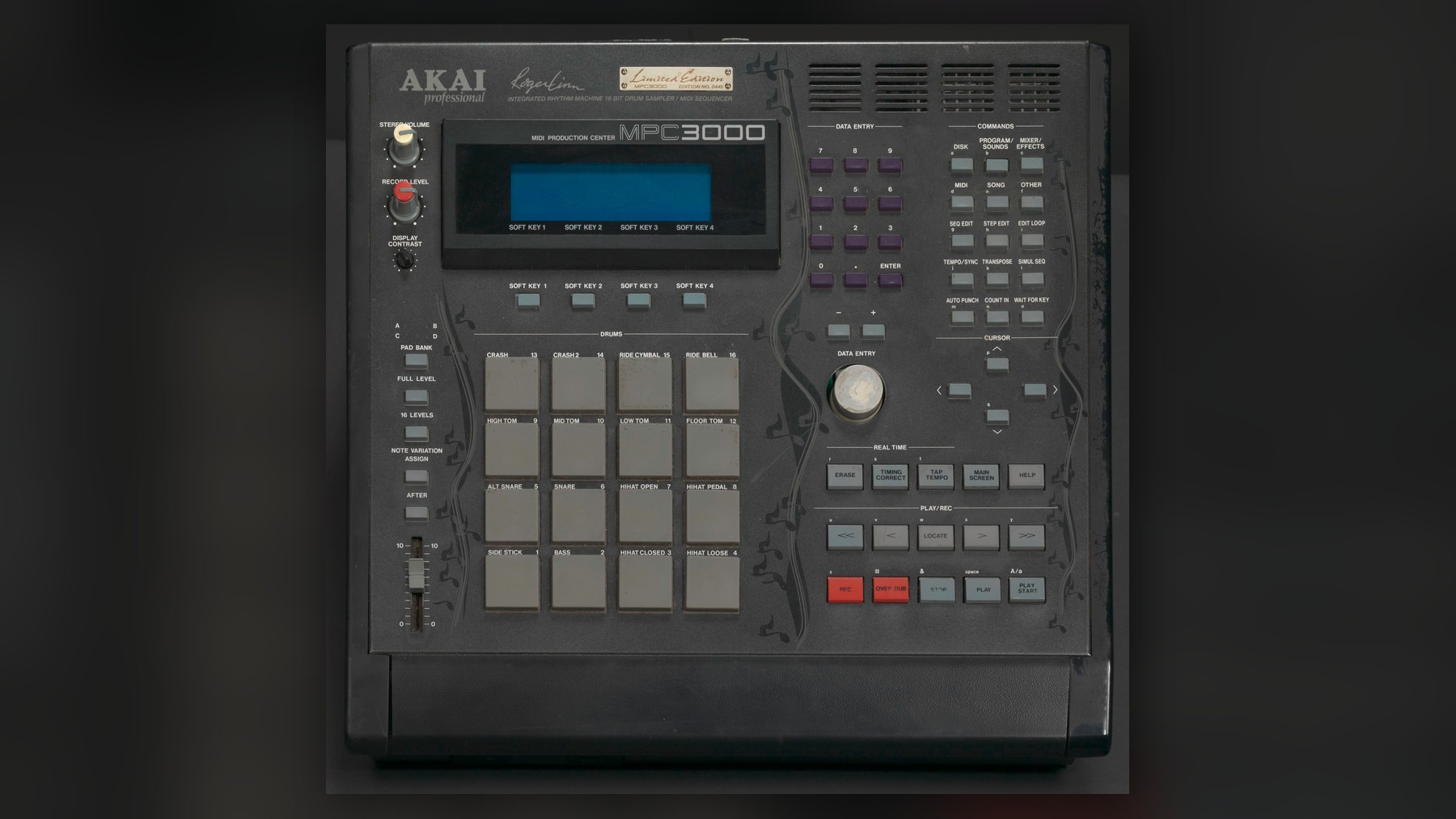
There are maybe five instruments that changed the feel of popular music rather than just its sound. The Akai MPC is one of them. Nearly forty years after the first unit shipped, the layout it invented — a four-by-four grid of rubber pads, a sequencer that records how you actually played, and a sampler underneath both — is still the default way people make rhythm on a screenless box.
This is the story of how that happened, and where the newest and smallest MPC, the Akai Professional MPC Sample (opens in a new tab), lands in a lineage that runs from studio furniture to something that fits in a jacket pocket.
What an MPC actually is
Three machines in one enclosure:
- A sampler. It records audio — a record, a mic, your phone, itself — and stores those recordings as playable sounds.
- A pad controller. Sixteen velocity-sensitive pads, so hitting harder makes it louder. You play a sample like a drum, with your fingers, in real time.
- A sequencer. It captures that performance as timed events you can loop, edit and arrange, then quantize toward the grid rather than onto it.
That last part is the whole religion. Most drum machines before the MPC put every note exactly on the grid, which reads as mechanical. The MPC sequencer runs at 96 pulses per quarter note on the earliest models (960 on modern ones) and offers swing as a percentage: nudge the off-beats late and the pattern starts breathing. Producers call it "the MPC swing." It is not magic circuitry — it is a timing philosophy baked into the workflow by the person who designed it.
1988: the MPC60 and the Roger Linn bargain
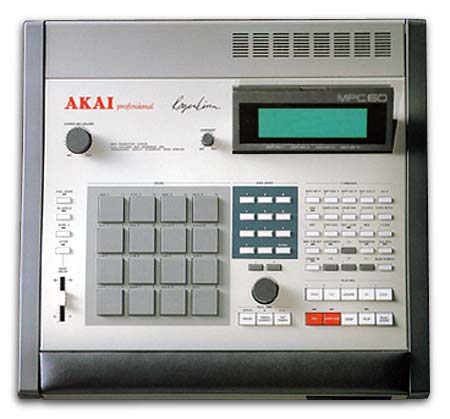
Roger Linn had already built the LM-1 and the LinnDrum, the machines that gave the eighties their snare. When his company folded, Akai — a Japanese electronics maker with real manufacturing muscle and a serious sampler division — hired him to design their drum machine. The result, released in 1988, was the MPC60: MIDI Production Center.
It sampled at 12-bit, 40 kHz, with a stock 750 KB of memory — around 13 seconds of audio, expandable to 26. Thirteen seconds. That constraint is not a footnote; it is the reason a whole genre sounds the way it does. When you can only hold a few seconds of sound, you chop, you loop, and you filter your source hard before it goes in. The MPC60 converters and filters added a soft, thickened low end that people spent the next three decades trying to emulate in plug-ins.
It also cost around $5,000 and weighed as much as a small amplifier. This was studio gear, and its first users — Marley Marl's orbit, then the Bomb Squad, Pete Rock, Large Professor, DJ Premier — used it the way a band uses a rhythm section.
1994: the MPC3000, the one people mean
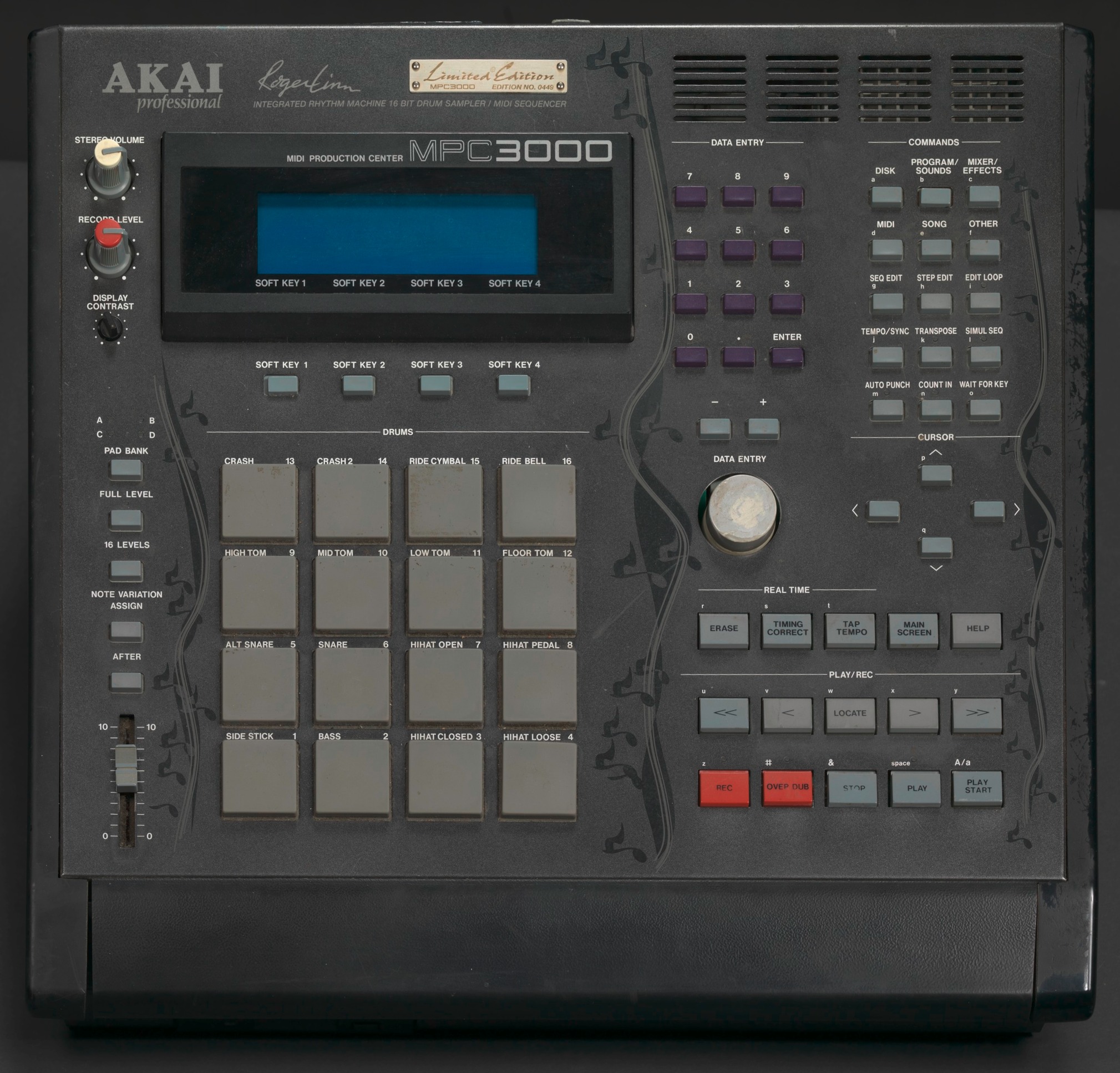
The MPC3000 was Linn's last design for Akai and the machine most often described as the best-sounding of the family. It moved to 16-bit, 44.1 kHz sampling with 2 MB of memory (expandable to 32), added stereo sampling, resonant filters per voice, and 32-voice polyphony — while keeping the 60's timing engine and physical philosophy.
It is the machine J Dilla used to build the drunk, deliberately un-quantized pocket that reoriented rhythm for a generation of producers; his personal 3000 sits in the Smithsonian National Museum of African American History and Culture alongside his Minimoog. Kanye West, DJ Premier, Q-Tip and Dr. Dre all logged serious hours on 3000s. If someone says "MPC sound" without qualifying, they usually mean this one.
1997–2003: the MPC2000, 2000XL and the era of the floppy disk
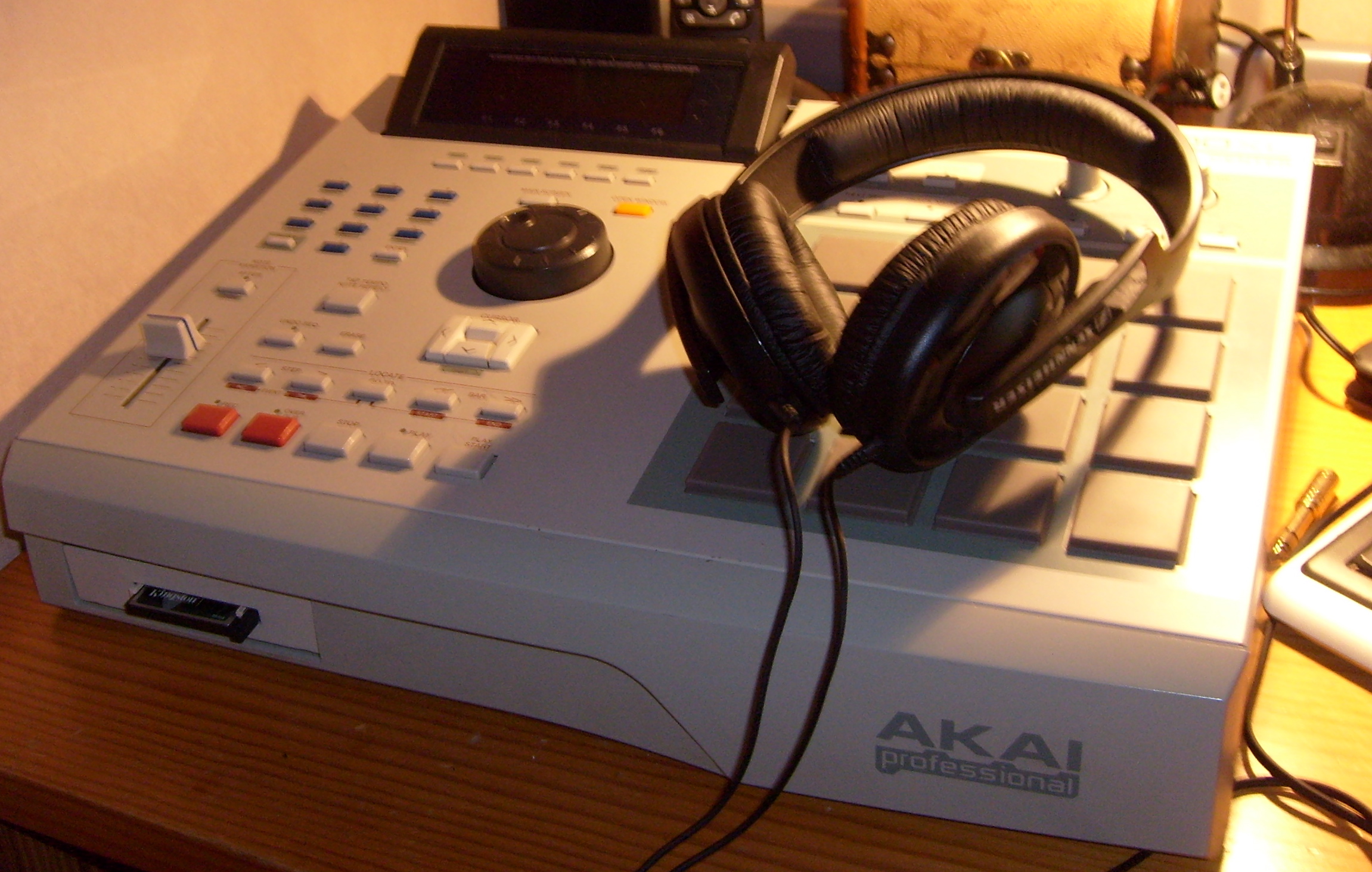
Linn left; Akai kept going. The MPC2000 (1997) and the MPC2000XL (2000) dropped the price, added SCSI storage, effects boards and a far better editing screen, and — crucially — landed in the hands of teenagers instead of only commercial studios. Floppy disks and Zip drives replaced tape reels as the currency of beat swapping.
The 2000XL is the most-used MPC in history by sheer volume, and the reason so many producers who came up in the early 2000s still describe their workflow in 2000XL terms: sample, trim, assign to pad, record a 2-bar loop, build the arrangement in Song mode. The MPC4000 (2002) chased high-end studio sampling; it was powerful, complicated, and never became the folk instrument the 2000XL was.
2004–2008: the MPC1000, 2500, 5000 — and the first portable
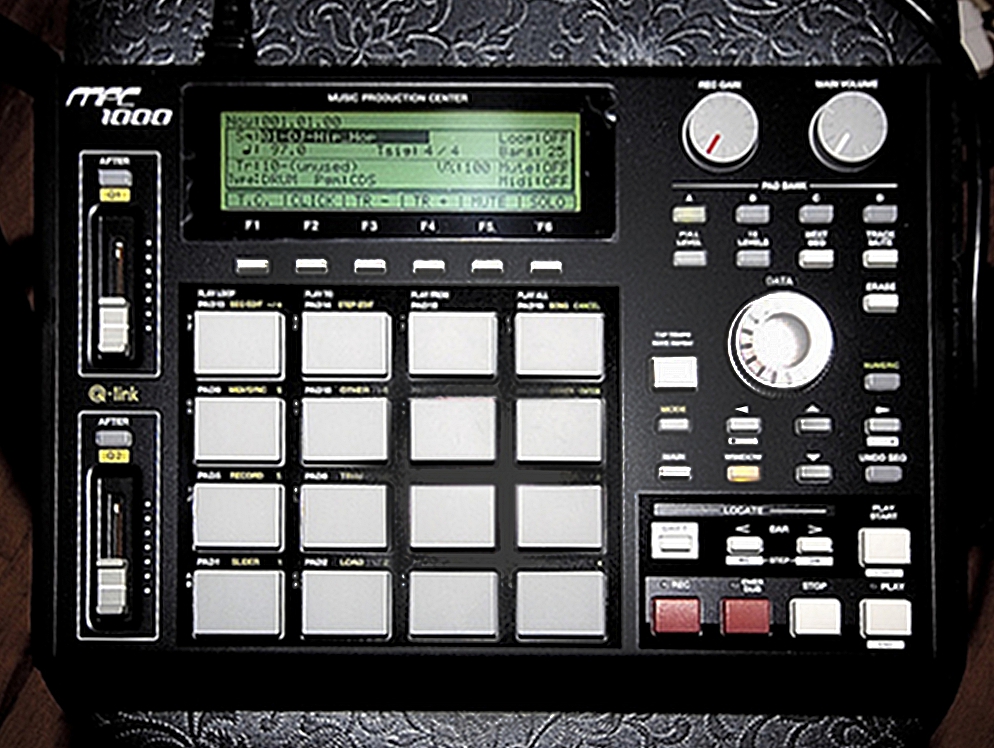
The MPC1000 (2004) shrank the format into something you could actually carry to a session, and became a cult favorite once third-party firmware (the community-written JJOS) added features Akai never shipped. The MPC2500 slotted above it for people who wanted more screen and more I/O.
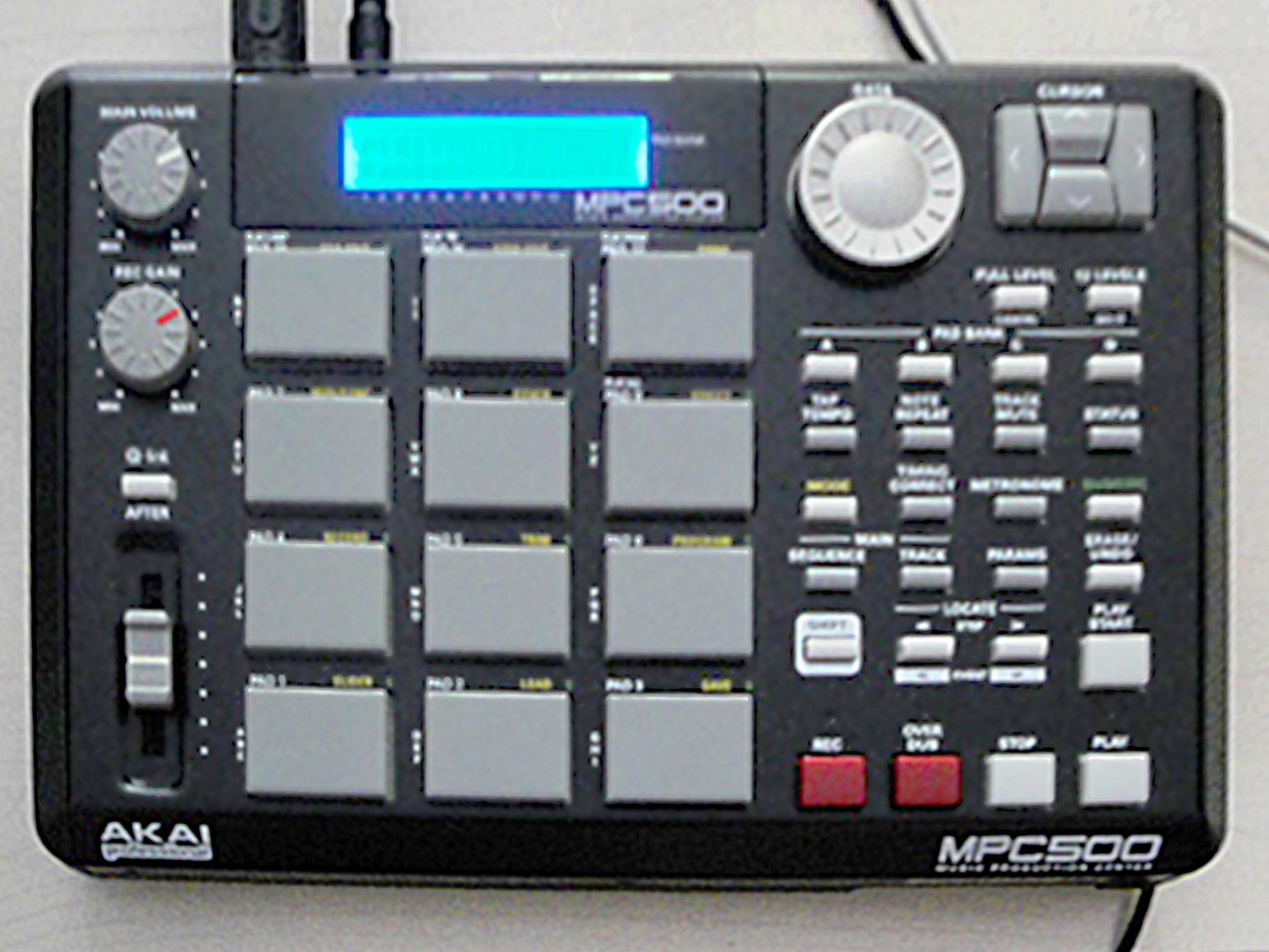
Then came the one that matters most for this story: the MPC500 (2006). Twelve pads instead of sixteen, a small screen, and — for the first time — battery power. It was the first MPC you could genuinely make a beat on in a passenger seat or a hotel bed. It sold modestly and was discontinued relatively quickly, but it proved the demand: people wanted the MPC workflow away from the desk.
The MPC5000 (2008) added a virtual analog synth and hard-disk recording, then the line went quiet. Laptops with Ableton Live and FL Studio had eaten the middle of the market.
2012–2024: software, then standalone again
Akai's answer in 2012 was the MPC Renaissance and MPC Studio — controllers with MPC hardware feel that ran the sound engine on your computer. It kept the brand alive and won over people who lived in a DAW, but it also broke the original promise: an MPC that boots in seconds and needs nothing else in the room.
That promise came back in 2017 with the MPC Live and MPC X: standalone Linux-based machines with touchscreens, internal drives, built-in batteries (Live), and no computer required.
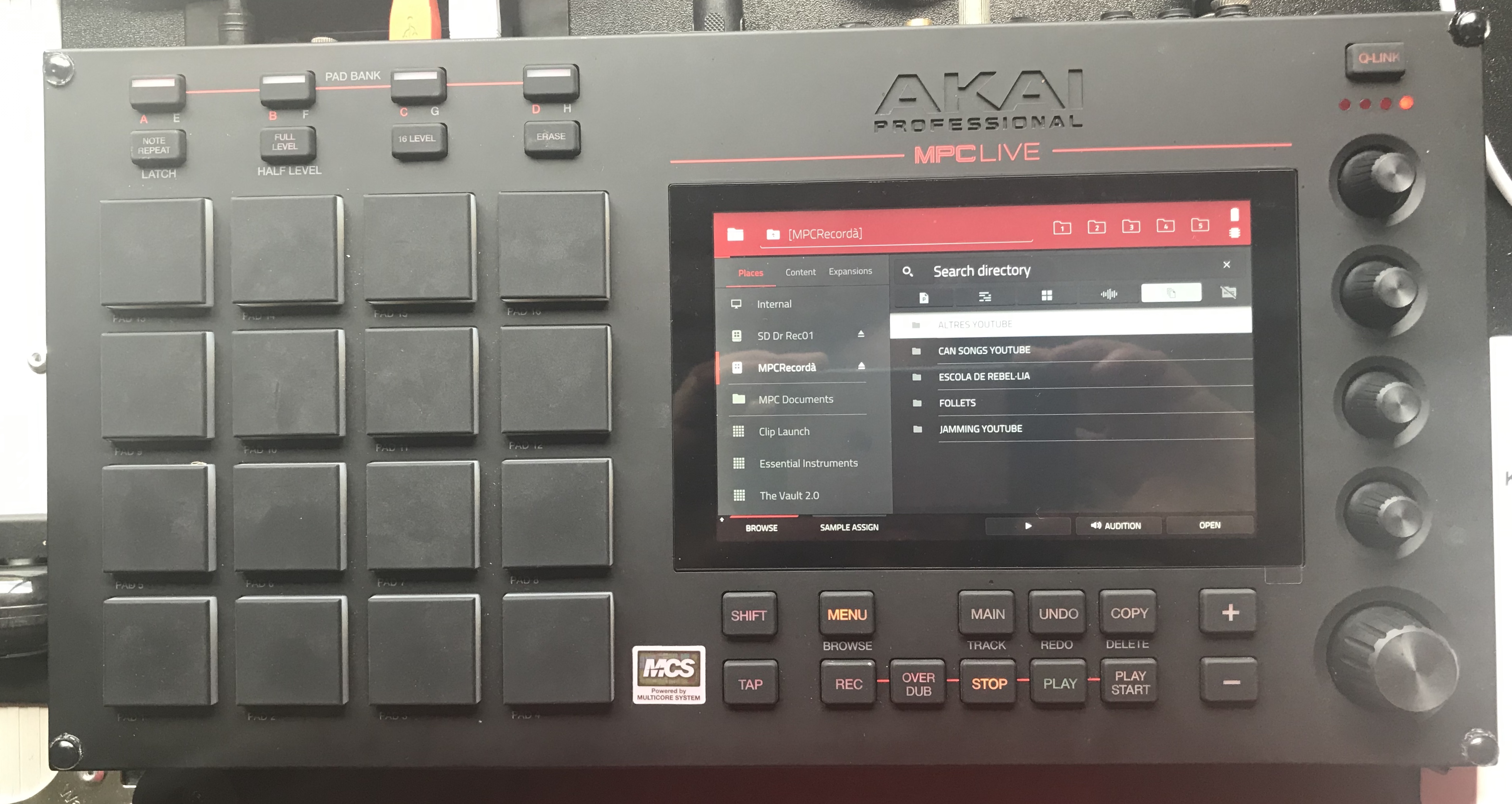
The MPC One (2020) made standalone cheap. MPC Key 61 (2022) and MPC Key 37 (2023) bolted keybeds and synth engines on top. By the mid-2020s the MPC had become a full production ecosystem — powerful, deep, menu-heavy, and, for a lot of people, a little far from the thing that made an MPC an MPC: hit pad, hear sample, build loop.
2026: the MPC Sample
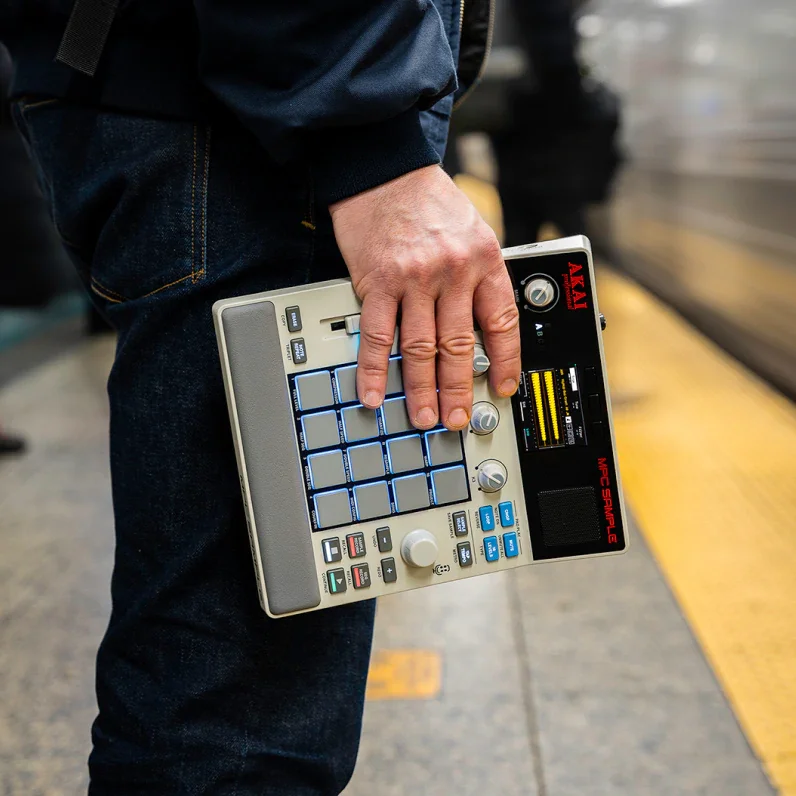
The MPC Sample (opens in a new tab) is Akai deliberately walking that back. It is the smallest MPC ever made — 7.6 x 9.3 x 2.0 inches and 2.03 lbs (19.4 x 23.6 x 5.0 cm, 0.92 kg) — and it is built around the vintage workflow rather than a touchscreen operating system.
What it actually is, per Akai's published specs:
| Spec | MPC Sample |
|---|---|
| Pads | 16 RGB velocity-sensitive MPC pads with aftertouch |
| Display | 2.4" full-color LCD with waveform editing |
| Sampling | 44.1 kHz, 32-bit float processing; records 24-bit/44.1 kHz |
| Polyphony | 32 stereo voices, with disk streaming |
| Storage | 8 GB internal (~2 GB factory content), microSD expansion |
| Memory | 2 GB |
| Sequencer | MPC sequencer, 960 PPQN, real-time swing |
| Capacity | 16 samples x 8 banks and 16 sequences x 8 banks per project, no project limit |
| Max sample length | 20 minutes per sample |
| Inputs | 2 x 1/4" TRS (mic/line), built-in microphone |
| Outputs | 2 x 1/4" TRS line, 1/8" headphones, 3-watt speaker |
| Sync | 1/8" TRS MIDI in and out, 1/8" CV/Gate sync out, USB-C |
| Controls | 3 knobs, 360° push encoder, 30 mm fader, 4 onboard FX |
| Power | USB-C bus power or internal lithium-ion, ~5 hours playback |
Why the spec sheet is more interesting than it looks
A microphone and a speaker are in the box. You can sample the room, chop it, sequence it and hear the result without plugging in anything at all. That is the MPC500 dream finished properly: no interface, no headphones required, no laptop.
32-bit float processing at 44.1 kHz. You are not fighting clipping on the way in the way you did on a 12-bit machine. The grit, if you want it, is a choice you make with the FX and the fader rather than a limitation you work around.
Twenty-minute samples with disk streaming. Every classic MPC constraint was about memory. This one holds a full live set as a single sample and streams it off the drive, which turns "sample the record" into "sample the whole side and chop later."
CV/Gate and TRS MIDI out. It clocks a modular rack or a Volca without an adapter box. The smallest MPC ever made is also, oddly, one of the easier ones to drop into a hardware setup.
A 30 mm fader and three knobs. The old MPC fader is back, and the control surface is small enough that muscle memory is achievable in a week rather than a month.
Who it is for
- Producers who stall in a DAW. Sixteen samples and sixteen sequences per bank is a constraint, and constraints finish songs. This is the point.
- Sample diggers. Instant Sample Chop, real-time time-stretch and re-pitch, and a mic in the chassis means the flip starts wherever you are.
- Live and hardware players. Battery, speaker, MIDI and CV out, under a kilogram.
- People buying their first MPC. It teaches the workflow that every larger MPC still runs on, at the bottom of the price ladder.
Who it is not for
If you need multitrack arrangement, plug-in instruments, big-screen editing and dozens of tracks, this is not that machine — an MPC One or Live is. The MPC Sample is a sketchpad and a performance instrument, and it is honest about that.
Should you buy it?
If your beats die in the browser window of a DAW, a small machine with a mic, a speaker, a fader and 16 pads is a better investment than another sample pack. The MPC Sample is the first MPC in years that is designed around starting ideas rather than finishing them, and starting is where most people are stuck.
Check the Akai Professional MPC Sample on Amazon (opens in a new tab)
If you want the wider field before you commit, we compared the current crop of hardware samplers in Best samplers in 2026, covered the controller side in Best MIDI keyboard controllers in 2026, and built a whole travel rig in A mobile production setup that fits in a backpack.
MPC timeline at a glance
| Year | Model | Why it mattered |
|---|---|---|
| 1988 | MPC60 | Roger Linn design; 12-bit sampling, pads plus swing sequencer |
| 1991 | MPC60 MkII | Same engine, refined build; the workhorse of early 90s rap |
| 1994 | MPC3000 | 16-bit/44.1 kHz, stereo sampling, filters; the "classic" MPC |
| 1997 | MPC2000 | Price drop, SCSI, effects boards; MPCs go mainstream |
| 2000 | MPC2000XL | Best-selling MPC; the bedroom-producer standard |
| 2002 | MPC4000 | High-end studio sampler ambitions |
| 2004 | MPC1000 | Compact, JJOS firmware scene |
| 2006 | MPC500 | First battery-powered portable MPC |
| 2008 | MPC5000 | Virtual analog synth, hard-disk recording |
| 2012 | Renaissance / Studio | Computer-based MPC era |
| 2017 | MPC Live / X | Standalone returns, touchscreen and internal drive |
| 2020 | MPC One | Cheap standalone |
| 2022–23 | MPC Key 61 / 37 | Keybeds and synth engines |
| 2026 | MPC Sample | Smallest MPC; mic, speaker, battery, vintage workflow |
FAQ
Who invented the MPC? Roger Linn designed the MPC60 (1988) and MPC3000 (1994) for Akai, building on his earlier LM-1 and LinnDrum work. Akai engineering handled the sampler hardware and manufacturing.
What does MPC stand for? Originally "MIDI Production Center." Akai later rebranded it "Music Production Center," and today the name mostly just means MPC.
Which MPC did J Dilla use? Primarily an MPC3000, which is now held in the Smithsonian National Museum of African American History and Culture.
What is "MPC swing"? A timing offset applied to off-beat notes, set as a percentage in the sequencer. It shifts those notes between the grid lines late, producing a laid-back groove instead of a rigid one.
Is the MPC Sample standalone? Yes. It has an internal battery, an 8 GB drive, a built-in microphone and a 3-watt speaker, so it records, sequences and plays back with nothing else connected.
Can the MPC Sample sync with other gear? Yes — 1/8" TRS MIDI in and out, a CV/Gate sync output with configurable rates, and USB-C for audio, MIDI and SD card access.
Should a beginner start with the MPC Sample or an MPC One? Start with the Sample if you want to learn the workflow, sketch anywhere and finish arrangements elsewhere. Choose the One if you want to build complete, multitrack tracks on the hardware itself.
This article contains affiliate links. If you buy through them, Sampled earns a small commission at no extra cost to you.