 SAMPLED
What Guitar Pedals Should a Beginner Buy in 2026?
Compressors, wahs and multi-effects explained in plain language — what each pedal does to your sound, who actually needs one, and which budget picks are worth your money.
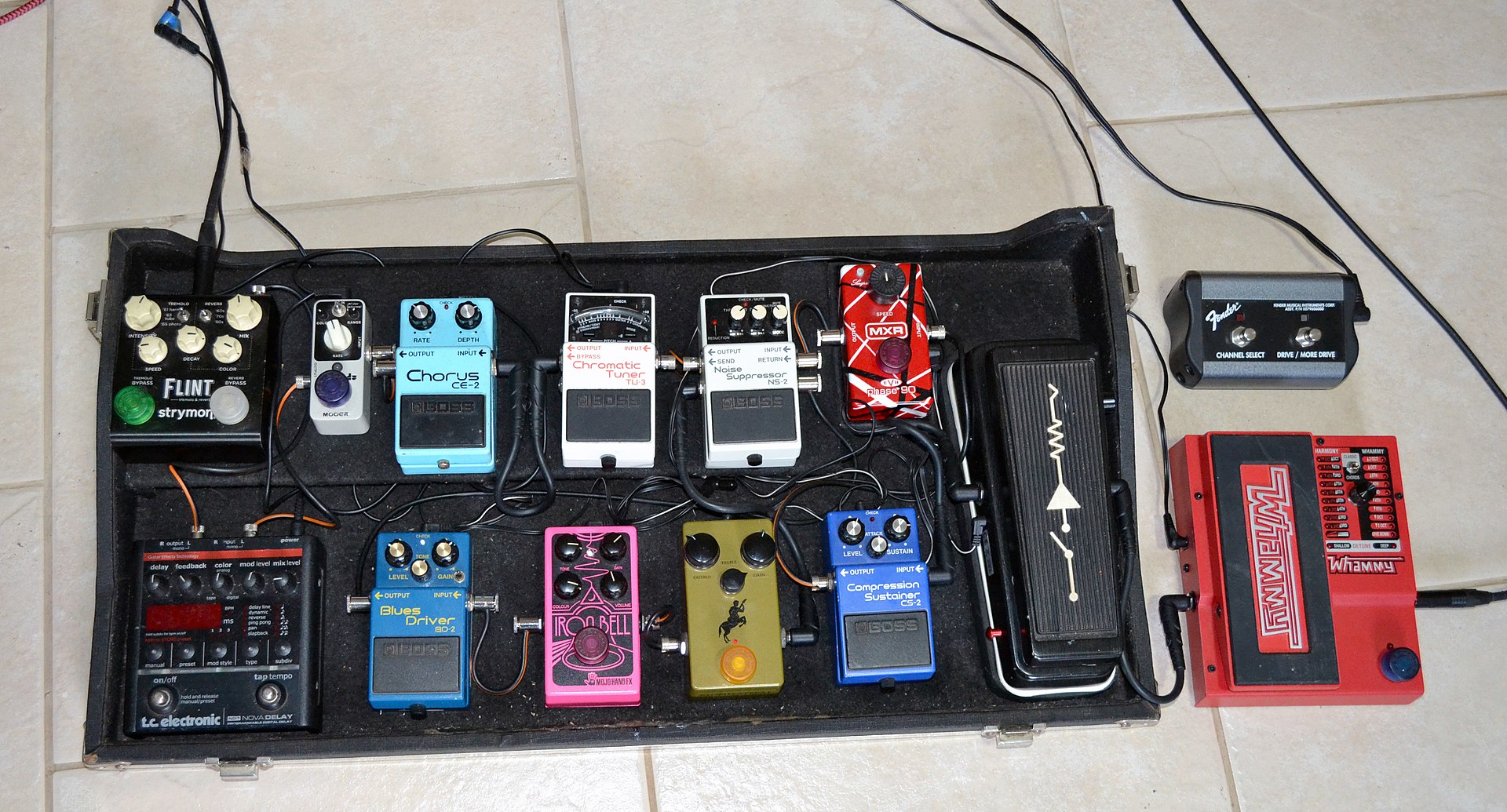
Plug a guitar straight into an amp and you get one sound: yours, but only one version of it. A guitar pedal is how that sound multiplies. Every record you love — the glassy funk strut, the solo that hangs in the air for ten seconds, the "waka-waka" on every seventies soundtrack — is a guitar signal that got bent on its way to the speaker by a little box on the floor.
This guide explains what a guitar pedal actually does, then walks through four budget-friendly pedals worth your attention in 2026: a compressor, a wah, and two multi-effects units. For each one you'll get the plain-English version of what the effect is, what the specific pedal offers, whether you personally need it, and whether it's worth buying.
What does a guitar pedal actually do?
Your guitar pickups turn string vibration into a small electrical signal. That signal travels down the cable to your amp, which makes it loud. A pedal sits in between — guitar into pedal, pedal into amp — and changes the signal before the amp ever sees it.
Each pedal is either an analog circuit (transistors and capacitors physically reshaping the voltage, the same way it's been done since the sixties) or a digital processor (a tiny computer converting your signal to numbers, math-ing it, and converting it back). The footswitch is just a routing decision: press it and your signal flows through the effect; press it again and it flows around it. That bypassed path is why you can stack five pedals and still hear your dry guitar when everything's off.
Pedals tend to sit in a rough order called the signal chain: filters (wah) and compressors first, overdrives and distortions in the middle, modulation (chorus, phaser) after that, and delay and reverb last. It's a convention, not a law — but it explains most pedalboards you'll ever see, including the one in the photo above.
1. Amazon Basics Compressor — the cheapest useful pedal you'll ever own
What a compressor pedal does
A compressor evens out your playing dynamics. Hit a string hard and it tames the peak; let a note die out and it lifts the tail. The result: quiet notes and loud notes come out closer to the same volume, chords sound glued together, and single notes sustain noticeably longer. It's the exact same concept as the compression engineers use on recordings, just living on your pedalboard instead of in a plug-in.
You hear compression everywhere once you know it: the percussive "cluck" of country picking, impossibly even funk rhythm guitar, those singing David Gilmour leads that refuse to fade. It's also the effect nobody notices until you turn it off — compression is felt as much as heard.
What this one offers
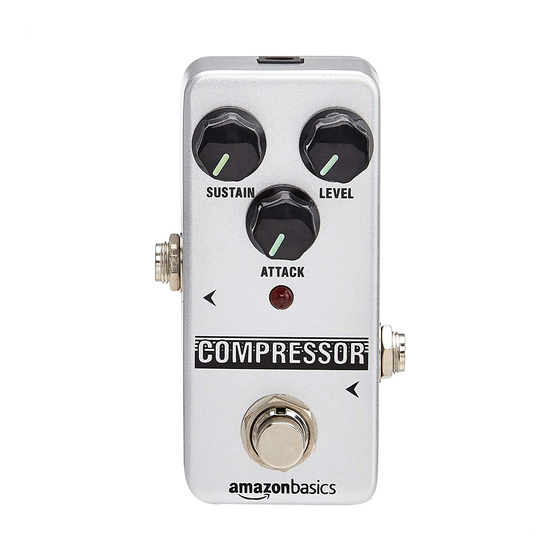
The Amazon Basics Compressor (opens in a new tab) keeps it simple: a fully analog circuit with true bypass (so your dry tone passes through untouched when it's off) and three knobs:
- Sustain — how much compression you get. Low for subtle smoothing, high for that squashed, endless-sustain sound.
- Attack — how fast the compression grabs the note. Slower settings let the pick "pop" through before the squash arrives; faster settings clamp down instantly.
- Level — overall output volume, so the compressed signal can match (or slightly boost) your bypassed volume.
That's the entire learning curve. Three knobs is genuinely all a compressor needs, and it's the same control layout as pedals costing four times as much.
Do you need a compressor?
You need one if you play clean or edge-of-breakup tones — funk, country, worship, indie, R&B — where evenness and sustain carry the part. You probably don't need one if you only play high-gain metal, because heavy distortion already compresses the signal on its own. Honestly assess your setlist: if most of it is clean or crunchy, a compressor will quietly improve all of it.
Should you buy it?
Yes — if you're compressor-curious, this is the lowest-risk way in. Compression is the effect most players buy last because it's unglamorous, then wish they'd bought first because it makes everything else sound more expensive. The Amazon Basics unit does the job without menu-diving or a manual. If you later outgrow it, you'll know exactly which parameters you want more of.
Check the Amazon Basics Compressor price on Amazon (opens in a new tab)
2. Dunlop Cry Baby 535Q Multi-Wah — the wah you grow into, not out of
What a wah pedal does
A wah is a filter you play with your foot. Rocking the treadle sweeps a frequency peak up and down — heel down is dark and bassy, toe down is bright and nasal — and moving it while you play produces the vocal "wah" cry the effect is named after. It's the sound of Hendrix's "Voodoo Child (Slight Return)," Slash's "Sweet Child O' Mine" solo, Isaac Hayes' "Theme from Shaft," and approximately every funk record ever cut.
What the 535Q offers
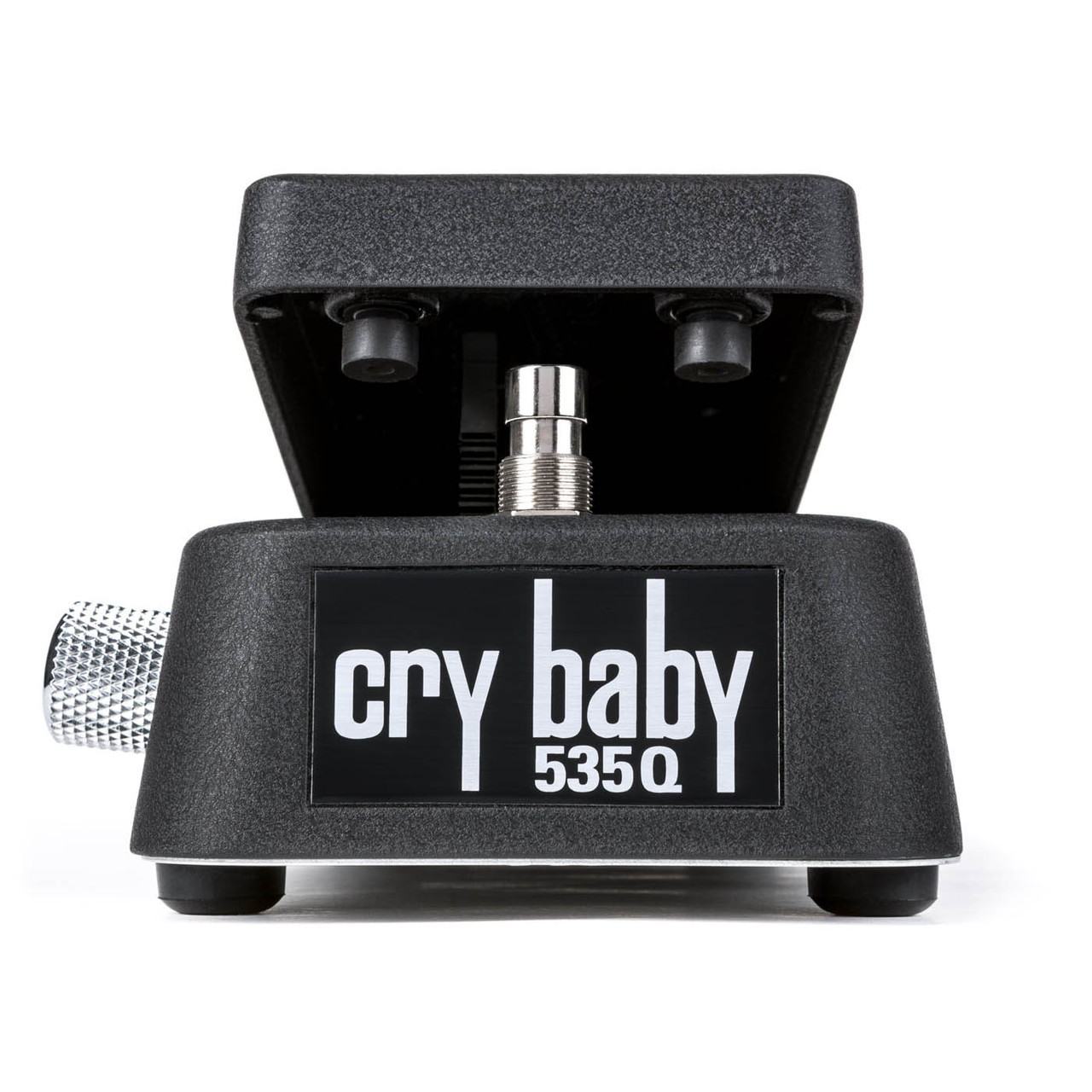
The Cry Baby is the wah — it's been in production in some form since 1967. The Dunlop Cry Baby 535Q (opens in a new tab) is the fully adjustable version, built for players who want to tune the effect to their rig instead of accepting one factory voice:
- Six-position Range Selector — shifts the wah's sweep from a bright, aggressive 440 Hz–2.2 kHz down to a dark, vocal 250 Hz–1.2 kHz. Each position is voiced after one of Dunlop's best-sounding vintage wahs.
- Variable Q control — sets how sharp the filter peak is. Low Q is wide and smooth; high Q is narrow, focused and cutting.
- Switchable boost — a side-mounted kick switch adds up to roughly +17 dB of gain, so your wah leads jump out of the mix instead of getting buried.
Do you need a wah?
Need is strong — unless you play rock, funk, soul, metal or blues, where wah is close to essential vocabulary, especially for solos and rhythm punctuation. If the music you play never calls for it, a multi-effects unit (below) includes wah models you can experiment with before committing floor space to a dedicated treadle.
Should you buy it?
If wah is going to be a core part of your sound, yes. The standard Cry Baby is cheaper, but its single fixed voicing either suits your guitar-and-amp combination or it doesn't. The 535Q's range selector and Q control mean it always suits your rig, and the boost solves the oldest wah problem — stepping on it for a solo and disappearing. At an MSRP of $179.99 it's the buy-once wah.
Check the Cry Baby 535Q price on Amazon (opens in a new tab)
3. MOOER GE100 — an entire pedalboard in one box
What a multi-effects pedal does
Everything above — and everything else. A multi-effects unit is a digital box containing models of compressors, wahs, overdrives, amp cabinets, choruses, delays and reverbs, chainable in whatever order you like and storable as presets. Instead of buying eight pedals, you buy one pedal that impersonates all of them.
What the GE100 offers
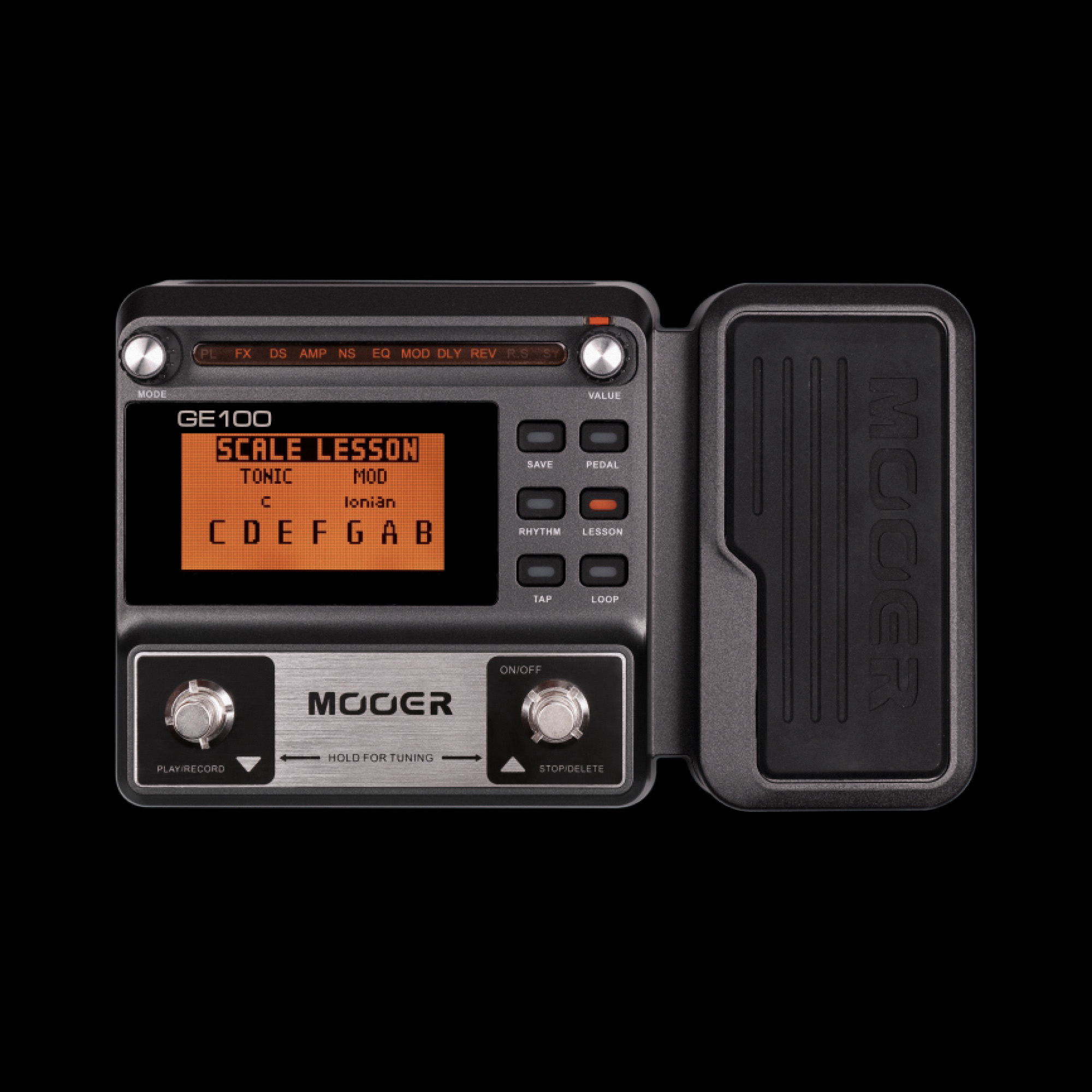
The MOOER GE100 (opens in a new tab) is absurdly complete for its price bracket:
- 66 effect types across 8 modules, including amp simulations — 80 factory presets show you what's possible, and 80 user slots let you save your own chains.
- A 180-second looper — record a chord progression, loop it, and practice soloing over yourself. That's the single most effective practice tool a guitarist can own.
- 40 drum patterns and a metronome built in, so the loop has something to sit on.
- An assignable expression pedal that can be a wah or a volume control.
- Tap tempo, a tuner, and a headphone output for silent practice.
- Scale and chord lessons built into the screen — genuinely useful when you're learning theory and don't want to reach for your phone.
Do you need a multi-effects unit?
If you're a beginner who doesn't yet know which effects you love, yes — this is the entire point of the category. One purchase lets you audition compression, wah, chorus, delay and twenty flavors of distortion before spending real money on dedicated pedals. It's also the answer for silent practice: headphones in, amp sims on, neighbors undisturbed.
Should you buy it?
As a first pedal for an exploring beginner, it's hard to argue against. The looper-plus-drum-machine practice rig alone justifies it. Just know what you're signing up for: digital models of analog classics are good, not identical, and the 160 preset slots reward an evening spent reading the manual.
Check the MOOER GE100 price on Amazon (opens in a new tab)
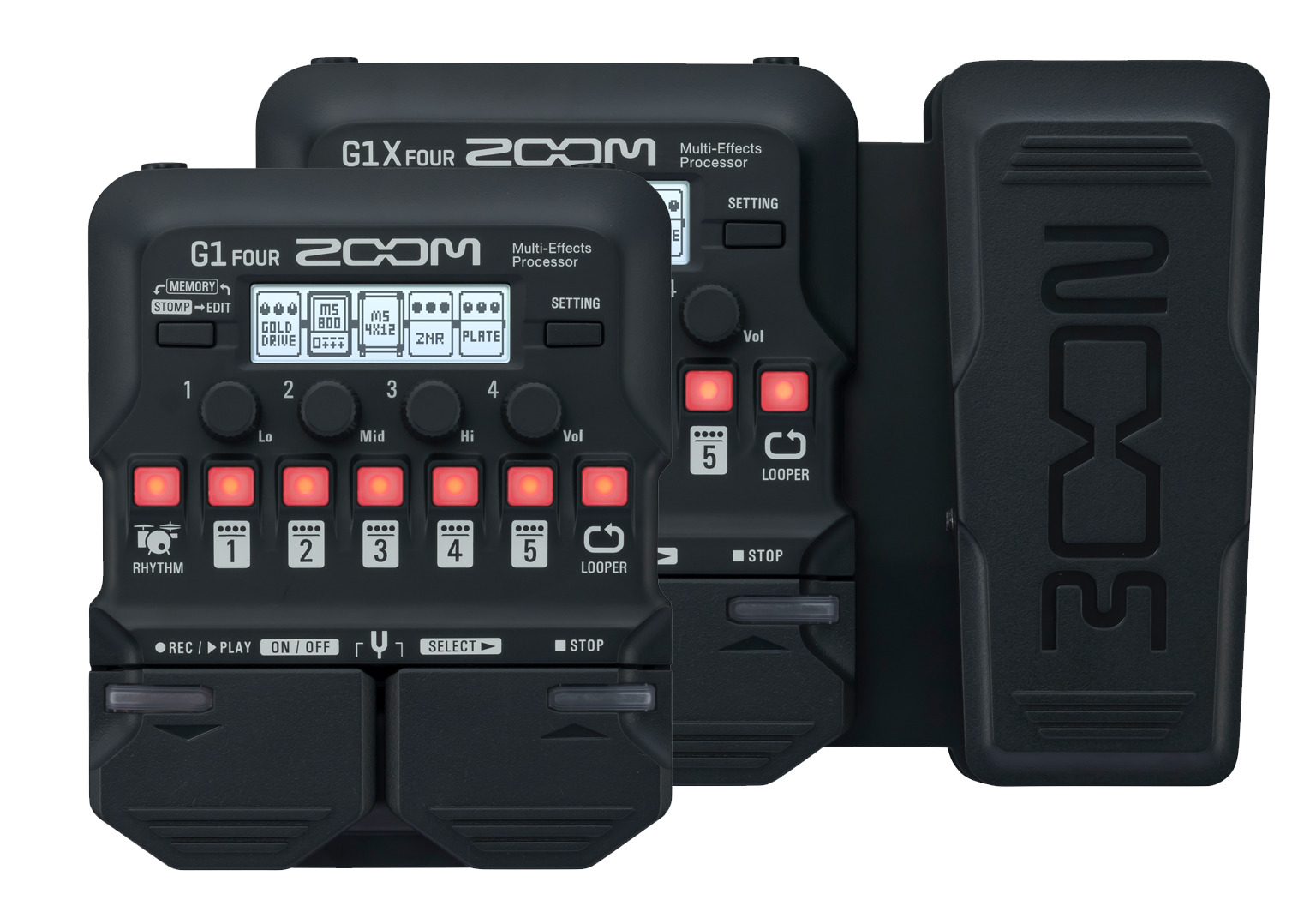
4. Zoom G1X Four — the multi-effects with a software ecosystem
What it offers
The Zoom G1X Four (opens in a new tab) attacks the same problem as the GE100 from a different angle. Headline specs:
- Over 70 effects and amp models, with up to five running simultaneously in any order.
- A built-in expression pedal for wah, volume and pitch effects.
- A 30-second looper and 68 rhythm patterns for practice.
- Zoom Guitar Lab support — connect over USB and download additional free effects. Zoom is still actively updating this platform: an OverDrive landed in December 2025, a BitCrush in February 2026 and a DynaDelay in April 2026. A pedal that gains features after you buy it is rare at this price.
- Runs on four AA batteries (around 18 hours), plus an aux input for jamming along with tracks and a headphone out.
Do you need it?
Same profile as the GE100: beginners mapping the effect landscape, players who need quiet practice, writers who want to demo tones fast. The battery power and aux input make it the more portable of the two — it works on a park bench.
Should you buy it?
Yes if the Guitar Lab ecosystem appeals — being able to reorganize chains on a computer screen and pull down new effects over USB keeps the unit fresh years in. The looper is shorter than the GE100's (30 seconds vs 180), which matters if looping is your main practice method and barely matters if it isn't.
Check the Zoom G1X Four price on Amazon (opens in a new tab)
MOOER GE100 vs Zoom G1X Four: which multi-effects should you get?
These two are the same idea with different priorities. The GE100 wins on practice tools: a looper six times longer, more drum patterns, and those built-in scale lessons make it the better bedroom-teacher. The G1X Four wins on ecosystem and portability: Guitar Lab's free downloadable effects mean the pedal keeps expanding, and battery power means it goes anywhere. Both have expression pedals, tuners and headphone outs. If your main goal is practicing alone with loops, lean MOOER; if you want the box that grows and travels, lean Zoom.
The four pedals side by side
| Pedal | Type | Standout features | Best for |
|---|---|---|---|
| Amazon Basics Compressor (opens in a new tab) | Analog compressor | True bypass, Sustain/Attack/Level controls | Clean-tone players wanting sustain and evenness |
| Dunlop Cry Baby 535Q (opens in a new tab) | Wah | 6 wah ranges, variable Q, +17 dB boost | Soloists and funk/rock rhythm players |
| MOOER GE100 (opens in a new tab) | Multi-effects | 66 effects, 180s looper, lessons, drum machine | Beginners and loop-based practicers |
| Zoom G1X Four (opens in a new tab) | Multi-effects | 70+ effects, Guitar Lab downloads, battery powered | Players wanting an expandable, portable rig |
Which pedal should you buy first?
- You just started playing and don't know your sound yet: get one of the multi-effects units. You'll audition every effect category for the price of a single boutique pedal, and the looper will make you a better player faster than any other purchase on this list.
- You play mostly clean and your dynamics are all over the place: the compressor. It's the least exciting purchase and the most immediately audible improvement.
- You already have a drive sound you love and want expression: the 535Q wah — and because the multi-effects both include wah models, try those first to be sure the effect earns the floor space.
- The honest long game: many players start with a multi, learn which three effects they actually use, then buy dedicated analog versions of exactly those. Either of these multi-effects units plus the Amazon Basics Compressor is a complete starter rig for well under the price of one mid-range boutique box.
Once your pedal tones are sorted, you'll want to capture them — our guide to affordable audio interfaces covers the recording side, the mobile production setup shows how a whole rig fits in a backpack, and if your "pedalboard" is eventually going to live inside a computer, start with the 35 best free plugins instead.
Frequently asked questions
Do I need pedals to play guitar? No. A guitar and an amp are complete. Pedals are how you access the sounds between clean and distorted — and some, like a looper inside a multi-effects, are practice tools that have nothing to do with tone at all.
Are cheap pedals worth it? For the four categories here, yes. Compression is a mature, simple circuit — affordable analog comps sound remarkably close to expensive ones. Multi-effects are digital, where manufacturing scale has driven prices to the floor. Where budget pedals compromise is enclosure ruggedness and resale value, not basic sound.
What order should pedals go in? The conventional chain is: wah and compressor first, overdrive/distortion next, modulation (chorus, phaser) after, then delay and reverb last. Swap the wah and compressor freely — players argue about it endlessly, and both orders work.
Can I use a multi-effects and single pedals together? Absolutely — it's the standard intermediate rig. Put the dedicated pedal in front of the multi (or in its loop), and treat the multi as everything-else-plus-the-amp.
This article contains affiliate links. If you buy through them, Sampled earns a small commission at no extra cost to you — it keeps the lights on.