 SAMPLED
Is the Yamaha PSR-E373 Good for Beginners? A Home-Studio Review
A 61-key portable that doubles as a MIDI controller — why it earns its spot in a small studio, and where it runs out of road.
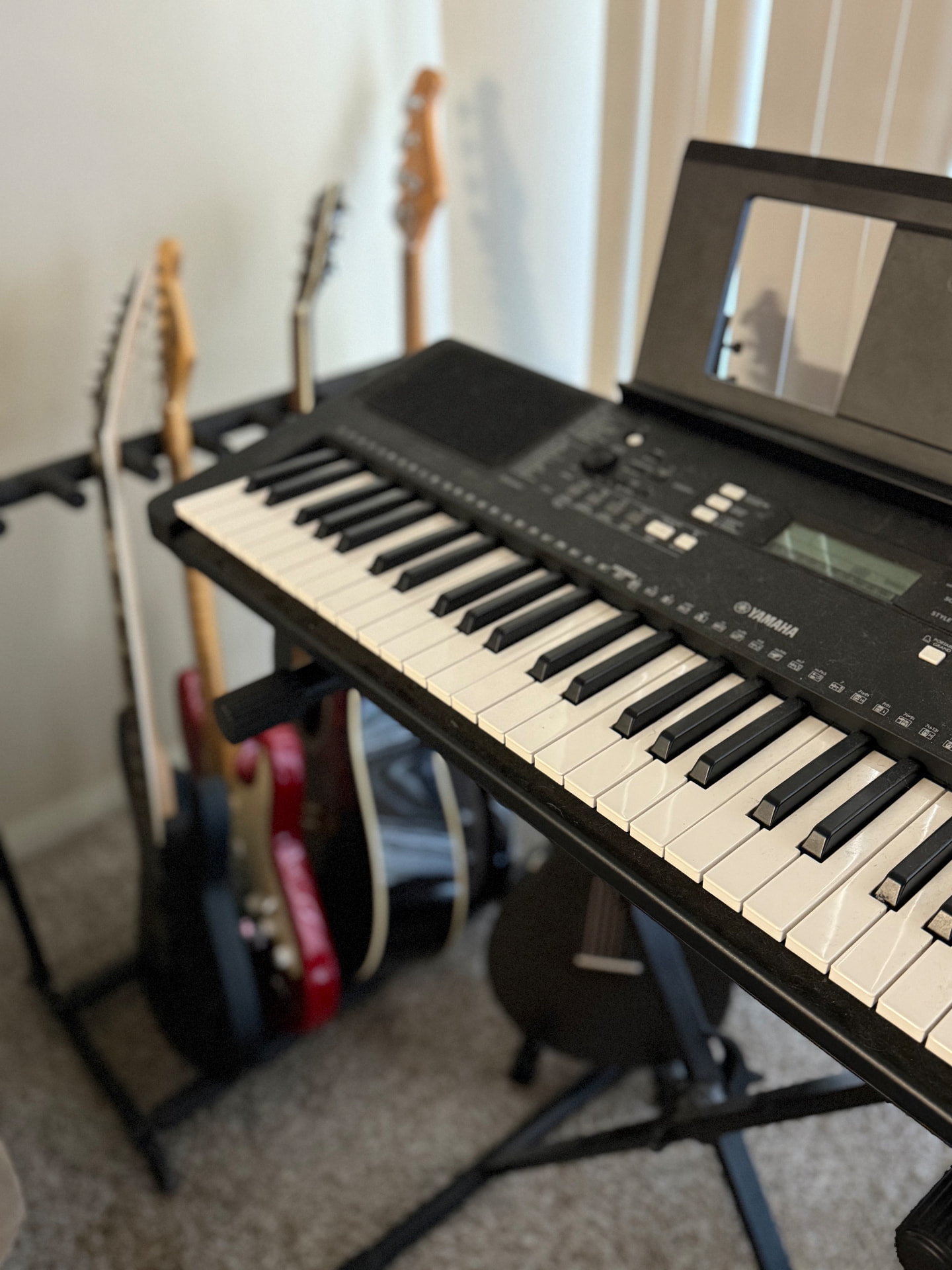
Most home setups don't need another synth. They need a keyboard that turns on, sounds decent, and doesn't make you think about it. That's the job the Yamaha PSR-E373 (opens in a new tab) has been doing in my room, parked on an X-stand next to the guitar rack, ready whenever a track needs keys instead of another riff.
What it actually is
The PSR-E373 is a 61-key portable arranger keyboard. The keys are touch-sensitive — play harder, get louder — which is the single feature that separates a usable keyboard from a toy. It runs on the power supply or on batteries, weighs under 10 pounds, and has roughly 600 onboard voices plus a big pile of accompaniment styles.
The sound engine borrows from Yamaha's bigger instruments. The acoustic piano is sampled from a concert grand, and it holds up in a mix better than the price suggests. Electric pianos, organs, strings, brass, and a deep bench of world instruments round it out. There's also a Duo mode that splits the keyboard into two identical ranges, which is genuinely useful if you're teaching someone or trading parts with a collaborator.
Why it earns the space
It's a MIDI controller that also makes sound. Plug the USB-to-host port into your computer and it shows up as a MIDI device — no interface, no extra drivers on most systems. Play your soft synths through it, then unplug and it's still a full instrument on its own. That dual life is why it stays set up instead of living in a closet.
Sketching is faster on keys. Chord progressions that take twenty minutes to voice on a guitar take two on a keyboard. Even if you're not a piano player, being able to hold a triad and hear the harmony changes how you write.
The arranger styles are a rhythm section on tap. Purists roll their eyes at auto-accompaniment. Use it anyway — as a scratch backing track to test whether an idea has legs before you commit to programming drums.
It survives real life. Batteries mean it goes to a friend's place, a porch, a hotel room. The onboard speakers are small but honest enough for practice.
Where it falls short
Sixty-one keys means no full 88-key range, so heavy classical playing will run out of room. The keys are unweighted — springy, not hammer-action — so if your goal is piano technique, this isn't the instrument for that. The screen is a small LCD, and digging into deeper settings involves function numbers rather than menus. And the built-in speakers are speakers, not monitors; record it out or over USB, not with a mic in front of the cabinet.
None of that matters much for what most producers need it for: a reliable set of keys within arm's reach.
How I'd set it up
Put it on a sturdy X-stand at seated height. Run USB to the computer for MIDI and audio, and keep a sustain pedal plugged in — it's the cheapest upgrade to how musical your playing sounds. Save your two or three go-to voices to the registration memory so you're not scrolling through 600 patches mid-idea.
Then leave it out. Gear you have to unpack is gear you don't use. The reason the PSR-E373 (opens in a new tab) shows up in my tracks is that it's always on, always plugged in, and takes zero setup to start playing.
Who it's for
Producers who play a little piano and want keys in the room. Guitarists who need to hear chord voicings outside of shapes. Songwriters starting out who need one instrument that covers piano, pads, bass, and strings. Parents buying a first keyboard for a kid who might actually stick with it — touch sensitivity means the practice transfers to a real piano later.
If you need weighted hammer action or 88 keys, buy that instead. If you want a keyboard that quietly makes you more productive, this one is hard to beat at the price (opens in a new tab).
Disclosure: this article contains affiliate links. If you buy through them, Sampled may earn a commission at no extra cost to you. Photo: Robert Anthony / Sampled.