 SAMPLED
Is the Waldorf Quantum MK2 Worth It? 16 Voices and Five Engines
Poly aftertouch, 59GB of sample flash and eight analog filter voices — a close look at Waldorf's flagship hybrid and the stand-and-cables bundle it ships in.
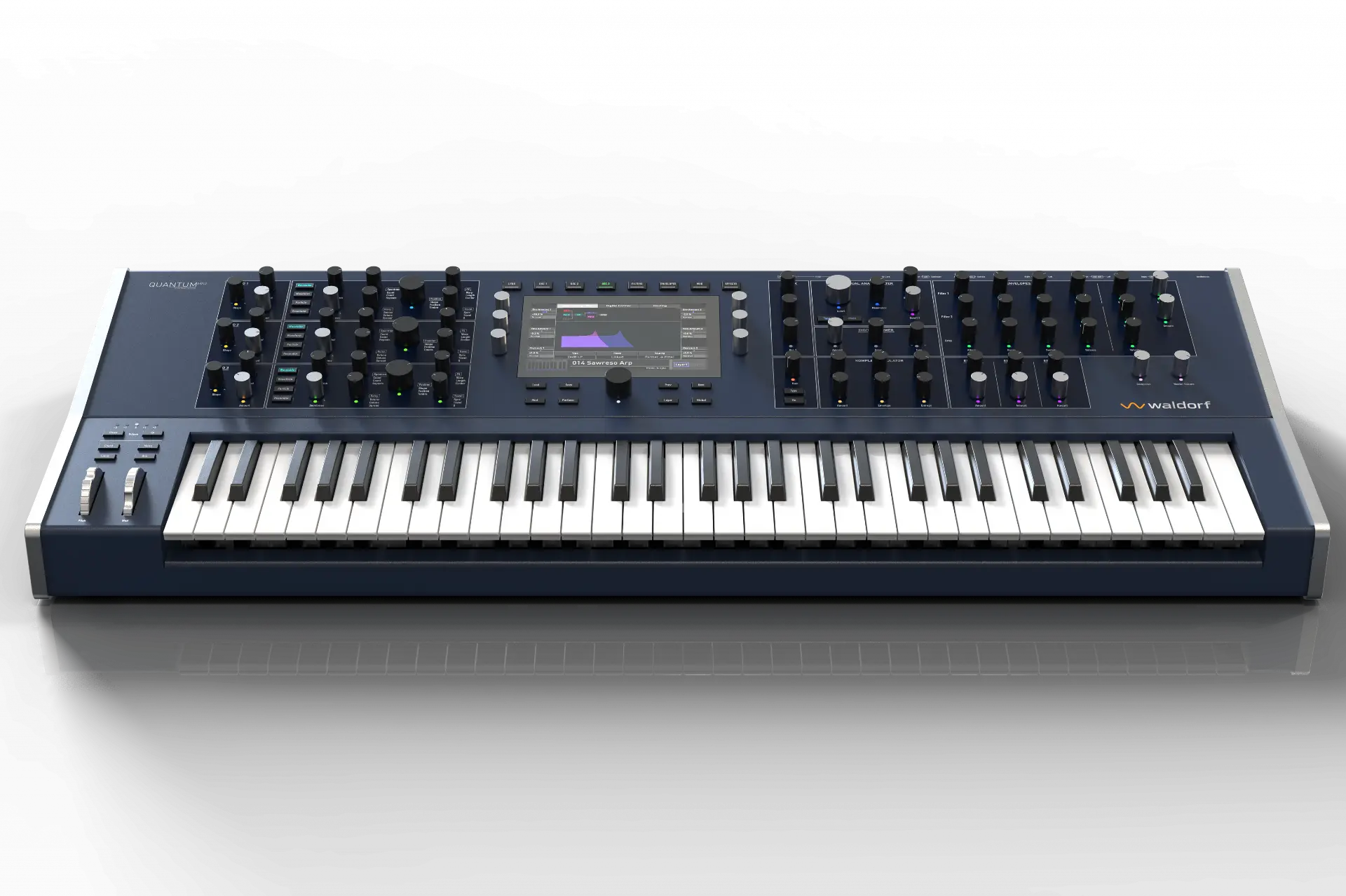
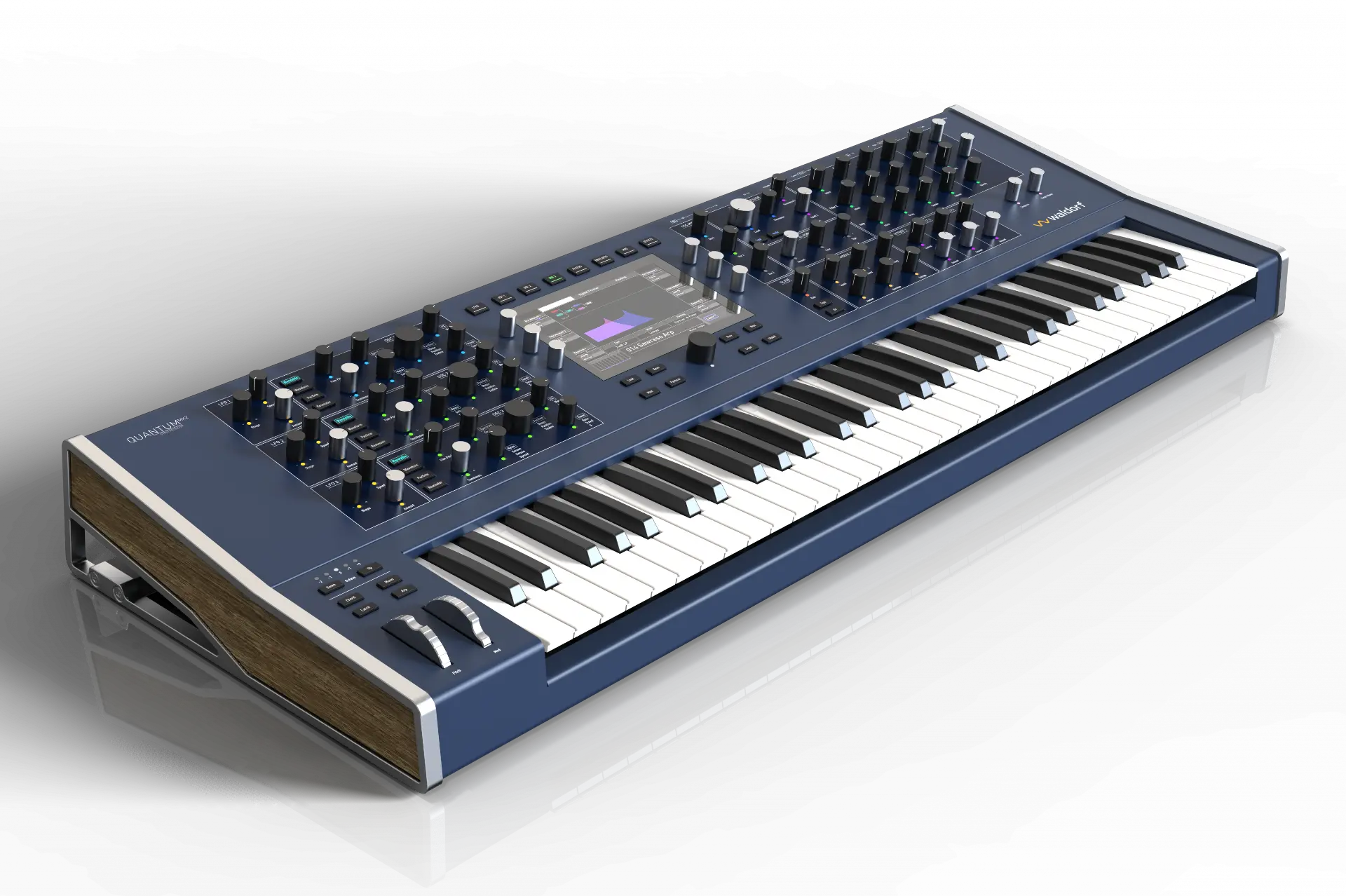
The Waldorf Quantum MK2 is not a synth you buy on impulse. It is a 61-key, 17.8 kg German-built instrument that tries to be a wavetable synth, a granular sampler, an FM engine, a physical-modelling resonator and a proper analog-filtered polysynth at the same time — and mostly succeeds. If you have been circling one, the bundle version on Amazon (opens in a new tab) pairs it with an Ultimate Support APEX AX-48 Pro Plus column stand and a pair of 10-foot Kellards MIDI cables, which is a sensible way to buy something this heavy.
What actually changed in the MK2
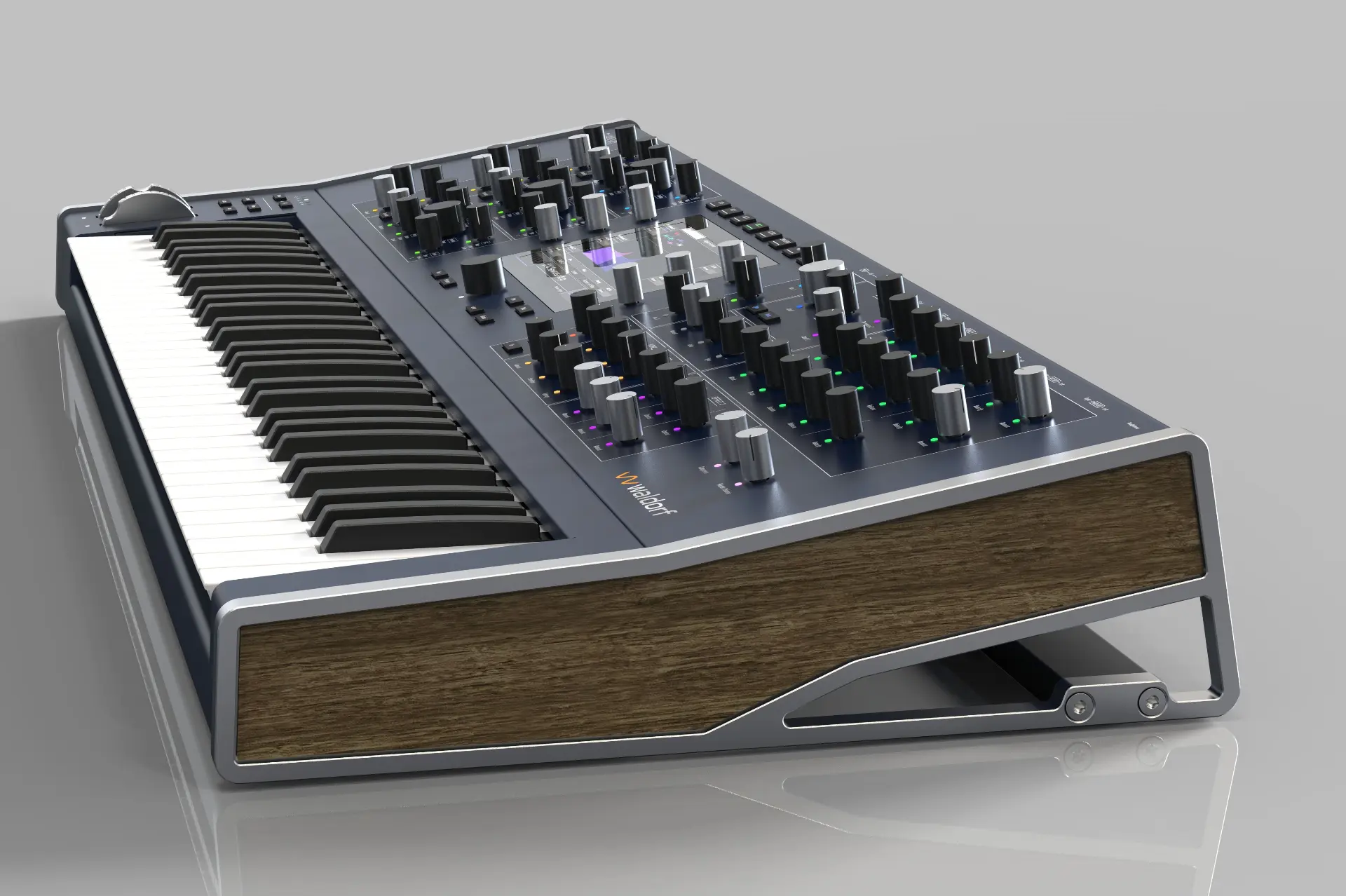
Three things matter. First, the keybed: a Fatar TP/8SK with 61 semi-weighted keys and polyphonic aftertouch, the same bed used on the Iridium Keyboard. Mono aftertouch bends every held note together; poly aftertouch lets you lean into one note in a chord and move only that voice's filter, pitch or envelope. On a synth with a 40-slot mod matrix, that is a genuinely different instrument, not a spec bullet.
Second, memory. Internal sample flash jumps to 59 GB, with roughly 2 GB of factory sample content pre-loaded and 3.4 GB set aside for presets and wavetables. You can load real multi-sample libraries into the Particle oscillators instead of rationing them.
Third, the voice math. Eight voices run through the true analog low-pass filters; switch voices to the digital multi-mode filters and you get up to 16, in any combination you like. That hybrid split is the headline number and it is honest — you are not getting 16 analog voices, you are getting eight plus eight, and you choose the mix per patch.
Three oscillators, five engines each
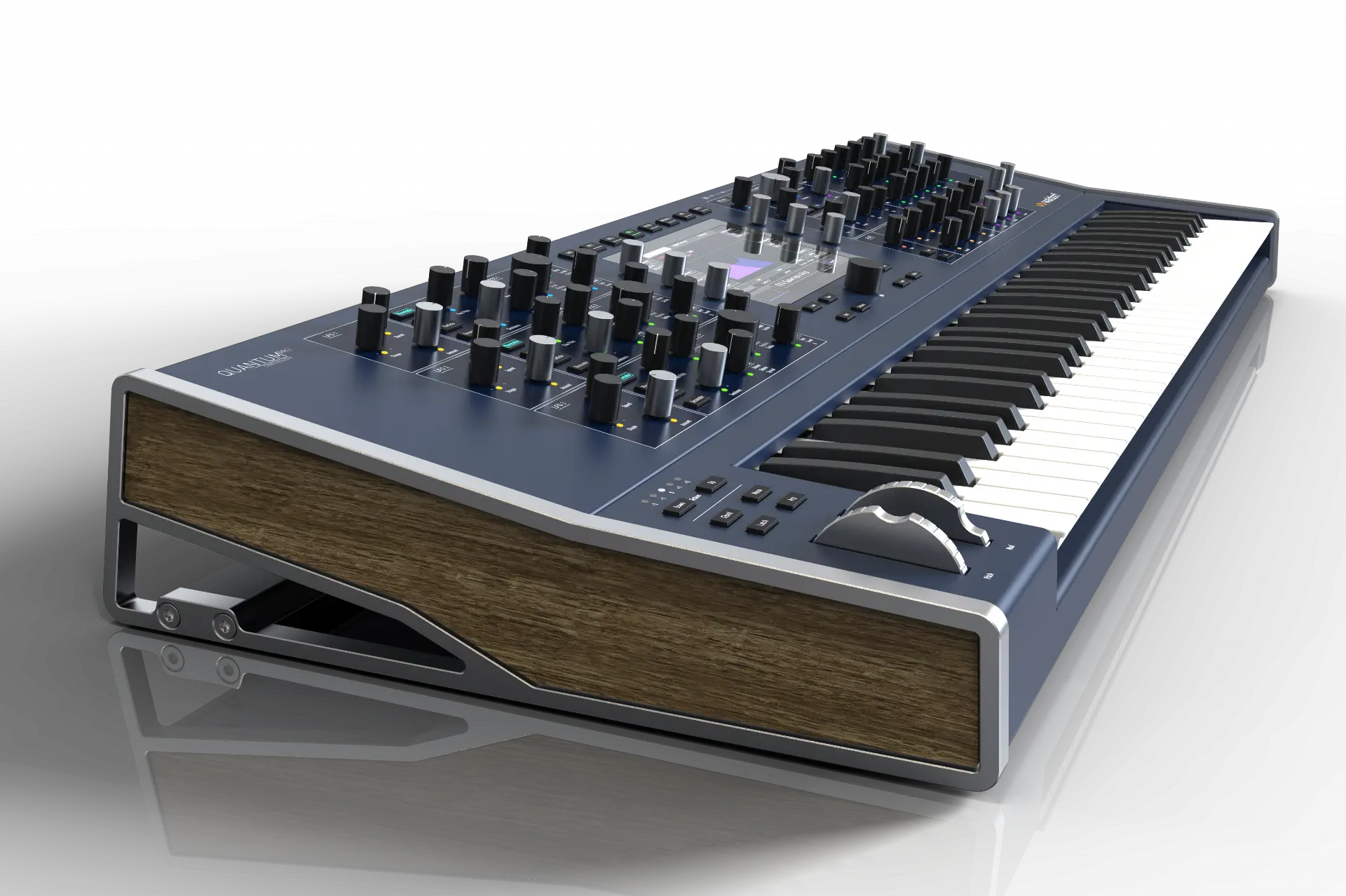
Every one of the three stereo oscillators can be set to any of five synthesis modes:
| Mode | What it does |
|---|---|
| Wavetable | Classic Waldorf tables plus Nave-era extras: speech synthesis, wavetable generation from audio |
| Waveform | Up to 8 stacked waves per oscillator, detuned or chordal, with hard sync, warp, PWM and tunable noise |
| Particle | Sampler in traditional or granular mode, multi-samples or live input |
| Resonator | Sample-as-exciter feeding a filter-bank physical model |
| Kernel | Six-operator FM through to audio-rate wavetable cross-modulation |
Three slots, five engines, freely mixed — that is where the Quantum stops sounding like anything else. A Kernel FM operator modulating a granular Particle stream through an analog 24 dB ladder is a patch you cannot build on one box anywhere else at this price.
Filters and the digital former
Each voice carries two analog low-pass filters, switchable between 24 dB and 12 dB slopes, with link modes for serial, parallel and stereo-split behaviour. Or you swap to two digital multi-mode filters and free up voices. Behind them sits the digital former — per-voice comb, high-pass, band-pass and notch models borrowed from Nave, Largo and the PPG, plus bit-crusher and drive. Routing between oscillators, filters and former is user-defined, so you can put the crusher before the ladder and get the exact wrong-in-a-good-way result.
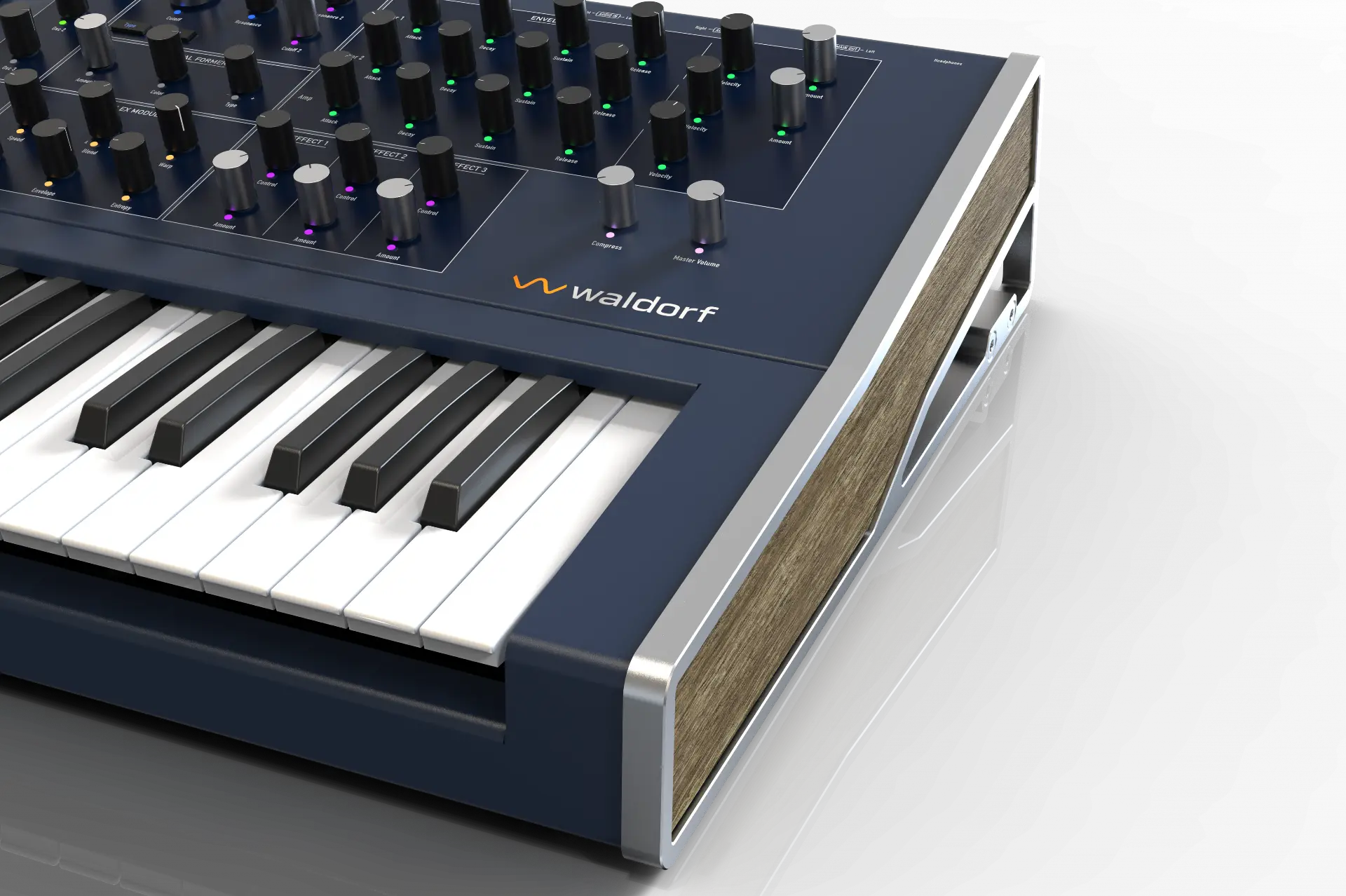
Modulation is deep even by boutique standards: 6 poly/global LFOs, 6 loopable envelopes, the Komplex multistage modulator, and a 40-slot matrix with quick-assign from the panel. Every knob is lit by a multicolour LED so modulation destinations announce themselves instead of hiding in menus.
Sequencer, effects, and living with it
The step sequencer records steps, automates parameters and quantises pitch to scale, including microtonal setups imported from Skala .scl files. The arpeggiator has seven algorithms, seven sort orders, octave range, swing, gate, beat division and rhythmic patterns, with chordal and non-chordal latch.
Each of the two timbres gets a five-slot master effects rack — phaser, flanger, chorus, reverb, drive, EQ — and the main output has its own compressor. The synth is dual-timbral, split or layered, with separate stereo outs per timbre, so you can run pad and lead to different channels at a gig.
Patch capacity runs to around 10,000, organised by bank, author, attribute and number, with favourites lists that work as set lists. Presets, samples and wavetables move in and out over SD card or USB drive, and there is an on-board audio file editor so you are not tethered to a laptop.
The bundle, honestly
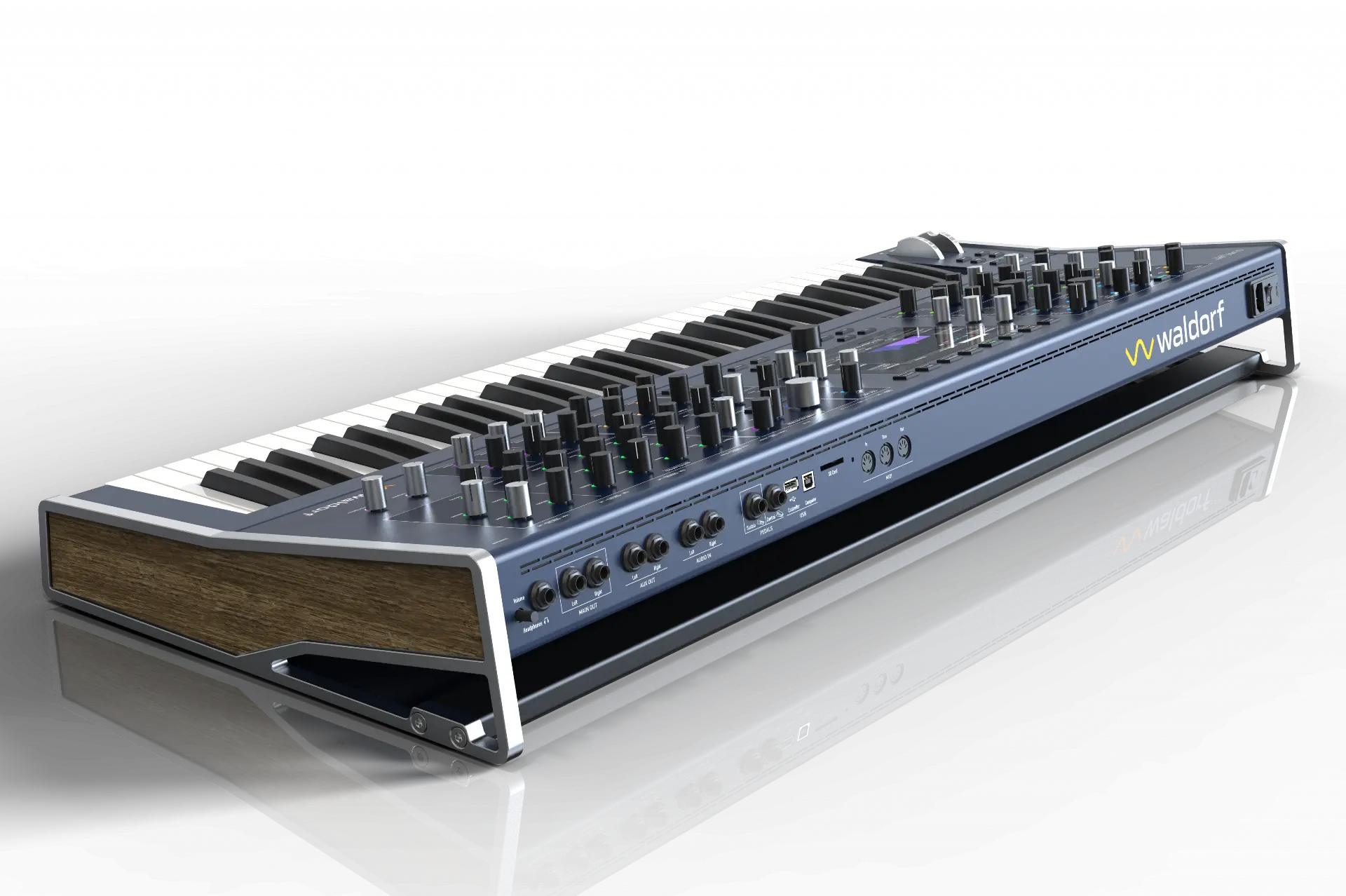
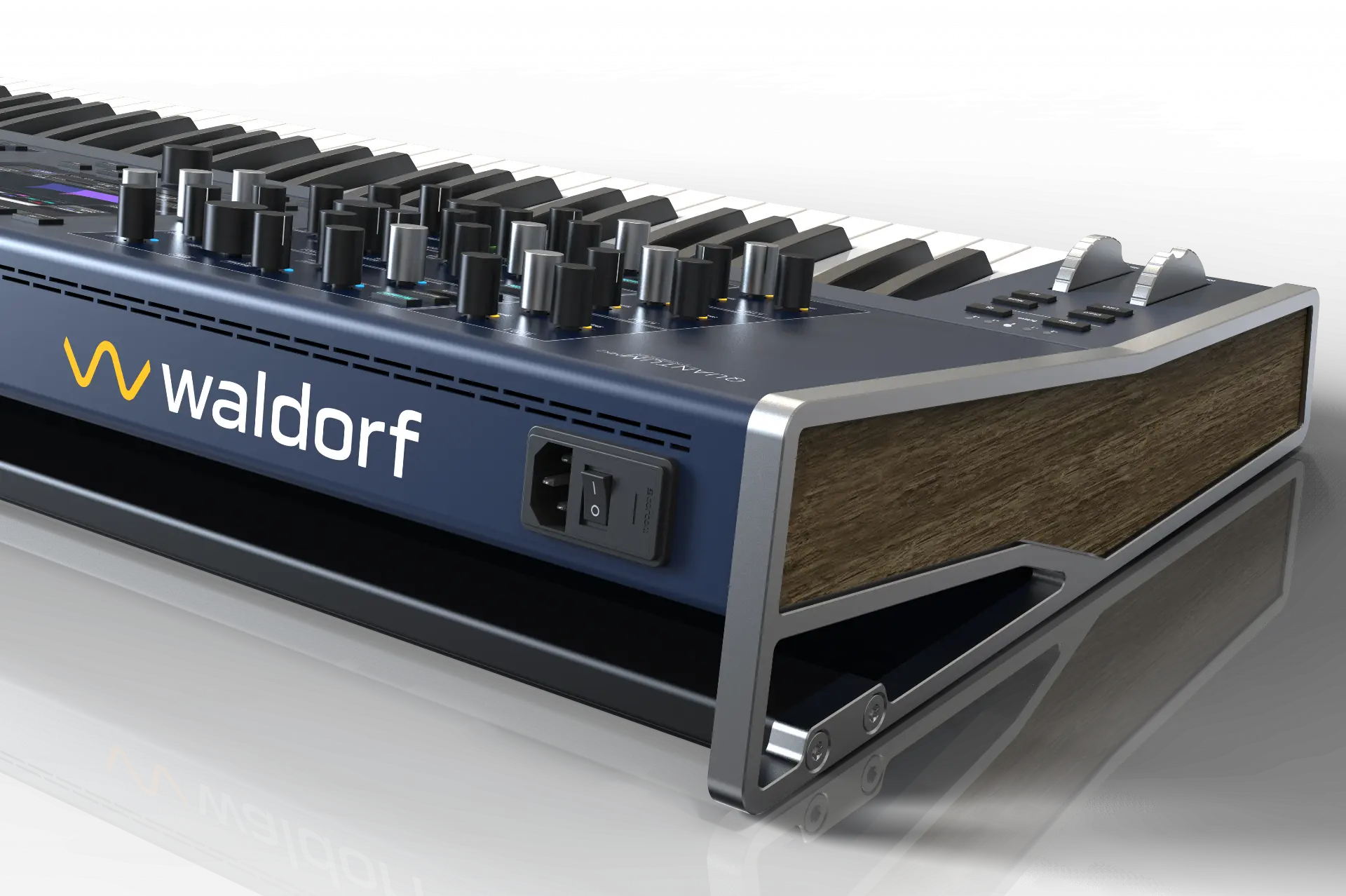
At 1006 × 401 × 131 mm and 17.8 kg, the Quantum MK2 will punish a cheap X-stand. The APEX AX-48 Pro Plus in this bundle (opens in a new tab) is a column stand rated for real weight and it packs down for transport, which is the correct pairing rather than an upsell. The two 10-foot MIDI cables cover the DIN In/Thru/Out on the back — useful, since poly aftertouch can be sent and received over MIDI, so the Quantum can drive or be driven as an expressive controller.
Who should buy one
Sound designers, film and game composers, and anyone whose records live or die on texture. If your workflow is "load a Rhodes, play the part," this is an expensive way to do it. If you spend evenings pushing a wavetable through a resonator to find one sound nobody else has, the Quantum MK2 is the shortest path to it currently on the market, and the MK2's poly aftertouch is the feature that turns those patches into performances.
Ready to pull the trigger? Check the current bundle price on Amazon (opens in a new tab).
Product photos courtesy of Waldorf Music press materials. This article contains affiliate links; Sampled may earn a commission on purchases at no extra cost to you.