 SAMPLED
Velocity, aftertouch and mod wheel: making a hardware synth sound played
Most synth patches sound programmed because nothing responds to the hands. Four routings fix that.
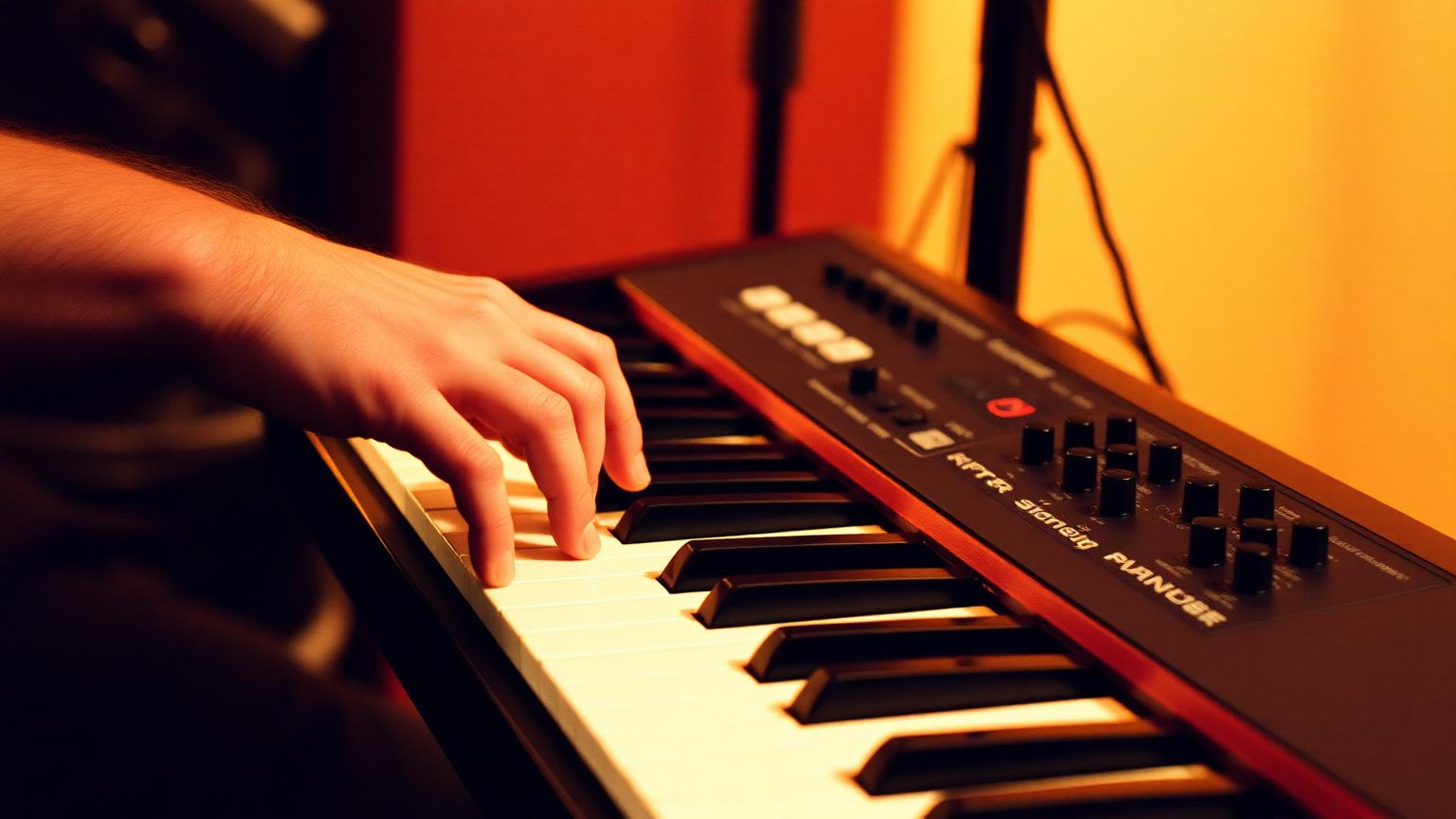
The gap between a demo patch and a record is almost never the oscillators. It is that on the record, the sound changes because someone moved. Acoustic instruments have no static state: press harder, blow harder, bow faster, and the timbre changes as well as the volume. Synths only do that if you wire it.
Here is the short list of connections that make the difference, in the order they are worth making.
1. Velocity to filter cutoff, not just to level
Almost every factory patch routes velocity to amplitude. That gets you louder, not brighter, so hard playing sounds like the same sound turned up. Add velocity to filter cutoff at a modest depth — enough that a soft note is noticeably duller than a hard one, not so much that hard notes go shrill.
A good calibration: play at your softest comfortable dynamic and set the cutoff for the darkest tone you would ever want. Then set velocity depth so your hardest dynamic is as bright as you would ever want. Everything in between now works.
2. Velocity to envelope times
Real instruments do not only get brighter when struck harder; they get faster. Where your synth allows it, route velocity to shorten the filter envelope attack and decay slightly. A five to fifteen percent change is plenty. Nobody will consciously notice it. Everyone will notice when it is missing.
3. Aftertouch to something that is not vibrato
Channel aftertouch — pressure applied after the key is down — is the most underused control on a hardware keyboard. The factory assignment is nearly always vibrato depth, which is fine and which everybody ignores.
More useful destinations:
- Filter cutoff, small positive amount. Lean into a held note and it opens. This is the closest a keyboard gets to a wind player's crescendo.
- Oscillator sync amount or wavetable position. Timbral change under the fingers, no pitch change.
- Sub-oscillator level. Weight on demand for the last note of a phrase.
- FM or ring mod depth, tiny amount. Adds grit only when you press.
Polyphonic aftertouch, where each key reports its own pressure, is better still and increasingly available on mid-priced instruments. If you have it, route it per-voice to cutoff and play a held chord while leaning on one note. That is a sound you cannot get any other way.
4. Mod wheel as a mix control, not an effect control
The mod wheel is usually set to vibrato depth, which is a hangover from 1970s lead playing. Try mapping it to something structural instead: the level of a second oscillator, the amount of noise in a pad, the dry/wet of a delay, or the depth of every other modulation at once (many synths have a global "mod wheel scales everything" option).
Then perform the arrangement with it. A pad that opens gradually over eight bars because your left hand moved is more convincing than the same curve drawn in a DAW, because the timing is slightly imperfect.
Curves matter more than depths
Most synths let you choose a velocity response curve. If your playing consistently lands in the middle of the range, a linear curve wastes both extremes. Choose a curve that puts your natural dynamic in the middle and leaves headroom either side, then stop touching it. Constantly rebalancing curves is a way of avoiding practice.
Same for aftertouch: many keybeds require a lot of force before pressure registers at all. Where a threshold or curve setting exists, lower the threshold until light pressure does something. If you have to push hard, you will never use it in a take.
A quick test
Program any patch you like. Record a phrase. Now play the same phrase into a piano roll at fixed velocity 100 and compare. If the two sound the same, none of your expression routings are doing anything, and the patch will sit flat in a mix no matter how good the oscillators are.
Fix that first, then go back to sound design.