 SAMPLED
How Do Producers Build and Sell Custom Sound Kits Without an Existing Audience?
A zero-overhead plan for sound designers and sample flippers: curate a tight 25-sound kit, sell it for free-to-start fees, and earn your first buyers with teaser packs, chop videos and beat battles.
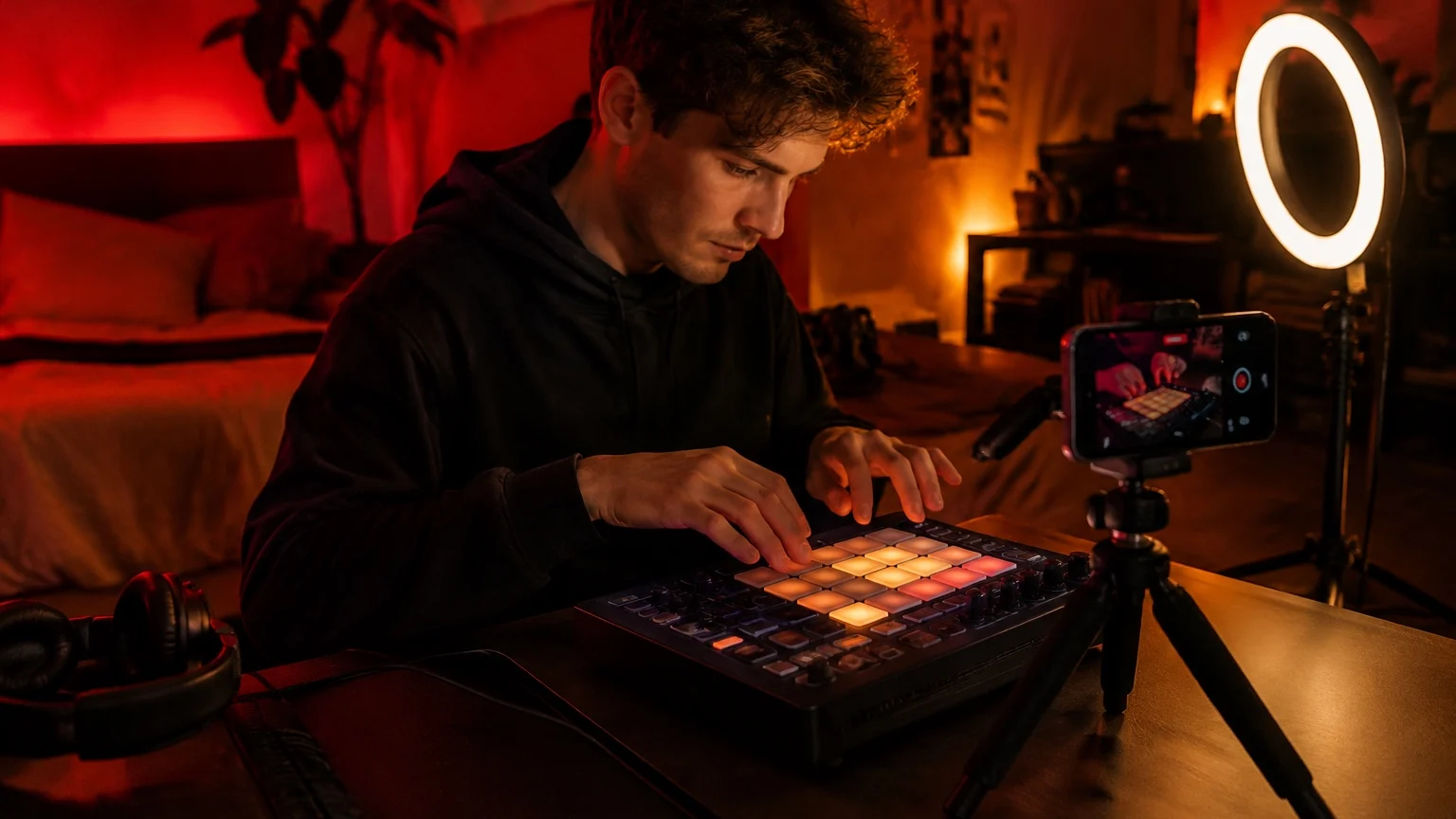
Quick answer: You don't need 50,000 followers to sell a sound kit. You need a small, sharp kit (around 25 sounds), a free storefront like Payhip or Gumroad, a free teaser pack that proves your sound, and short videos that show other producers what your sounds do in a beat. The audience grows from the kit, not the other way around.
Think of your first kit like a food truck, not a supermarket. A supermarket wins by stocking everything. A food truck wins by making five things so well that people tell their friends. Most new kits fail because they try to be the supermarket.
Step 1: Pick one sound people can recognize
Before you record anything, finish this sentence: "This kit is for producers who want ___." Good answers are narrow: "dusty soul chops for boom bap," "detuned 808s for Jersey club," "foley percussion recorded in a hardware store."
A narrow kit is easier to describe, easier to film and easier to remember. "Hip-hop drums" is a shelf at the supermarket. "Drums sampled from a broken church piano and a filing cabinet" is a reason to click.
Step 2: Curate 25 sounds, not 500
Bloated folders are the biggest tell of a first kit. Buyers don't want to dig through 500 files to find six good ones. A tight kit looks like this:
| Folder | Count | What it does for the buyer |
|---|---|---|
| Melodic loops or chops | 8 | The hook that starts a beat |
| One-shot drums | 8 | Kicks, snares, percs with your character |
| 808s / bass | 3 | Tuned and labeled with key |
| Textures and FX | 4 | Risers, vinyl noise, foley |
| Bonus (MIDI or stems of one loop) | 2 | Shows your process, adds value |
Rules worth keeping:
- Label everything:
SK_Chop_Rainroom_92bpm_Fm.wavbeatsloop3_final_v2.wav. Key and BPM in the filename save buyers time. - Export clean: 24-bit WAV, trimmed silence, no clipping, consistent loudness.
- Only use sounds you own. If a loop contains an uncleared record, you're selling someone else's copyright. Original recordings, your own synth patches and properly licensed sources only.
- Include a one-page license that says buyers can use the sounds royalty-free in released music but can't resell or repack the raw files.
Step 3: Sell it with no monthly bill
You can launch with $0 upfront. Here's how the common free options compare (fees checked November 2026; card processing comes on top for Payhip):
| Platform | Free-plan fee | Good for |
|---|---|---|
| Payhip (opens in a new tab) | 5% per sale, plus Stripe/PayPal fees | Keeping more of each sale; handles EU/UK VAT and US sales tax |
| Gumroad (opens in a new tab) | 10% + $0.50 per direct sale (30% via its Discover marketplace) | Fast setup; Gumroad acts as merchant of record for taxes |
| Google Drive link | Free (15 GB storage included) | Free teaser packs only; no checkout or license tracking |
Rule of thumb: put the paid kit on Payhip or Gumroad, and use either the same store at $0 or a Drive link for the free teaser. A storefront also captures buyer emails, which becomes your real audience.
Pricing: for a first 25-sound kit, $10–$20 is a common, low-friction range. Gumroad and Payhip both let you set a "pay what you want" price with a minimum, so you can offer $0+ on the teaser and let fans tip.
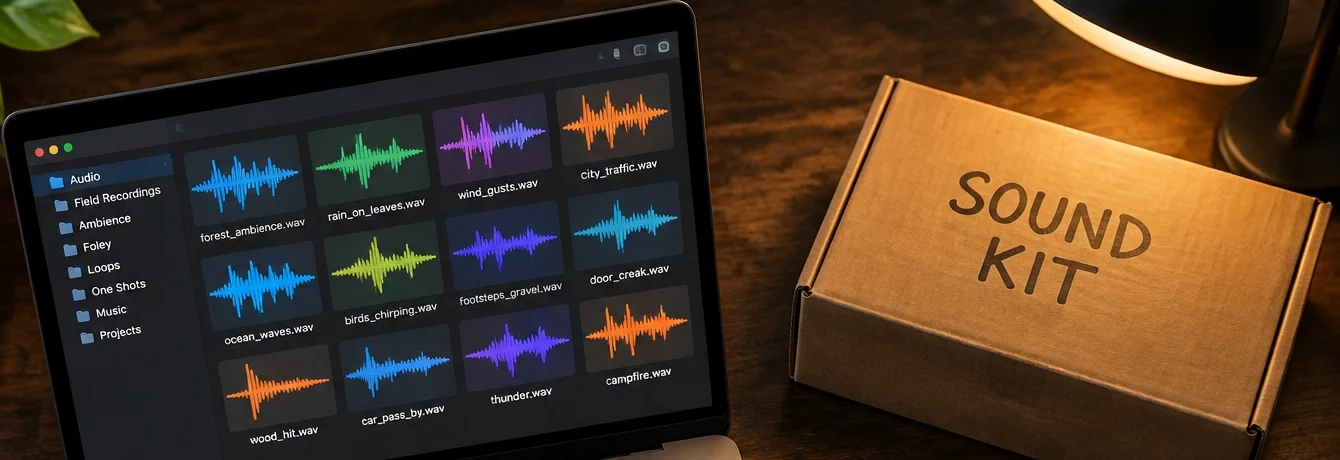 Illustration: Sampled
Step 4: Earn trust with a free teaser kit
Strangers won't pay $15 for sounds they've never heard. Give away 5–6 of your best sounds as a free mini-kit, like a bakery handing out samples at the counter.
- Pull the teaser from the same sessions as the paid kit so the quality matches.
- Ask for an email at download (both Payhip and Gumroad collect it).
- Put a line in the teaser's readme: "Like these? The full 25-sound kit is here," with your store link.
- One week later, email those downloaders a short beat made with the full kit.
Step 5: Post chop videos that show the sound working
Producers buy what they can hear in a finished beat. Short vertical videos on TikTok, Instagram Reels and YouTube Shorts are free and suit this perfectly.
Formats that work without a following:
- "Sample to beat in 60 seconds": raw sound, the chop, the finished loop.
- "Before and after": a stock kick versus your processed kick.
- "Where this sound came from": film the filing cabinet, the broken piano or the rain on a car roof you recorded.
- Flip challenges: "Here's the sample, show me your flip," with the free teaser linked in your bio.
Keep the first second loud and visual, show your hands or the waveform, and post consistently (three short clips a week beats one long video a month). Put the store link in your bio, not in every caption.
Illustration: Sampled
Step 6: Use Discord beat battles and producer communities
Communities are where producers actually trade sounds. Join a few active producer Discords and beat battle servers, contribute for a couple of weeks before promoting anything, then:
- Offer your teaser kit as the sample for a battle. Every entrant downloads and uses your sounds, and every finished entry is a demo of your kit.
- Sponsor a small prize: the winner gets your full kit plus a feature on your page.
- Repost the best flips (with permission and credit). Those videos are your strongest advertising.
Follow each server's self-promotion rules. A community that feels used will remember your name for the wrong reason. If you want to run your own space later, our guide to building a paid producer community shows how.
Step 7: Measure, then make kit number two
After 30 days, look at three numbers:
| Number | What it tells you |
|---|---|
| Teaser downloads | Whether your videos and posts reach people |
| Teaser-to-paid conversion | Whether the free sounds make people want more |
| Which video drove the most clicks | What to film more of |
If 200 people grab the teaser and 10 buy at $15, that's about $150 before fees from a single kit, and 200 emails for the next one. Kit two goes faster because you already have the template, the store and a list. Bundle kits one and two together later for a discount.
Common mistakes
| Mistake | Fix |
|---|---|
| 500 unlabeled files | 25 named, tuned, trimmed sounds |
| Uncleared samples inside loops | Record or license everything you sell |
| No free version | Teaser kit with email capture |
| Posting only the cover art | Show the sound inside a beat |
| Spamming links in Discord | Contribute first; offer sounds for battles |
| No license file | One page stating royalty-free use, no resale |
FAQ
How many sounds should my first kit have? Around 20–30. Enough to be worth paying for, small enough that every sound is strong.
Do I need to register a business first? Not to start in most places, but income from sales is generally taxable. Keep records and check your local rules.
Gumroad or Payhip? Payhip's free plan takes a smaller cut (5% versus 10% + $0.50); Gumroad handles more tax work as merchant of record. Either works for a first kit.
Can I sell loops that sample old records? Not safely. Selling uncleared samples exposes you and your buyers to claims. Sell only original or properly licensed material.
What if nobody buys at first? Keep the teaser free, keep posting flips, and treat the first kit as audience-building. The email list is the long-term asset.