 SAMPLED
What Are the Best Studio Headphones? ATH-M50x vs MDR-7506 vs DT 770 Pro
Three closed-back monitors have survived every trend in studio gear. Here is how the Audio-Technica ATH-M50x, Sony MDR-7506 and Beyerdynamic DT 770 Pro actually differ, and which one belongs on which job.
Studio headphone recommendations churn every year, but the same three closed-backs keep showing up on mic stands, in broadcast racks and in bedroom setups that punch above their price: the Audio-Technica ATH-M50x (opens in a new tab), the Sony MDR-7506 (opens in a new tab) and the beyerdynamic DT 770 PRO (opens in a new tab). All three are wired, passive and closed. None of them need an app. That is exactly why they have outlasted a decade of hype cycles.
The differences between them are not subtle once the job is defined. Tracking, mixing and long editing sessions each reward a different balance of isolation, comfort and tonal honesty.
Quick comparison
| Sony MDR-7506 | Audio-Technica ATH-M50x | beyerdynamic DT 770 PRO (80 Ohm) | |
|---|---|---|---|
| Driver | 40 mm | 45 mm | 45 mm |
| Impedance | 63 Ohm | 38 Ohm | 80 Ohm |
| Frequency response | 10 Hz - 20 kHz | 15 Hz - 28 kHz | 5 Hz - 35 kHz |
| Cable | Coiled, attached | Detachable (3 supplied) | Coiled, attached |
| Character | Bright, forward mids | Scooped, punchy low end | Deep sub, airy treble |
| Best at | Tracking, broadcast, spotting problems | Everyday all-rounder | Long mix and edit sessions |
| Buy | Amazon (opens in a new tab) | Amazon (opens in a new tab) | Amazon (opens in a new tab) |
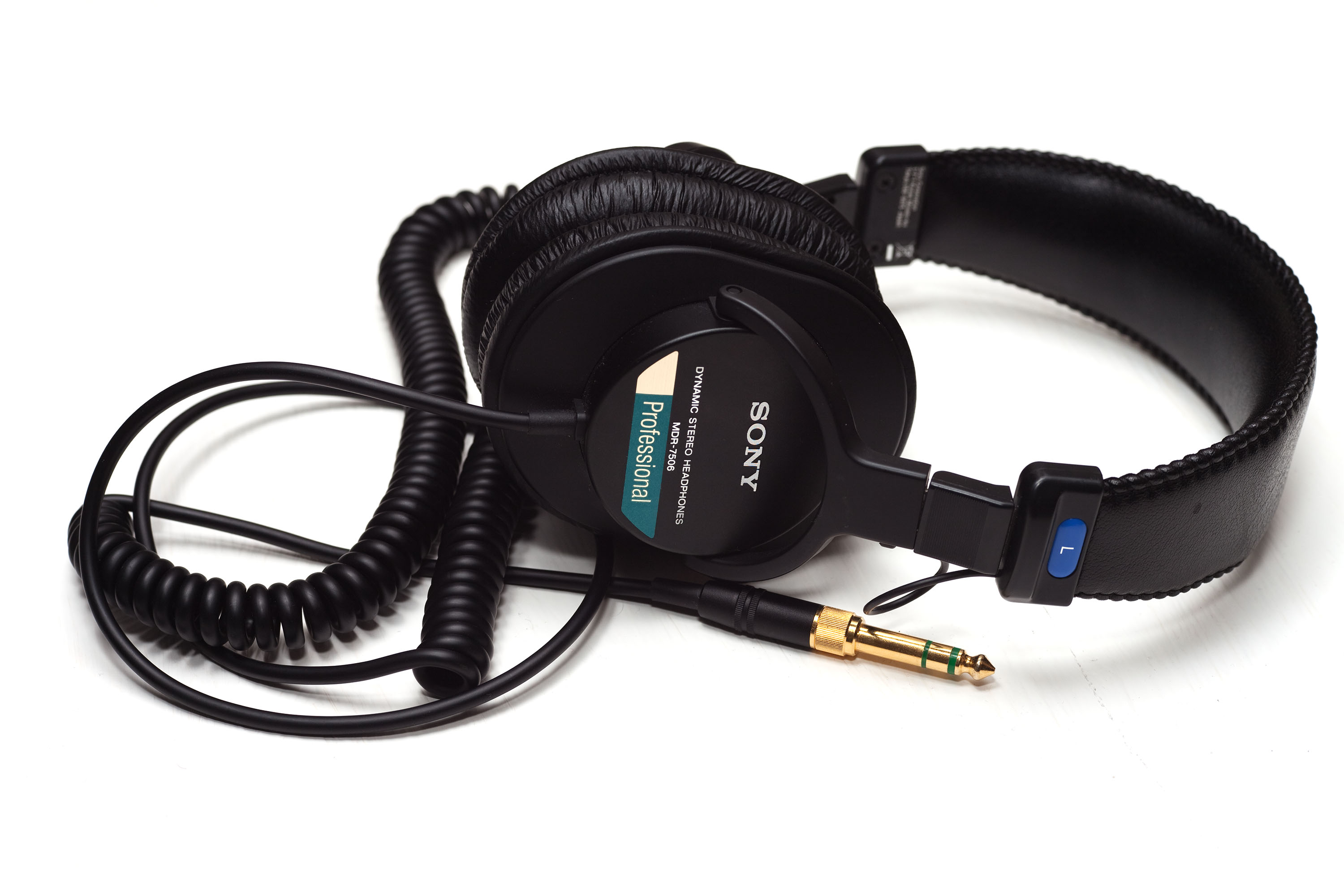
Sony MDR-7506: the tracking standard
Introduced in 1991 out of the consumer MDR-V6 lineage, the 7506 became the default headphone of film, television and broadcast location sound. Its reputation rests on an unflattering upper midrange: sibilance, mouth noise, amp hum and clipped consonants are obvious the first time a take is played back, which is precisely what an engineer needs while a microphone is still open.
The 63-ohm impedance drives cleanly from a phone, a field recorder or a budget interface without a headphone amp. The earcups fold flat, and replacement pads cost less than a dinner, which is why decade-old pairs are still in service. The tradeoff is a bright top end that can make mix decisions feel harsher than they are, and a clamping force that takes a week to relax.
Best for tracking vocals, podcast rigs, location sound and anyone who wants one pair to survive a backpack. Check the current price on Amazon. (opens in a new tab)
Audio-Technica ATH-M50x: the all-rounder
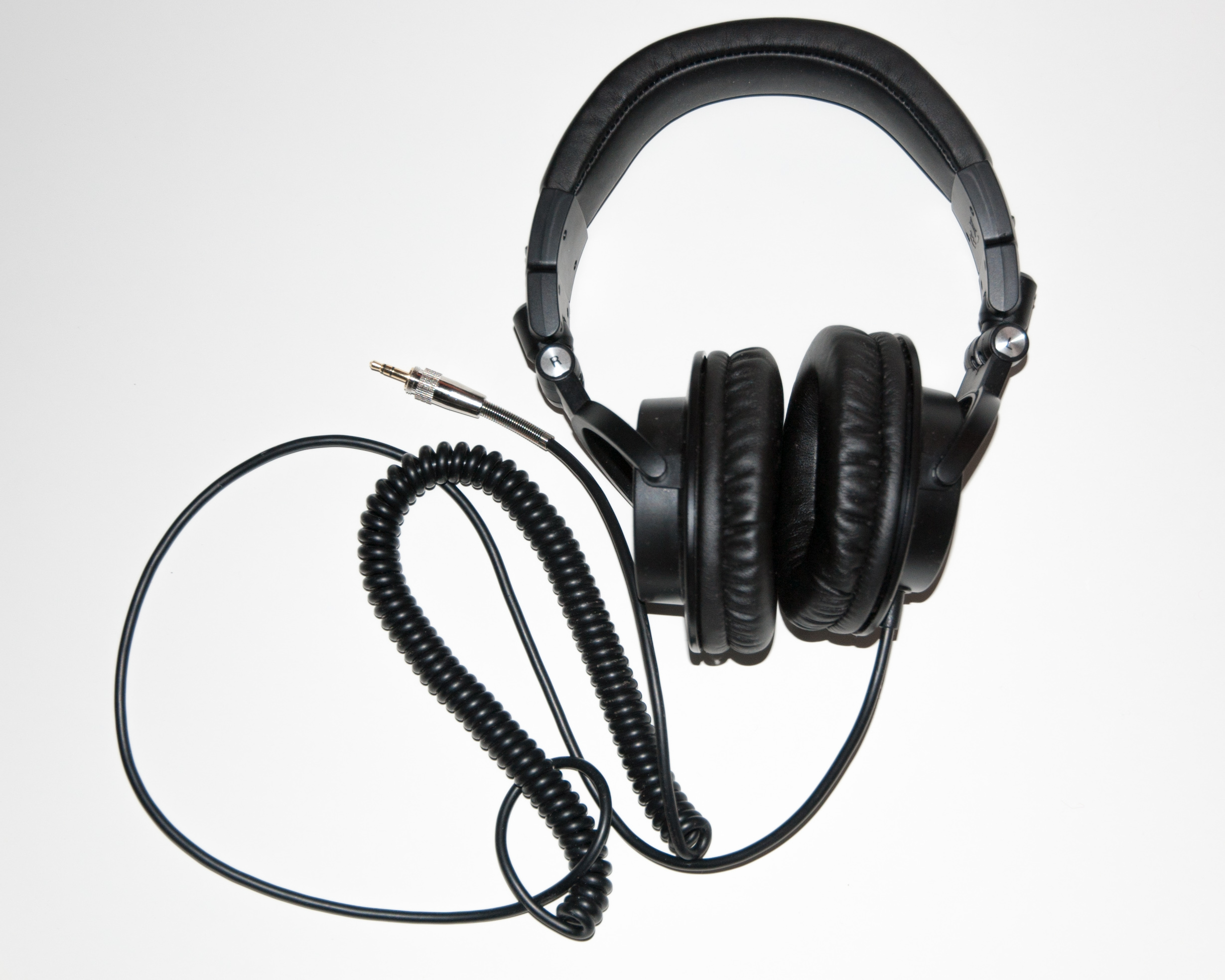
The M50x is the model that pulled studio headphones into everyday use. A 45 mm driver, a slightly scooped tuning and a strong low-mid punch make music enjoyable in a way the 7506 never tries to be, while still holding enough detail for rough mixing and arrangement work.
The practical upgrade over the older M50 is the detachable cable: three are supplied - coiled, short straight and long straight - so a chewed connector no longer retires the headphone. Bundled with a hard case, it also becomes the pair that travels without getting crushed in a bag.
The caveat is that bass presence. It flatters low end, so kick and sub decisions made exclusively on the M50x tend to land light on other systems. Reference against a second source before committing. The ATH-M50x with the Slappa hard case is here. (opens in a new tab)
beyerdynamic DT 770 PRO: the long-session mixer
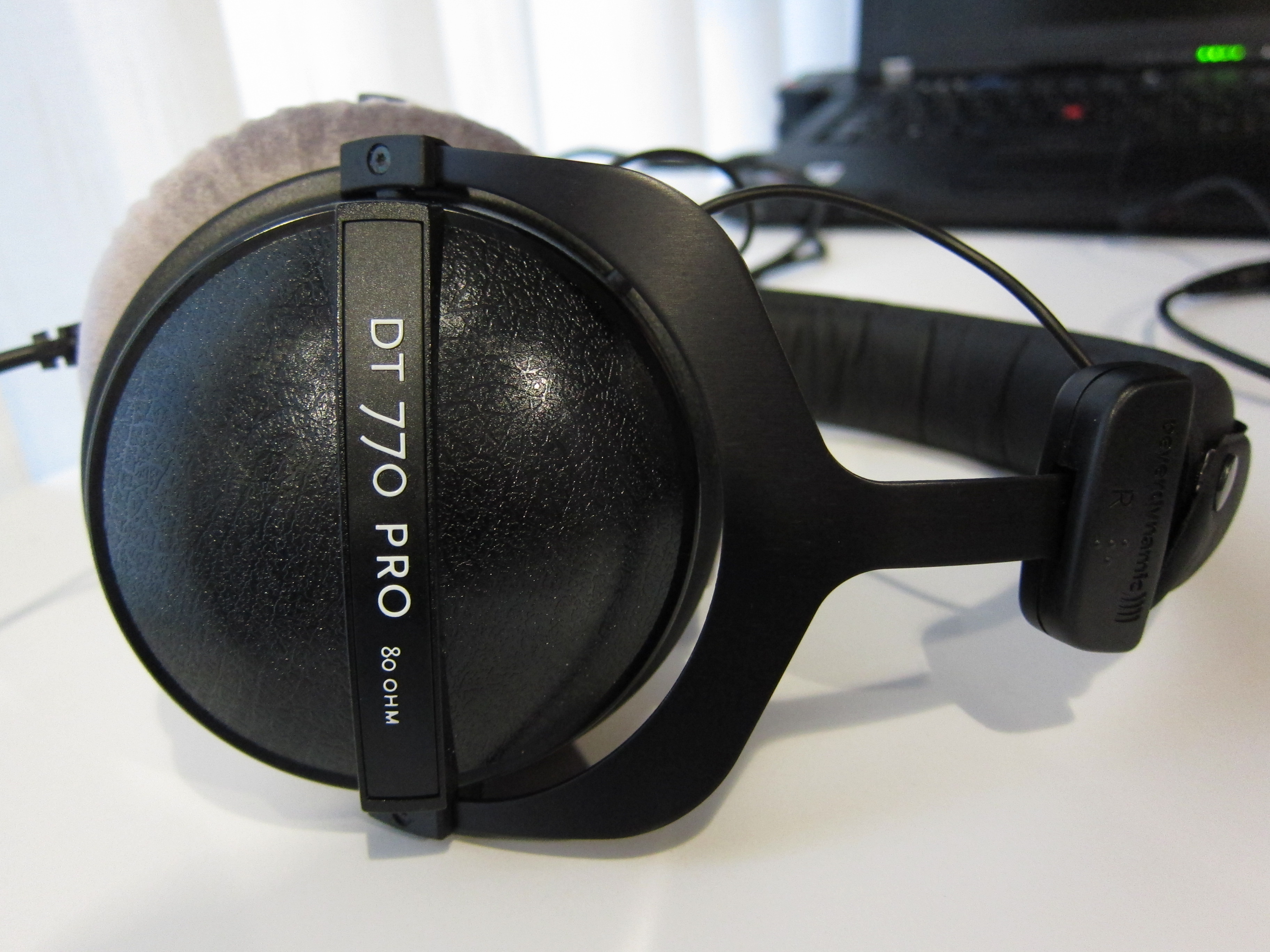
Hand-assembled in Heilbronn, Germany, the DT 770 PRO is the comfort benchmark of the three. Velour pads and a soft padded headband make six-hour edit sessions realistic in a way pleather cups do not, and the pads, headband and cable are all user-replaceable, which is why studios keep buying them.
Tonally it is the widest of the three: real sub extension below where the other two roll off, a relaxed midrange, and a lifted treble that exposes reverb tails, room tone and edit clicks. That combination suits mixing, mastering checks and post-production far better than tracking, where the open airiness can encourage over-bright decisions.
Impedance choice matters. The 80-ohm version is the studio pick - enough load to stay controlled off an interface, low enough that no dedicated amp is required. The 250-ohm variant genuinely wants an amplifier; the 32-ohm is built for mobile use. The 80 Ohm gray version is on Amazon. (opens in a new tab)
Which one to buy
For a first and only pair used mostly for recording, the MDR-7506 (opens in a new tab) is the safest purchase: cheap to maintain, brutally revealing where it counts, and impossible to kill.
For one pair that has to record, edit and also survive the commute, the ATH-M50x (opens in a new tab) is the compromise with the fewest sharp edges, particularly in the hard-case bundle.
For anyone who spends more hours mixing than tracking, the DT 770 PRO 80 Ohm (opens in a new tab) wins on comfort and low-end resolution, and its replaceable parts make it the longest-term investment of the three.
A two-headphone setup covers everything: one bright and honest pair for capture, one comfortable and extended pair for the long work. Whichever combination is chosen, the room and a cheap pair of consumer earbuds should still get the final check before anything is called finished.
Sampled uses Amazon affiliate links. Purchases made through the links above may earn the site a commission at no additional cost to the reader. Product selections are made independently.