 SAMPLED
What Is the Best Condenser Mic for Vocals? AT2020 vs NT1 5th Gen vs LCT 240 Pro
Three condenser mic bundles for three budgets: the AT2020 starter kit with boom arm and pop filter, the dual-output RODE NT1 5th Gen, and the Lewitt LCT 240 Pro vocal pack.
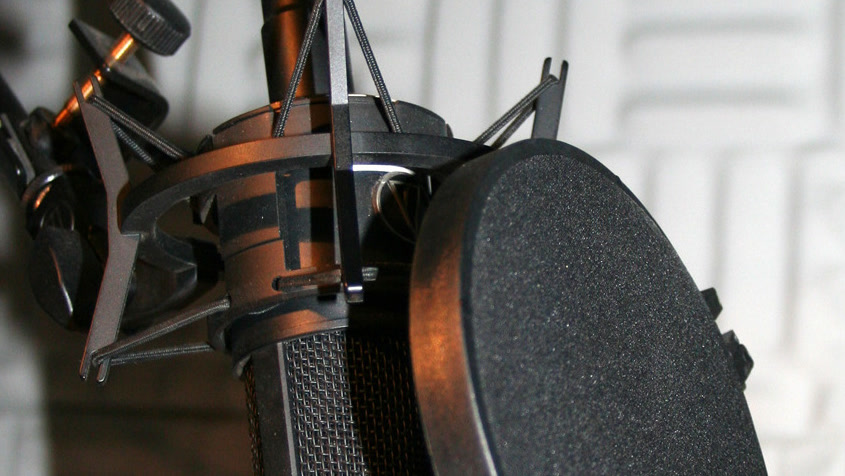
A condenser microphone is the first thing a home studio upgrades after the interface, and the question is never really "which mic sounds best" -- it is "which mic sounds best for this room, this voice, and this budget." Three bundles answer that question at three price points: the Audio-Technica AT2020 bundle (opens in a new tab) with a boom arm and pop filter for under a hundred dollars, the RODE NT1 5th Gen (opens in a new tab) with dual XLR and USB outputs and the lowest self-noise in its class, and the Lewitt LCT 240 Pro vocal pack (opens in a new tab) that sits between them with a gold-sputtered capsule and a matching shock mount.
All three are cardioid large-diaphragm condensers -- the pattern that rejects off-axis room noise while capturing the detail in a voice -- but they differ in capsule size, self-noise, maximum SPL, and what comes in the box. The comparison below covers the specs that actually change a recording, then breaks down each mic on its own.
Quick comparison
| AT2020 Bundle | RODE NT1 5th Gen | Lewitt LCT 240 Pro | |
|---|---|---|---|
| Capsule | 15.4 mm low-mass | 1" (25 mm) gold-sputtered | 1" (25 mm) gold-sputtered |
| Polar pattern | Cardioid | Cardioid | Cardioid |
| Frequency range | 20 Hz to 20 kHz | 20 Hz to 20 kHz | 20 Hz to 20 kHz |
| Self-noise | 20 dB(A) | 4 dB(A) | 19 dB(A) |
| Max SPL | 144 dB | 142 dB | 142 dB |
| Output | 3-pin XLR | XLR + USB-C (24-bit/96 kHz) | 3-pin XLR |
| Impedance | 100 ohms | 100 ohms | 100 ohms |
| Weight | 345 g | 325 g | 310 g |
| Included accessories | XLR cable, boom arm, pop filter, cleaning cloth | SM6 shock mount, pop filter, dust cover, XLR cable | Shock mount, pop filter |
| Phantom power required | Yes (48 V) | Yes (48 V, XLR) / USB bus power | Yes (48 V) |
| Best for | First mic, podcasting, streaming | Serious vocal and instrument tracking | Mid-budget vocal and acoustic recording |
| Buy | Amazon (opens in a new tab) | Amazon (opens in a new tab) | Amazon (opens in a new tab) |
Audio-Technica AT2020 bundle: the starter kit that actually works
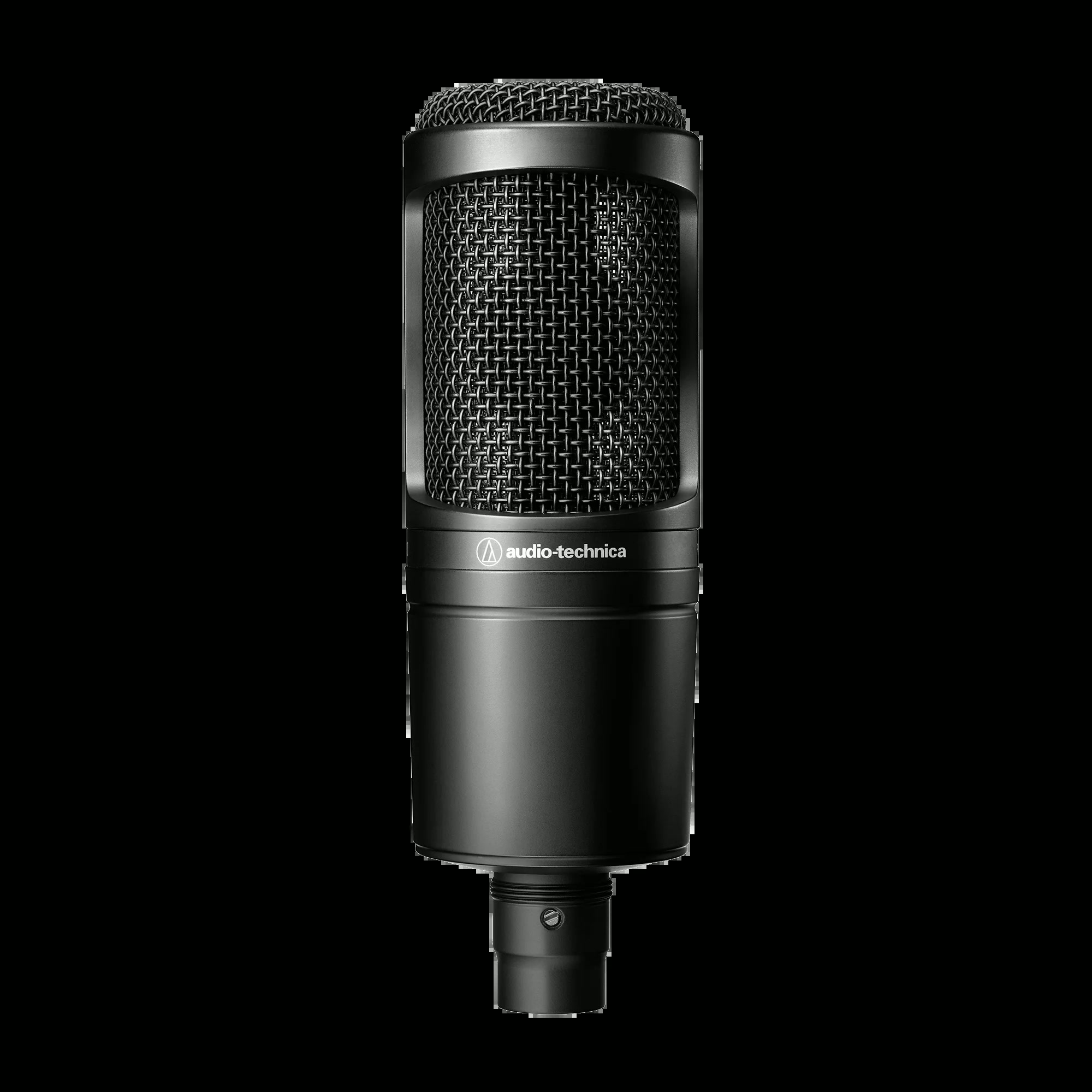
The AT2020 (opens in a new tab) has been the default first condenser since Audio-Technica introduced it in 2004, and the reason is simple: a 15.4 mm low-mass diaphragm with a 2-micron thickness that captures transients without the hyped top end of cheaper competitors. The cardioid pattern rejects rear reflections well enough for an untreated bedroom, and a 144 dB max SPL means it can sit in front of a guitar cab without distorting.
The self-noise is 20 dB(A) -- not the quietest on this list, but it disappears once there is a voice or an instrument in front of the capsule. What makes the bundle worth choosing over the bare mic is the accessories. A boom arm gets the capsule off the desk and out of the vibration path of the keyboard; a pop filter catches plosives before they hit the diaphragm; an XLR cable connects without a separate trip to the store; and the cleaning cloth keeps dust off the grille between sessions. For a content creator building a first signal chain -- interface, mic, arm, filter -- that is everything in one box.
The AT2020 is side-address, so it records from the side with the grille facing the source, not from the end. That catches new users, but it also means the mic sits naturally on the boom arm above the keyboard. For podcasting, streaming, voice-over, and first attempts at vocal tracking, the AT2020 bundle (opens in a new tab) is the cheapest mic on this list that does not sound cheap.
RODE NT1 5th Gen: the quietest mic on the list, with two ways out
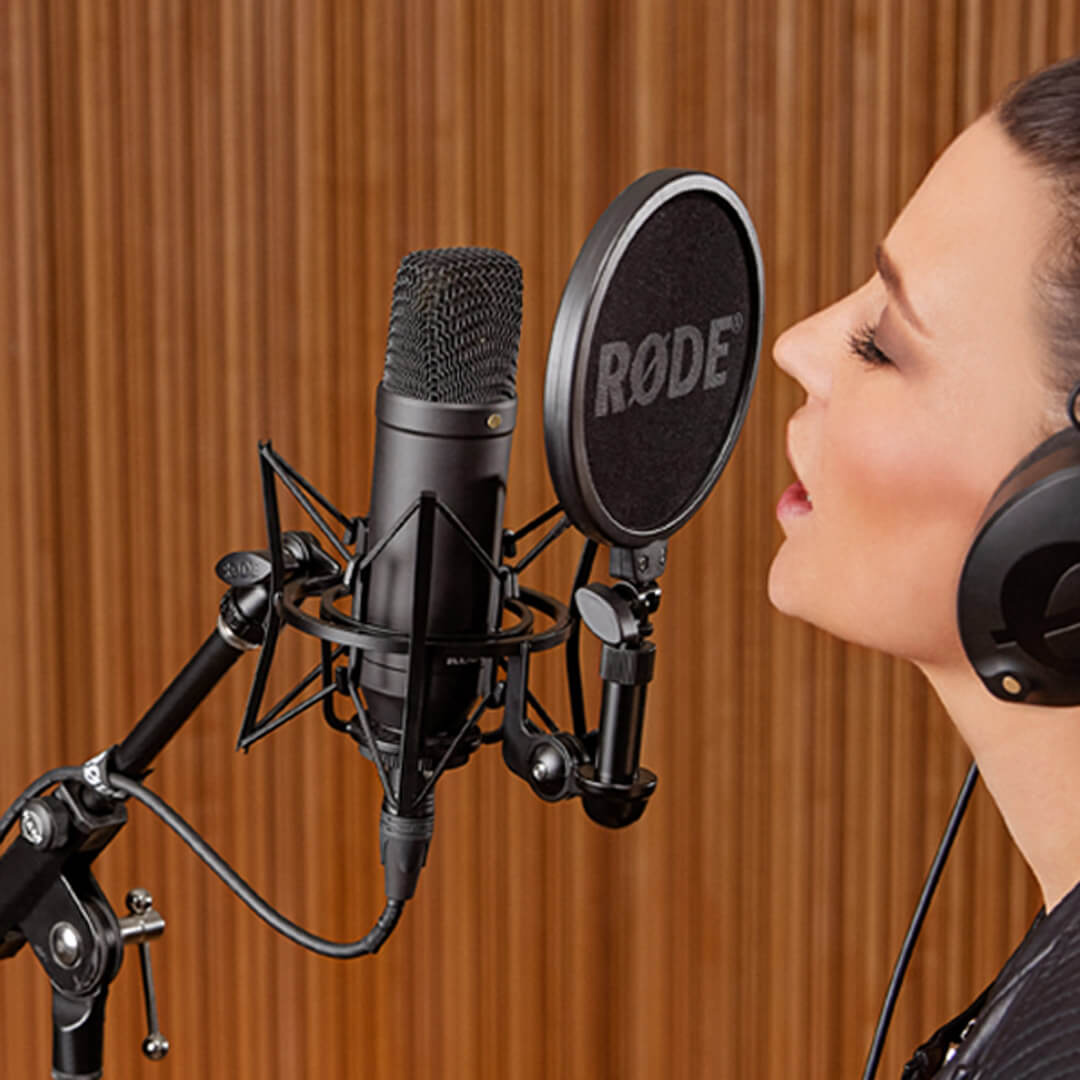
The NT1 5th Gen (opens in a new tab) is the mic on this list that a professional studio would not outgrow. A 1-inch gold-sputtered capsule with a cardioid pattern covers the same 20 Hz to 20 kHz range as the other two, but the self-noise is 4 dB(A) -- among the lowest of any studio condenser at any price. That means the space between phrases is silent, not hissy, and the recording does not need aggressive noise reduction on the vocal channel.
What separates the 5th Gen from the earlier NT1 is the dual output. A 3-pin XLR carries the analog signal to an interface as before, and a USB-C port carries a 24-bit, 96 kHz digital signal straight to a computer -- no interface required. For a producer who tracks vocals at a desk with an interface but also records on a laptop in a hotel room, the same mic serves both signal chains. Internal capsule shock mounting handles desk vibration, and the body is machined aluminium with nickel plating and a ceramic coating.
The bundle includes RODE's SM6 suspension shock mount -- the swing-arm mount with a telescopic pop shield that isolates the capsule from stand-borne rumble -- plus a dust cover and a six-metre XLR cable. The SM6 alone would cost over a hundred dollars separately. The NT1 5th Gen (opens in a new tab) is the most expensive mic on this list, and it is also the only one that comes with everything needed for a broadcast-grade vocal chain in the box.
Lewitt LCT 240 Pro vocal pack: the middle ground
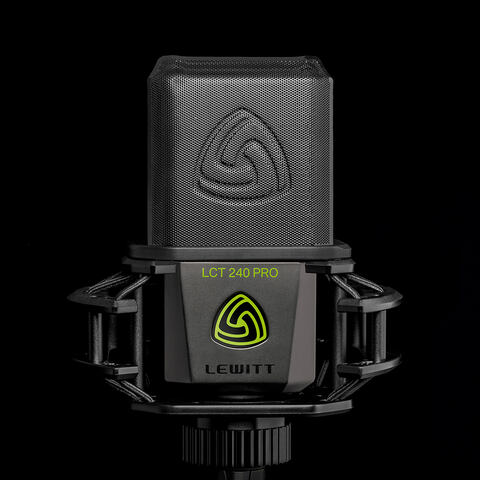
The LCT 240 Pro (opens in a new tab) is Lewitt's entry into serious vocal recording, and the specs place it squarely between the AT2020 and the NT1. A 1-inch gold-sputtered Mylar capsule -- 3 microns thick -- runs the same 20 Hz to 20 kHz range with a cardioid pattern, a 142 dB max SPL, and 19 dB(A) of self-noise. That self-noise is slightly lower than the AT2020's, and the larger capsule gives the low-mid warmth that a smaller diaphragm cannot quite match.
The vocal pack includes a shock mount and a pop filter, which are the two accessories that change a recording more than any plugin. The shock mount decouples the capsule from desk and stand vibration; the pop filter handles plosives. Sensitivity is rated at 16.7 mV/Pa, which is hot enough that the interface gain does not need to be pushed into its noisier range. The connector is a gold-plated 3-pin XLR, and the mic weighs 310 grams.
Lewitt designed the LCT 240 Pro around vocals and acoustic instruments, and the frequency response reflects that: flat through the low mids with a gentle presence lift in the upper range that brings a vocal forward without sibilance. Sweetwater and Thomann reviewers rate it at 4.8 and 5 stars respectively, and MusicTech noted it could find a role in professional mic collections. At its price point, the LCT 240 Pro vocal pack (opens in a new tab) is the upgrade path for someone who has outgrown the AT2020 but does not need the NT1's USB output or its near-silent floor.
Which mic belongs on which desk
Buy the AT2020 bundle (opens in a new tab) for the first condenser. The boom arm, pop filter, cable, and cloth in one box remove every reason to delay, and the 15.4 mm capsule handles voice-over and streaming well enough that the upgrade itch takes a long time to set in.
Buy the NT1 5th Gen (opens in a new tab) when the recording needs to be clean enough to sit in a released track. The 4 dB(A) self-noise, the SM6 shock mount, and the dual XLR and USB-C outputs make it the only mic on this list that serves a desk interface and a laptop rig without compromise.
Buy the LCT 240 Pro vocal pack (opens in a new tab) for the middle. The 1-inch gold-sputtered capsule adds low-mid warmth the AT2020 cannot, the included shock mount and pop filter do the work the bare mic cannot, and the price sits between the other two without giving up the specs that matter for a vocal chain.
All three need 48 V phantom power through the XLR path -- the NT1's USB output is the exception, running on bus power. Pick the capsule that matches the voice and the room, and let the included accessories handle the rest.
Disclosure: this article contains Amazon affiliate links. Purchases made through them may earn Sampled a commission at no additional cost to the reader. Product photography courtesy of Audio-Technica (opens in a new tab), RODE (opens in a new tab), and Lewitt (opens in a new tab). Cover photo via Wikimedia Commons (opens in a new tab) (CC BY-SA 3.0).