 SAMPLED
The best analog synths under $500 right now
Real voltage-controlled instruments that cost less than a decent audio interface, and what each one gives up.
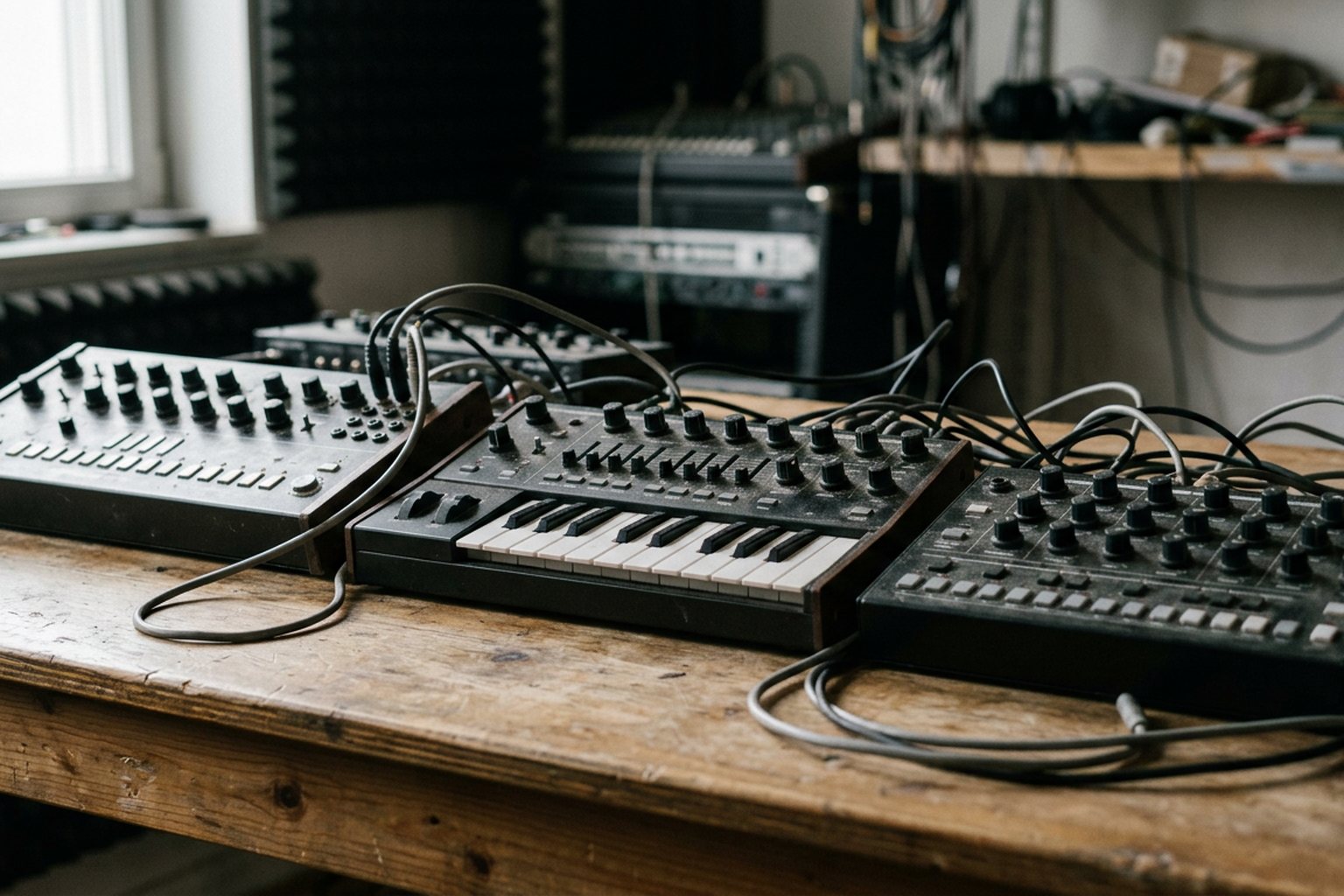
Buying an analog synthesizer on a modest budget used to mean settling for unstable micro-instruments or compromising with digital emulations. Today, real voltage-controlled oscillators, discrete analog filters, and tactile control panels sit comfortably below the five-hundred-dollar mark. The decision is no longer whether you can afford genuine voltage-controlled circuitry, but which specific compromises in voice count, interface layout, or build quality you are willing to accept.
What You Give Up Under $500
To get real analog circuitry down to this price point, manufacturers trim hardware costs in predictable places. Understanding these trade-offs prevents buyer's remorse before you unpack the box.
The primary sacrifice is usually voice count. Polyphonic analog engines require duplicate oscillator, filter, and envelope circuits for every voice. Under $500, most instruments are either monophonic or cap out at four to eight voices using high-density integrated circuit chips rather than fully discrete component layouts.
The second compromise is the physical interface. Expect mini-keys, narrow-profile keybeds without aftertouch, or headless desktop modules that require an external controller. Membrane buttons, menu-diving via small OLED screens, and lightweight plastic chassis are common standard trade-offs. Finally, preset storage is often stripped out on budget semi-modular designs, forcing you to document your patches manually or accept an entirely ephemeral workflow.
The Standout Analog Synths Under $500
Korg Minilogue: The Four-Voice Polyphonic Standard
The original Korg Minilogue remains a benchmark for low-cost polyphonic analog synth design. Built around a clean, two-VCO-per-voice architecture with a switchable two-pole or four-pole low-pass filter, it offers true four-voice polyphony in an aluminum-fronted chassis with a built-in tape-style delay unit.
Its voice modes are its strongest selling point. You can run it as a standard four-voice poly synth, stack all four voices into a heavy monophonic basspatch, use unison voice-depth detuning, or engage a chord mode for instant house stabs. The mini-keys are functional if uninspiring, and cranking the filter resonance thins out the low end significantly—a known trait of this filter design. Nevertheless, as an all-in-one package with knob-per-function layout and patch memory, it sits right at the top of the entry-level polyphonic market.
Dreadbox Typhon: Compact Monophonic Powerhouse
Designed and built in Greece, the Dreadbox Typhon isolates what matters most in a monophonic lead and bass synth: massive, rich analog oscillators and a buttery 24dB low-pass resonant filter. The analog voice card is paired with high-resolution digital effects developed by Sinevibes, running on a 32-bit DSP chip at the end of the signal chain.
The synth engine features two flexible oscillators, pitch modulation, and a dedicated analog amplifier circuit. Its modulation capabilities are unusually deep for a small hardware unit, offering three modulators that can act as LFOs, envelope generators, or step sequencers. The trade-off here is the control scheme. To keep the physical footprint small and the signal path high-end, tweakable parameters are controlled via a small screen and five slider faders. If you require a dedicated knob for every single parameter, the Typhon will frustrate you; if you want raw tone and aggressive onboard processing, it punches far above its price tag.
Behringer Pro-800: Maximum Polyphony on a Budget
For pure voice-per-dollar value, the Behringer Pro-800 delivers eight voices of dual-oscillator analog polyphony in a compact desktop module. The circuit architecture is based on the vintage Sequential Prophet-600, utilizing modern surface-mount recreations of classic CEM3340 oscillator chips and CEM3320 filter chips.
Having eight analog voices allows for complex chord voicings and long release tails without voice stealing—a luxury rarely found in gear under a thousand dollars. It includes storage for hundreds of presets and adds modern features like onboard controls for envelope response speed. However, you give up all keybed functionality, requiring a separate MIDI controller. The front panel interface feels crowded, and adjusting deeper menu parameters on the two-digit LED display requires referencing the manual until you learn the numeric shortcuts.
Arturia MiniBrute 2S: Patchbay Flexibility and Sequencing
Arturia’s MiniBrute 2S takes a completely different path by abandoning polyphony and preset storage in favor of semi-modular patchability and deep sequencing. It features a custom Steiner-Parker multi-mode filter (offering low-pass, high-pass, band-pass, and notch modes) paired with a unique "Brute Factor" feedback circuit that saturates the output from warm warmth to harsh chaos.
Instead of a traditional keybed, the 2S model provides a pad-based interface tied to an advanced three-track step sequencer. Track one handles note pitch, while tracks two and three can be routed to modulate CV destinations like filter cutoff, envelope decay, or oscillator waveshaping via the 48-point patchbay on the right panel. It requires no patch cables to make sound out of the box, but patching allows you to override internal connections and integrate the unit with Eurorack modular gear. The trade-off is absolute: what you see on the front panel is what you hear, and patches cannot be saved digitally.
Feature Comparison Matrix
| Synthesizer | Voice Architecture | Interface | Patch Storage | Primary Trade-off |
|---|---|---|---|---|
| Korg Minilogue | 4-Voice Polyphonic | 37 Mini-Keys | 200 Slots | Low end dips when filter resonance is boosted |
| Dreadbox Typhon | Monophonic | Desktop / Sliders | 128 Slots | Navigation relies on OLED screen and multi-use sliders |
| Behringer Pro-800 | 8-Voice Polyphonic | Desktop Module | 400 Slots | Requires external MIDI keyboard; basic LED display |
| Arturia MiniBrute 2S | Monophonic / Semi-Modular | Performance Pads | None | No digital preset saving; requires manual patch recall |
Key Considerations Before Buying
Selecting an analog synthesizer under $500 requires prioritizing how you intend to create music rather than simply scanning spec sheets.
- Polyphony vs. Monophonic Depth: Polyphonic synths require thinner individual oscillators so four or eight notes do not mud up a mix. Monophonic synths like the Typhon or MiniBrute 2S use thicker, wider-sounding oscillator circuits meant to dominate a specific frequency window in a track.
- Desktop Module vs. Integrated Keyboard: If you already own a good MIDI controller keyboard or work primarily within a DAW sequencer, buying a desktop module like the Pro-800 saves desk space and maximizes budget spent on synthesis circuits rather than plastic keys.
- Preset Storage Needs: If you perform live or write music rapidly across multiple genres, preset memory is essential. If you use synths for sound design, studio sampling, or immediate tactile experimentation, non-preset semi-modular units offer far more patch flexibility per dollar.
Quick answers
Can a synth under $500 handle low-end bass duties for modern production?
Yes. Monophonic synths like the Dreadbox Typhon or Arturia MiniBrute 2S produce dense, sub-heavy bass tones that easily match or surpass more expensive units. Polyphonic budget synths can also handle bass duties when set to dedicated mono or voice-stacking modes.
Do I need external gear to use a desktop synth module?
You will need a way to trigger notes, such as a USB-MIDI keyboard, a hardware sequencer, or a computer running a DAW connected via a USB or 5-pin DIN MIDI interface. Desktop modules do not produce sound on their own without receiving incoming MIDI note data.
Is semi-modular gear too complicated for a beginner?
Semi-modular synths like the MiniBrute 2S use normalized signal paths. This means sound flows automatically from the oscillators through the filter and amplifier without using patch cables. You can learn basic subtractive synthesis immediately, then introduce patch cables gradually as you want to experiment with custom routing.
Why do some budget synths lack an onboard pitch bend and modulation wheel?
To keep manufacturing costs low and physical footprints small, companies often eliminate dedicated wheel hardware on desktop modules and micro-keyboards. These controls can still be assigned and adjusted using an external MIDI controller mapped to standard MIDI continuous controller (CC) messages.
Making the Final Decision
When buying hardware in this price bracket, match the instrument to the specific hole in your current setup. If you lack a central polyphonic synth for chords and pads, an instrument like the Minilogue or Pro-800 covers the most functional ground. If you need a heavy bass engine, immediate hands-on sequence generation, or modulation to patch into other gear, stick to a dedicated monophonic unit. Buy for the core sound engine and physical workflow you will use daily, rather than feature sets you might only touch occasionally in a menu.