 SAMPLED
How Do You Tune Kick and Snare Drums? Note Frequencies and a Practical Guide
Use kick and snare frequency charts, practical tuning steps and MIDI-note calculations to shape drum sounds that fit your music.
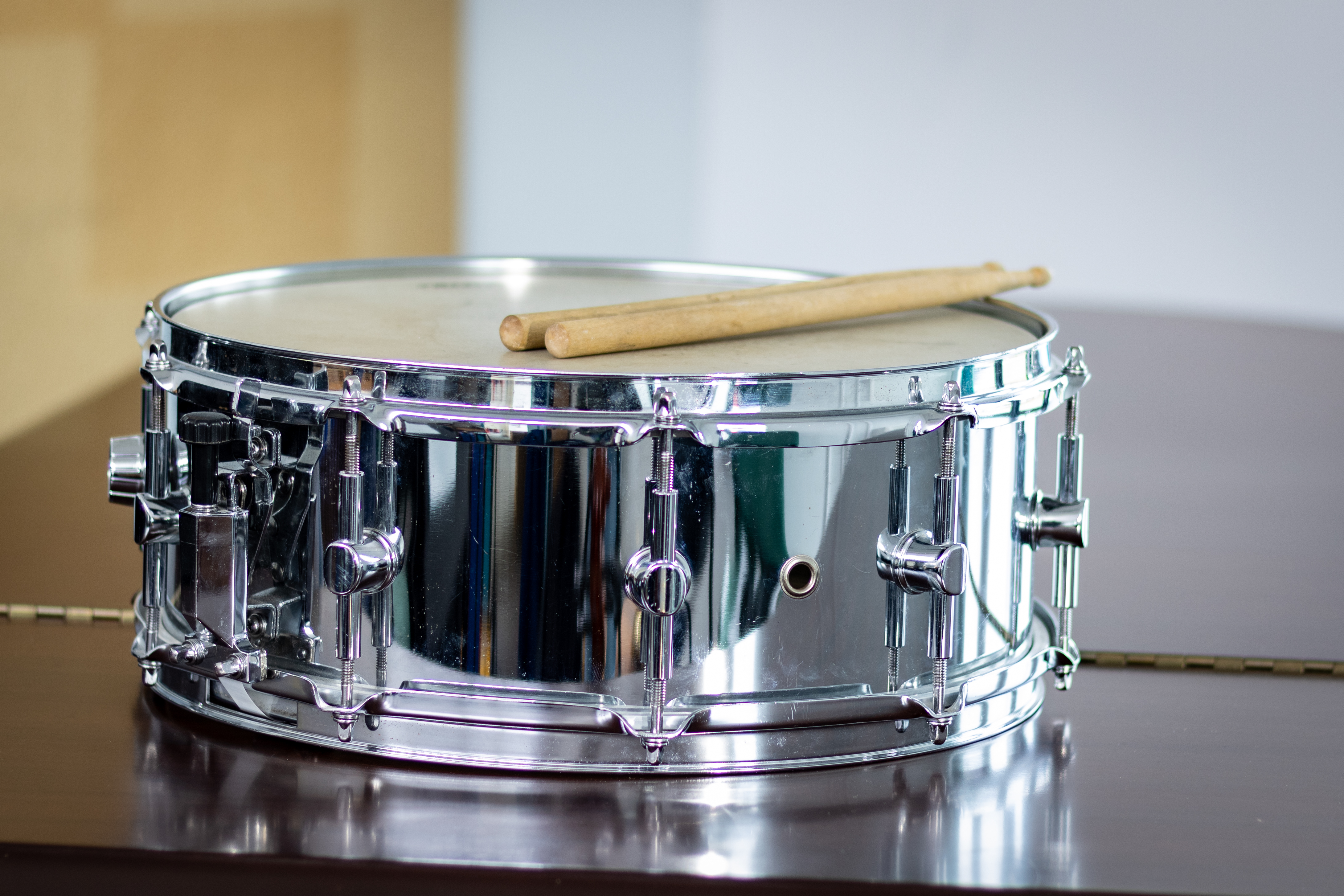
A kick that feels enormous on its own can turn muddy when the bass arrives. A snare can have plenty of crack yet still ring on a note that distracts from the melody. Learning to hear and adjust the pitched part of a drum gives you another way to make a beat feel intentional—without turning every hit into a music-theory exercise.
The short answer: tune the sustained body or tail when it has an identifiable pitch, then judge the result with the bass and the rest of the track. The charts below give you exact note-frequency reference points. They are not rules about where every kick or snare must sit.
What does it mean to tune a kick or snare?
A drum hit changes over time. Its opening attack, resonant body, ringing tail and noise do not necessarily share one stable pitch.
With a synthesized kick, the oscillator may start higher and drop rapidly toward a lower note. With an acoustic drum, several vibration modes contribute to the sound. A snare adds broadband noise from its wires—or a noise layer in a synthesized version—on top of its resonances.
That is why an analyzer's tallest peak is not automatically the drum's musical note. Listen for a repeatable tone in the part that sustains. If the drum is short, noisy or deliberately rough, there may be no useful single note to label.
Think of tuning as a creative adjustment, not a requirement to make every drum match the song's root.
Which frequencies correspond to kick-drum notes?
Here is a low-frequency reference spanning C1 to D2. These labels use scientific pitch notation, where middle C is C4, and 12-tone equal temperament with A4 at 440 Hz. Frequencies are rounded to two decimal places.
| Note | Frequency (Hz) |
|---|---|
| C1 | 32.70 |
| C♯1 / D♭1 | 34.65 |
| D1 | 36.71 |
| D♯1 / E♭1 | 38.89 |
| E1 | 41.20 |
| F1 | 43.65 |
| F♯1 / G♭1 | 46.25 |
| G1 | 49.00 |
| G♯1 / A♭1 | 51.91 |
| A1 | 55.00 |
| A♯1 / B♭1 | 58.27 |
| B1 | 61.74 |
| C2 | 65.41 |
| C♯2 / D♭2 | 69.30 |
| D2 | 73.42 |
Use this chart to identify or target a low kick tail, not to assign genres to particular notes. G1 is not inherently the best house kick, and D2 is not an upper limit for kick fundamentals. Equally, C1 is not an absolute lower limit. The useful pitch depends on the sound, arrangement and playback system.
Lower is not automatically heavier. If pushing the tail down makes it disappear on your speakers or compete with the bass, a higher target or a shorter decay may work better. Harmonics and the attack also affect whether the kick is audible beyond a subwoofer.
How do you tune a kick in your DAW?
1. Listen to the tail, not just the initial click
Loop the kick and inspect it with a spectrum analyzer or tuner. For a long electronic kick, focus on the later, more settled part of the sound. A pitch sweep can make a tuner jump between readings; a spectrogram can help you see the frequency fall over time.
If the sample is too short to identify a stable note, do not stretch it into a different instrument just to give it a name. Choose it for its attack and texture instead.
2. Decide what job the kick should do
Is it a short punch underneath a sustained bass line? Or does its tail act as the bass itself? A short kick may not need strict harmonic alignment. A sustained 808-style part is more exposed as a pitched element, so try it against the actual notes in the song.
3. Move the pitch, then compare at a similar loudness
Use your sampler's coarse pitch control for semitones and its fine-tune control for cents. Moving one octave up doubles the frequency; moving one octave down halves it. Moving a C2 tail down five semitones targets G1: roughly 65.41 Hz becomes 49.00 Hz.
A sampler that changes playback speed may also change the sample's duration. A pitch-preserving or time-preserving mode can behave differently and introduce its own artifacts. Check whether the new pitch still gives you the attack and decay you wanted.
4. Bring the bass back in
Play the kick and bass together. Check whether long tails overlap awkwardly, whether the bass masks the kick, and whether the downbeat loses weight. Matching note names does not guarantee phase alignment: the waveform shapes, timing and changing pitch still matter.
Try shortening the kick, changing its start position, choosing a different sound or using a little ducking before reaching for extreme EQ. Our sidechain-compression guide explains that last option.
5. Keep the version that improves the track
Compare the original and tuned kick at similar perceived loudness. Check the full beat, not only solo playback. A theoretically tidy note is not a better choice if it weakens the groove.
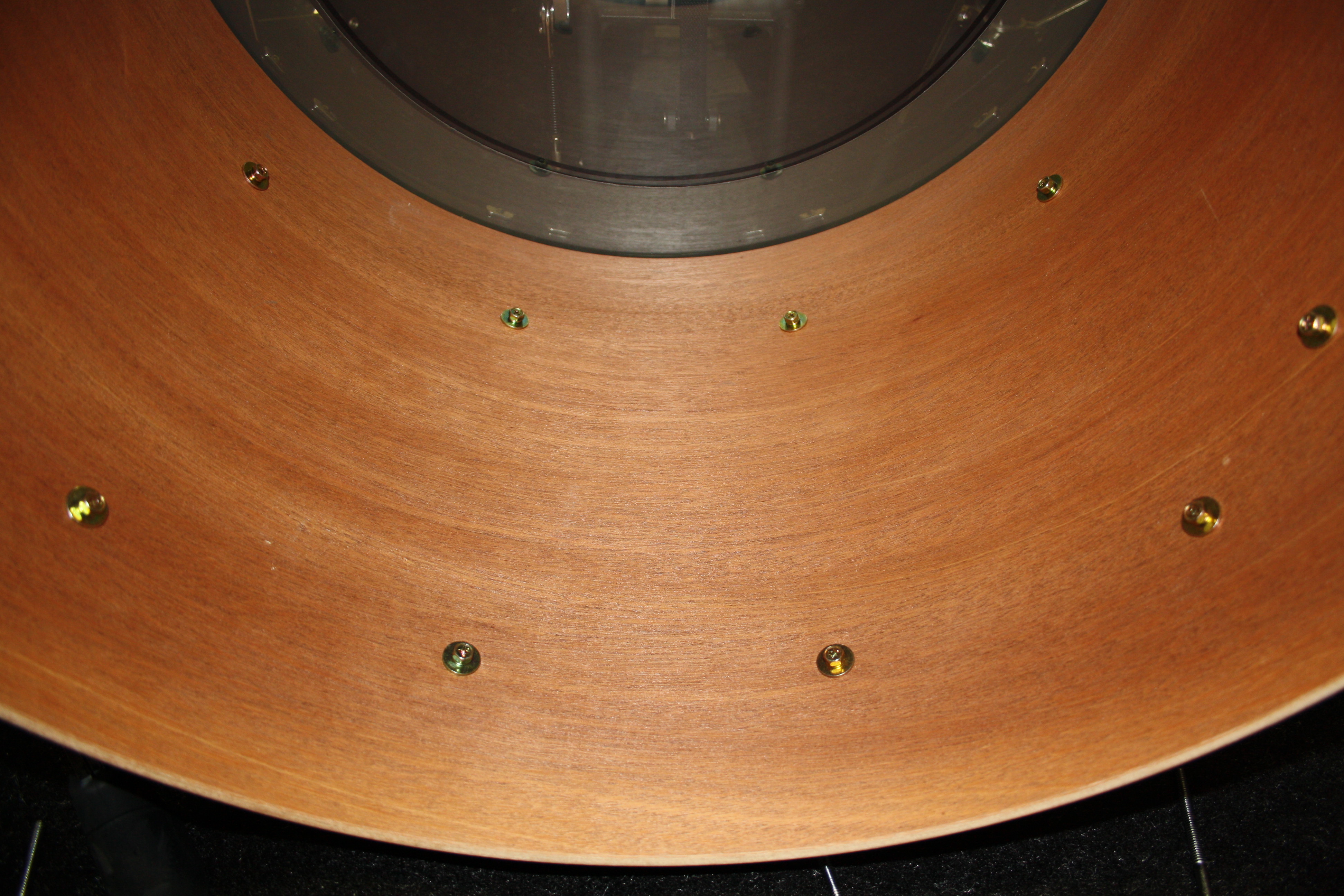
Photo: Dave Kobrehel, via Wikimedia Commons (opens in a new tab), CC BY 2.0 (opens in a new tab). Original photograph, unmodified.
Which frequencies can help you identify a snare's body or ring?
The next chart spans D2 to A3. It is a set of possible resonant-pitch reference points, not a universal snare tuning range. A snare can have multiple strong resonances, and the brightest crack is not simply a higher musical note.
| Note | Frequency (Hz) |
|---|---|
| D2 | 73.42 |
| E2 | 82.41 |
| F2 | 87.31 |
| G2 | 98.00 |
| A2 | 110.00 |
| B2 | 123.47 |
| C3 | 130.81 |
| D3 | 146.83 |
| E3 | 164.81 |
| F3 | 174.61 |
| G3 | 196.00 |
| A3 | 220.00 |
A ring above 220 Hz is not automatically outside a snare's usable range. Nor should you expect every rock snare to land on one of the lower entries. Treat any genre associations as creative suggestions rather than acoustical facts.
For a sampled snare, small pitch shifts can change both the tonal body and the noise texture. For an acoustic snare, head tension, the relationship between the heads, damping and wire adjustment all contribute to the result; a sample's pitch knob is not a direct substitute for those physical changes.
How do you tune a snare without losing its character?
- Find what is bothering you. Is the issue a sustained ring, a body that feels too heavy, or a thin attack? Those are different problems.
- Listen for the tonal component. Use an analyzer to support what you hear. Do not assume every peak belongs to one fundamental.
- Try small pitch changes first. Compare a few nearby settings with the music playing. Avoid forcing a snare across a large interval when a different sample would fit more naturally.
- Separate pitch from decay. A distracting ring might need a shorter envelope or some damping rather than a different note.
- Check layered hits. If you combine a snare body with a clap or noise layer, adjust the pitched layer separately where possible. Listen for timing changes and cancellation.
- Keep the groove and texture. The snare's role in the rhythm matters more than whether a tuner displays the tonic.
A useful exercise is to compare the original snare with a slightly lower version and a slightly higher version over the same eight bars. Choose the one that supports the song—not necessarily the one with the neatest analyzer reading.
Why does MIDI note 36 sometimes appear as C1 instead of C2?
Octave labels vary between software products. In scientific pitch notation, MIDI note 60 is C4 and MIDI note 36 is C2. Some DAWs instead label middle C as C3, so note 36 appears as C1 under that convention.
The label difference does not change the MIDI note number. For a conventionally tuned pitched instrument at A4 = 440 Hz, note 36 corresponds to about 65.4064 Hz regardless of what the interface calls that C.
There is another important distinction: a MIDI note sent to a drum rack can simply trigger a sample. It does not force that sample's kick tail to resonate at the equal-tempered frequency for that note. Check your sampler's root-note mapping and pitch behavior before treating the keyboard label as proof of tuning.
How do you calculate a frequency from a MIDI note number?
For an equal-tempered pitched oscillator using A4 = 440 Hz, the calculation is:
frequencyHz = 440 × 2 ^ ((midiNote - 69) / 12)
A fine-tuning offset can be included like this:
frequencyHz = 440 × 2 ^ ((midiNote - 69) / 12 + cents / 1200)
At zero cents, MIDI note 69 gives 440 Hz and note 36 gives approximately 65.4064 Hz. An octave below, note 24 gives approximately 32.7032 Hz.
If your intended note-36 oscillator reads 64.47 Hz, that is approximately 25 cents flat relative to 65.4064 Hz. The ratio of the measured value to the target is about 0.9857; the multiplier needed to raise the measured value to the target is about 1.0145, not 0.9856.
That mismatch alone does not reveal the cause. Check reference tuning, detune settings, sample-rate handling, numeric division and the part of the sound being measured before applying an arbitrary correction. A kick's intentional pitch envelope can also put a measurement below or above the nominal starting value.
What is a practical kick-and-snare tuning checklist?
- Identify whether the sound actually has a stable pitched tail or ring.
- Confirm the octave-label convention in your DAW.
- Use a note chart as a reference, not a genre prescription.
- Adjust pitch and decay separately where your instrument allows it.
- Compare with the bass and melody playing.
- Listen for timing and phase interaction; matching notes is not enough.
- Check at comparable loudness and on more than one playback system when possible.
- Save the original before committing to a tuned version.
Keep your levels under control while comparing sounds: the gain-staging guide is a useful companion. If you are building a drum collection, see how to make and sell your own sample packs. Before delivering the finished track, use the mix-preparation checklist.
Frequently asked questions
Does every kick need to be tuned to the song's key?
No. A sustained, clearly pitched kick or 808 can benefit from harmonic attention. A short, noisy kick may work without a meaningful note assignment. Judge the combination in the track.
Is 65 Hz a good kick frequency?
Around 65.41 Hz corresponds to C2 in scientific pitch notation. It is a useful reference to try, not a universally ideal kick setting. Decay, attack, bass arrangement and playback all affect the result.
Should a snare always match the root note?
No. Some snares have a prominent tonal ring worth adjusting; others are dominated by noise and several resonances. Matching the root is one option, not an obligation.
Can EQ tune a drum?
EQ can emphasize or reduce existing frequency components, but it does not generally transpose the sound the way a pitch control does. Use it to shape tone or tame a resonance, rather than assuming an EQ boost changes the drum's note.
Why does a tuner keep changing its reading on my kick?
The kick may have a pitch sweep, a noisy attack or too little stable sustain for a reliable reading. Look at the settled tail and listen in context instead of chasing the first displayed note.