 SAMPLED
Music theory basics · updated 2026-08-16
PITCH
How high or low a note sounds, set by the frequency of the vibration behind it. Concert A above middle C is standardised at 440 Hz.
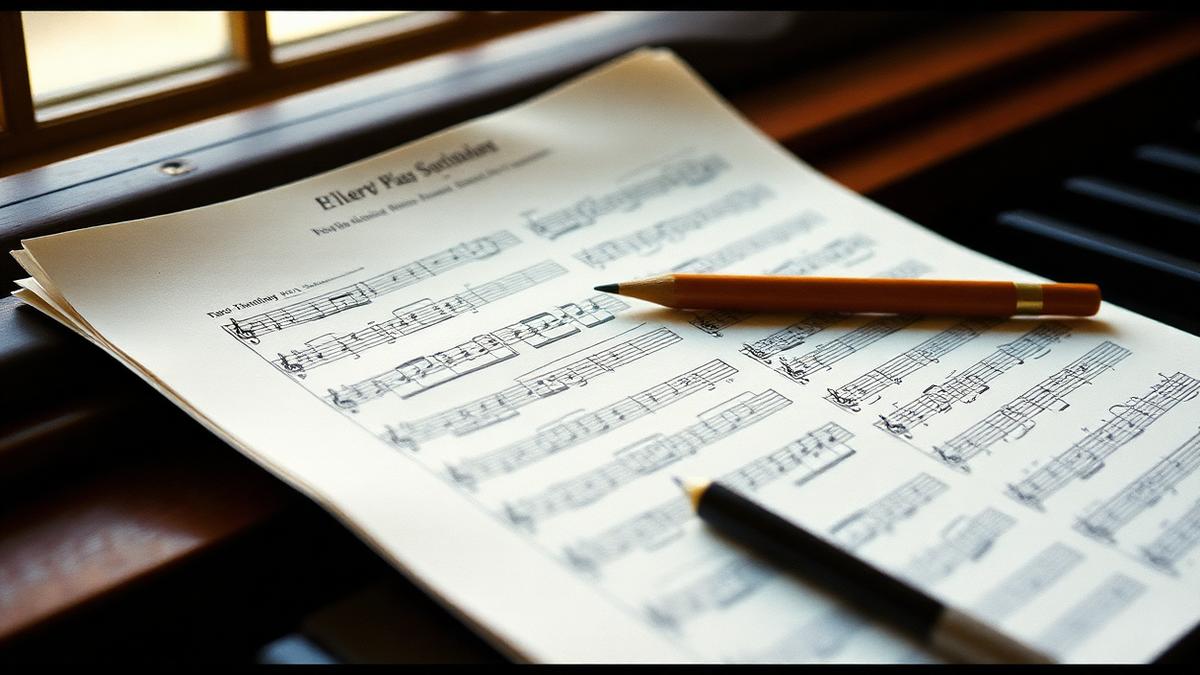
Photo: Music Sheet, Mozart's Alla Turca (opens in a new tab) by Schiller12 (opens in a new tab), via Wikimedia Commons — CC BY-SA 4.0 (opens in a new tab)
Key takeaways
- How high or low a note sounds, set by the frequency of the vibration behind it.
- Concert A above middle C is standardised at 440 Hz.
- Because it is perceptual rather than purely physical, two sounds at the same frequency can read as different pitches depending on harmonic content and loudness.
- If a vocal take was tracked against a synth tuned to 432 Hz, everything in the session will fight it until you retune the synth to 440 Hz and re-record.
- Watch out: treating pitch and frequency as the same thing.
Quick checklist
- Can you define pitch in one sentence without looking?
- Can you point at pitch in a real session, mix or contract?
- Have you tried the practical move above at least once?
- Would you catch the common mistake before it costs you a take?
- Have you opened one of the primary sources below rather than a forum thread?
PITCH IN DEPTH
Pitch is how the ear reads frequency: double the frequency and you hear the same note an octave higher. Because it is perceptual rather than purely physical, two sounds at the same frequency can read as different pitches depending on harmonic content and loudness. Tuning references matter in practice — most modern sessions assume A4 = 440 Hz, but orchestras, older instruments and some genres sit slightly sharp or flat of that.
How it works in practice
If a vocal take was tracked against a synth tuned to 432 Hz, everything in the session will fight it until you retune the synth to 440 Hz and re-record.
The mistake people make
Treating pitch and frequency as the same thing. Frequency is a measurement; pitch is what a listener reports hearing, and the two can diverge on very low or very loud sounds.
WHERE PITCH SITS
Pitch belongs to music theory basics in the Sampled music glossary. The vocabulary you need before anyone can explain a chart, a chord chart, or a session to you.
TERMS THAT DEPEND ON PITCH
- Interval
The distance between two pitches, counted in scale steps (a third, a fifth) or in semitones (4, 7).
- Scale
An ordered set of pitches inside an octave. Major, natural minor and the modes are the sets most pop, rap and dance music is built from.
- Key and key signature
The home pitch a piece gravitates to, plus the sharps or flats written at the start of the staff that spell out its scale.
- Chord and triad
Three or more pitches sounding together. A triad stacks a root, a third and a fifth; add a seventh and you get the jazz and neo-soul colours.
- Cents
A hundredth of a semitone. Tuning software and pitch correction both measure error in cents.
- Octave
The interval between one pitch and another at double or half its frequency. The two notes share a name because the ear hears them as the same pitch class.
TEST YOURSELF
0/3 answered · 0 correct
3 quick questions on pitch. Answers are marked instantly — nothing is sent anywhere.
1. Which statement best describes pitch?
2. What is the mistake people most often make with pitch?
3. In practice, which of these applies to pitch?
Ready for the full thing? Take the 25-question terminology test and get a certificate with your name and score.
SOURCES AND CITATIONS
Free, primary references for pitch — standards bodies, manufacturers, government offices and university course material. Each one lists the line of this entry it backs up.
- ISO 16:1975 (A440 standard) (opens in a new tab)
Standards body · International Organization for Standardization
“How high or low a note sounds, set by the frequency of the vibration behind it.”— the claim this source supports
Why it counts: The published standard is the document the rest of the industry defers to, so the numbers in this definition are not a convention someone invented.
- Open Music Theory — pitch (opens in a new tab)
Open textbook · Open Music Theory
“Concert A above middle C is standardised at 440 Hz.”— the claim this source supports
Why it counts: An openly licensed university textbook, so the definition can be checked against a citable academic source.
RELATED TERMS IN MUSIC THEORY BASICS
- Scale
- Key and key signature
- Chord and triad
- Chord progression
- Tempo and BPM
- Time signature
- Syncopation
- Harmony vs melody
Back to the full music glossary or read our latest articles.