 SAMPLED
Music theory basics · updated 2026-08-16
TIME SIGNATURE
Two stacked numbers telling you how many beats fill a bar and which note value gets the beat. 4/4 dominates popular music; 6/8 and 3/4 swing differently.
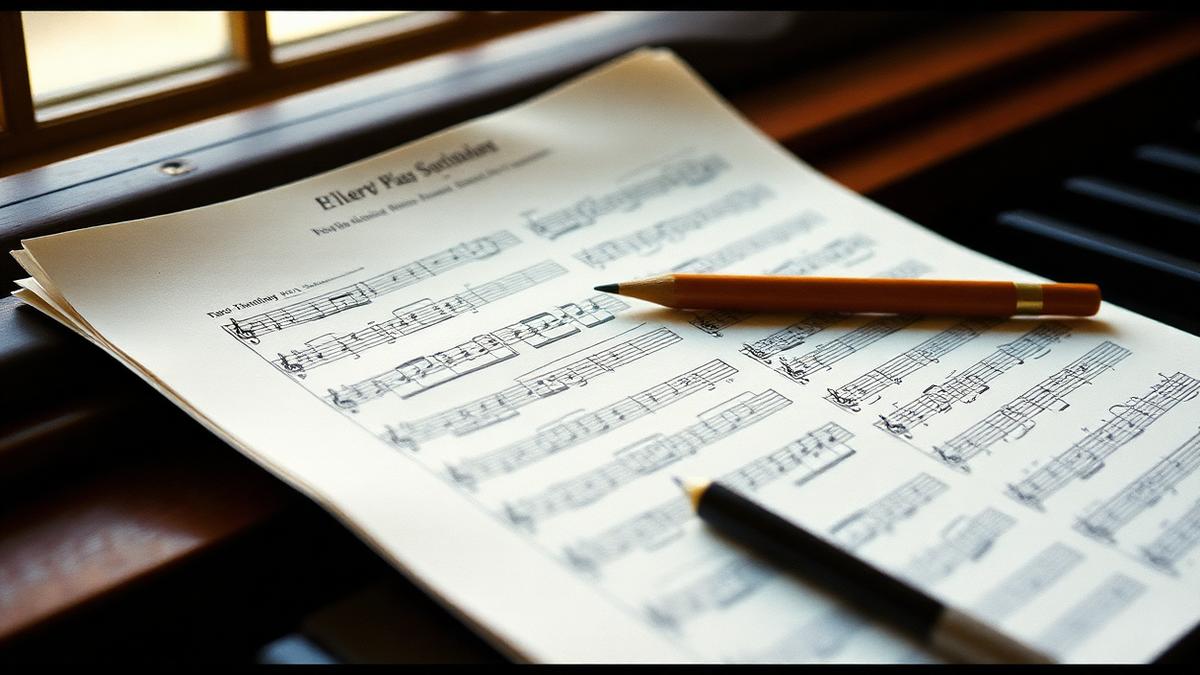
Photo: Music Sheet, Mozart's Alla Turca (opens in a new tab) by Schiller12 (opens in a new tab), via Wikimedia Commons — CC BY-SA 4.0 (opens in a new tab)
Key takeaways
- Two stacked numbers telling you how many beats fill a bar and which note value gets the beat.
- 4/4 dominates popular music; 6/8 and 3/4 swing differently.
- 4/4 dominates popular music, 3/4 and 6/8 carry waltz and ballad feels, and odd meters like 5/4 or 7/8 create the lurch you hear in progressive and much West African and Balkan music.
- 6/8 groups six eighth notes into two groups of three, which is why it swings naturally without any swing setting applied.
- Watch out: confusing 6/8 with 3/4.
Quick checklist
- Can you define time signature in one sentence without looking?
- Can you point at time signature in a real session, mix or contract?
- Have you tried the practical move above at least once?
- Would you catch the common mistake before it costs you a take?
- Have you opened one of the primary sources below rather than a forum thread?
TIME SIGNATURE IN DEPTH
The top number counts beats per bar and the bottom number says which note value gets the beat. 4/4 dominates popular music, 3/4 and 6/8 carry waltz and ballad feels, and odd meters like 5/4 or 7/8 create the lurch you hear in progressive and much West African and Balkan music.
How it works in practice
6/8 groups six eighth notes into two groups of three, which is why it swings naturally without any swing setting applied.
The mistake people make
Confusing 6/8 with 3/4. Both contain six eighth notes, but 6/8 pulses in two and 3/4 pulses in three, and drummers will play them completely differently.
WHERE TIME SIGNATURE SITS
Time signature belongs to music theory basics in the Sampled music glossary. The vocabulary you need before anyone can explain a chart, a chord chart, or a session to you.
TEST YOURSELF
0/3 answered · 0 correct
3 quick questions on time signature. Answers are marked instantly — nothing is sent anywhere.
1. Which statement best describes time signature?
2. What is the mistake people most often make with time signature?
3. In practice, which of these applies to time signature?
Ready for the full thing? Take the 25-question terminology test and get a certificate with your name and score.
SOURCES AND CITATIONS
Free, primary references for time signature — standards bodies, manufacturers, government offices and university course material. Each one lists the line of this entry it backs up.
- musictheory.net — time signatures (opens in a new tab)
Free interactive lessons · musictheory.net
“Two stacked numbers telling you how many beats fill a bar and which note value gets the beat.”— the claim this source supports
Why it counts: Short interactive drills that let you test the concept immediately rather than only read about it.
- Open Music Theory — meter (opens in a new tab)
Open textbook · Open Music Theory
“4/4 dominates popular music; 6/8 and 3/4 swing differently.”— the claim this source supports
Why it counts: An openly licensed university textbook, so the definition can be checked against a citable academic source.
RELATED TERMS IN MUSIC THEORY BASICS
- Transposition
- Cents
- Octave
- Semitone and whole tone
- Equal temperament
- Just intonation
- Overtone series
- Timbre
Back to the full music glossary or read our latest articles.