 SAMPLED
Music theory basics · updated 2026-08-16
TEMPO AND BPM
The speed of the pulse, counted in beats per minute. 90 BPM is a common rap pocket; 128 BPM is house's home address.
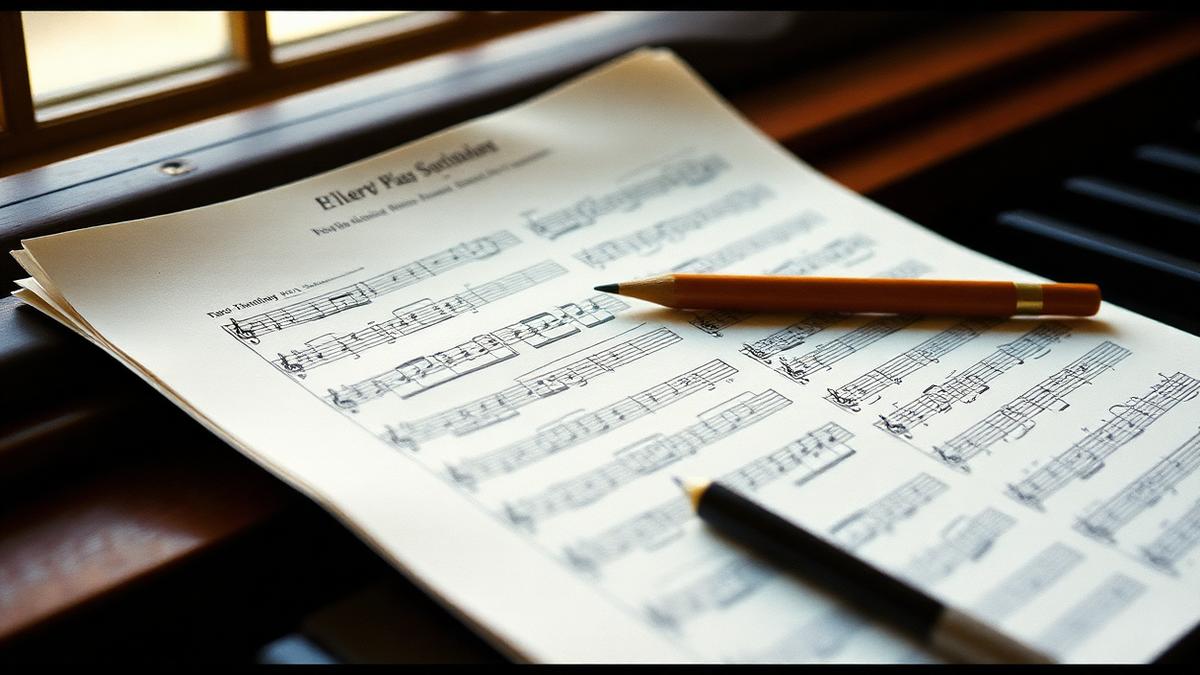
Photo: Music Sheet, Mozart's Alla Turca (opens in a new tab) by Schiller12 (opens in a new tab), via Wikimedia Commons — CC BY-SA 4.0 (opens in a new tab)
Key takeaways
- The speed of the pulse, counted in beats per minute.
- 90 BPM is a common rap pocket; 128 BPM is house's home address.
- Genres cluster around ranges — boom bap in the 85–95 region, house near 124, drum and bass near 174 — and half-time or double-time writing lets one tempo read as two.
- A 140 BPM trap beat with hi-hats in triplets feels faster than a 140 BPM half-time beat with a snare on beat three, despite an identical grid.
- Watch out: setting the project tempo after recording.
Quick checklist
- Can you define tempo and bpm in one sentence without looking?
- Can you point at tempo and bpm in a real session, mix or contract?
- Have you tried the practical move above at least once?
- Would you catch the common mistake before it costs you a take?
- Have you opened one of the primary sources below rather than a forum thread?
TEMPO AND BPM IN DEPTH
BPM counts quarter-note beats per minute, so it only describes speed once you also know the time signature and where the feel sits. Genres cluster around ranges — boom bap in the 85–95 region, house near 124, drum and bass near 174 — and half-time or double-time writing lets one tempo read as two.
How it works in practice
A 140 BPM trap beat with hi-hats in triplets feels faster than a 140 BPM half-time beat with a snare on beat three, despite an identical grid.
The mistake people make
Setting the project tempo after recording. Tempo-dependent effects, quantisation and warped audio all reference the project grid, and moving it afterwards rewrites the feel of every take.
WHERE TEMPO AND BPM SITS
Tempo and BPM belongs to music theory basics in the Sampled music glossary. The vocabulary you need before anyone can explain a chart, a chord chart, or a session to you.
TERMS THAT DEPEND ON TEMPO AND BPM
- Delay
Repeats of the signal, usually timed to the tempo. Slapback, ping-pong and dub delays are the common flavours.
- Arpeggiator
A sequencer that plays a held chord one note at a time in a pattern, locked to tempo. Rate, order and octave range are the usual controls.
- Sync: MIDI clock, MTC, Ableton Link
Different ways to keep devices in time — clock pulses, timecode, or peer-to-peer tempo sharing over a network.
- Loop (sample)
A bar or phrase of audio designed to repeat seamlessly at a stated tempo and key. Loops carry someone else's groove; one-shots let you build your own.
TEST YOURSELF
0/3 answered · 0 correct
3 quick questions on tempo and bpm. Answers are marked instantly — nothing is sent anywhere.
1. Which statement best describes tempo and bpm?
2. What is the mistake people most often make with tempo and bpm?
3. In practice, which of these applies to tempo and bpm?
Ready for the full thing? Take the 25-question terminology test and get a certificate with your name and score.
SOURCES AND CITATIONS
Free, primary references for tempo and bpm — standards bodies, manufacturers, government offices and university course material. Each one lists the line of this entry it backs up.
- musictheory.net — rhythm and tempo (opens in a new tab)
Free interactive lessons · musictheory.net
“The speed of the pulse, counted in beats per minute.”— the claim this source supports
Why it counts: Short interactive drills that let you test the concept immediately rather than only read about it.
- Ableton — Learning Music (beats) (opens in a new tab)
Manufacturer learning resource · Ableton
“90 BPM is a common rap pocket; 128 BPM is house's home address.”— the claim this source supports
Why it counts: A free, hands-on explainer from a DAW maker — useful for hearing the concept rather than only reading it.
RELATED TERMS IN MUSIC THEORY BASICS
- Time signature
- Syncopation
- Harmony vs melody
- Transposition
- Cents
- Octave
- Semitone and whole tone
- Equal temperament
Back to the full music glossary or read our latest articles.