 SAMPLED
MIDI, formats and standards · updated 2026-08-16
C2PA / CONTENT CREDENTIALS
An open provenance standard for signing how a piece of media was made — increasingly relevant to AI disclosure.
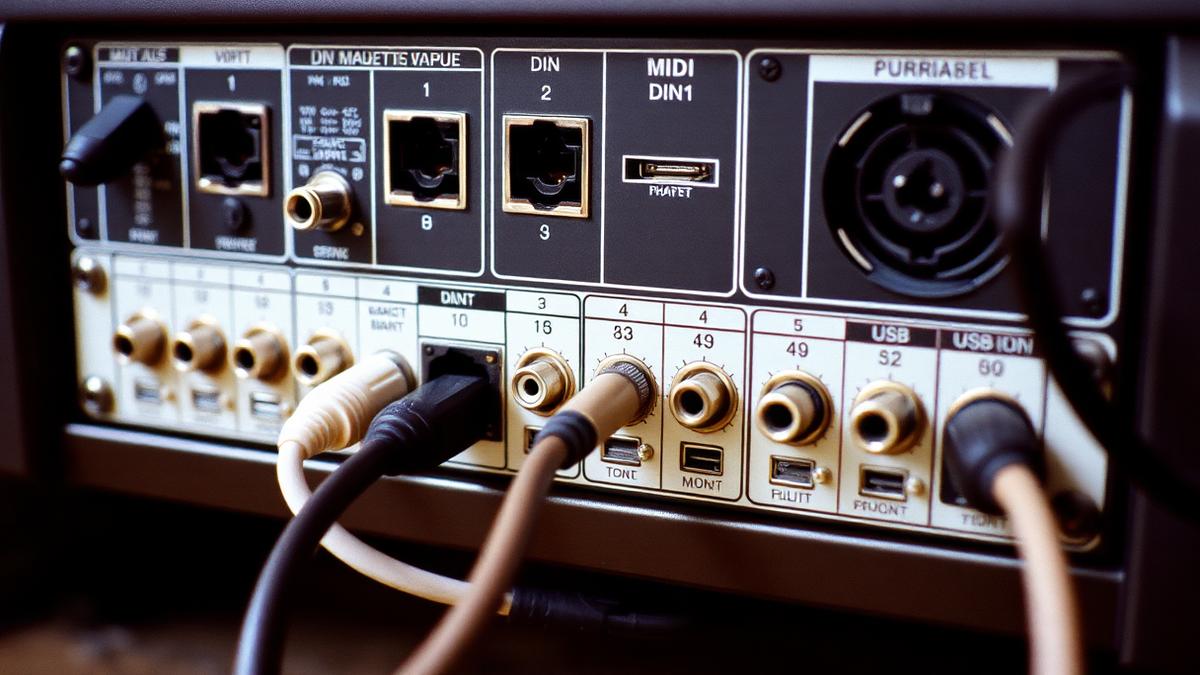
Photo: RME Hammerfall DSP 9652 MIDI connectors (opens in a new tab) by Dan Lynch (opens in a new tab), via Wikimedia Commons — CC BY-SA 2.0 (opens in a new tab)
Key takeaways
- An open provenance standard for signing how a piece of media was made — increasingly relevant to AI disclosure.
- In audio and AI-adjacent workflows it is becoming the mechanism for declaring how a file was produced.
- A signed manifest can record that a track used a specific generative tool at a specific stage.
- Watch out: assuming credentials survive every export.
- Sits under midi, formats and standards in this glossary, with 2 primary sources below.
Quick checklist
- Can you define c2pa / content credentials in one sentence without looking?
- Can you point at c2pa / content credentials in a real session, mix or contract?
- Have you tried the practical move above at least once?
- Would you catch the common mistake before it costs you a take?
- Have you opened one of the primary sources below rather than a forum thread?
C2PA / CONTENT CREDENTIALS IN DEPTH
C2PA is an open standard for cryptographically signed provenance metadata attached to media — who made it, with what tools, and what edits happened. In audio and AI-adjacent workflows it is becoming the mechanism for declaring how a file was produced.
How it works in practice
A signed manifest can record that a track used a specific generative tool at a specific stage.
The mistake people make
Assuming credentials survive every export. Stripping metadata during conversion removes the manifest unless the tool preserves it.
WHERE C2PA / CONTENT CREDENTIALS SITS
C2PA / content credentials belongs to midi, formats and standards in the Sampled music glossary. The plumbing — the specs your gear, files and delivery pipeline agree on.
TEST YOURSELF
0/3 answered · 0 correct
3 quick questions on c2pa / content credentials. Answers are marked instantly — nothing is sent anywhere.
1. Which statement best describes c2pa / content credentials?
2. What is the mistake people most often make with c2pa / content credentials?
3. In practice, which of these applies to c2pa / content credentials?
Ready for the full thing? Take the 25-question terminology test and get a certificate with your name and score.
SOURCES AND CITATIONS
Free, primary references for c2pa / content credentials — standards bodies, manufacturers, government offices and university course material. Each one lists the line of this entry it backs up.
- C2PA specifications (opens in a new tab)
Primary reference · c2pa.org
“An open provenance standard for signing how a piece of media was made — increasingly relevant to AI disclosure.”— the claim this source supports
Why it counts: Published by the organisation responsible for the thing being defined, so it is a first-hand source rather than a summary of one.
- Content Authenticity Initiative (opens in a new tab)
Primary reference · contentauthenticity.org
“C2PA is an open standard for cryptographically signed provenance metadata attached to media — who made it, with what tools, and what edits happened.”— the claim this source supports
Why it counts: Published by the organisation responsible for the thing being defined, so it is a first-hand source rather than a summary of one.
RELATED TERMS IN MIDI, FORMATS AND STANDARDS
- MIDI
- MIDI 2.0
- MPE
- WAV vs FLAC vs MP3/AAC
- Plugin formats (VST/AU/AAX/CLAP)
- ASIO / Core Audio
- Sync: MIDI clock, MTC, Ableton Link
- Metadata (ISRC, UPC, ISWC)
Back to the full music glossary or read our latest articles.