 SAMPLED
MIDI, formats and standards · updated 2026-08-16
MIDI 2.0
The 2020-era update: bidirectional, higher resolution, per-note controllers and profile-based auto-configuration.
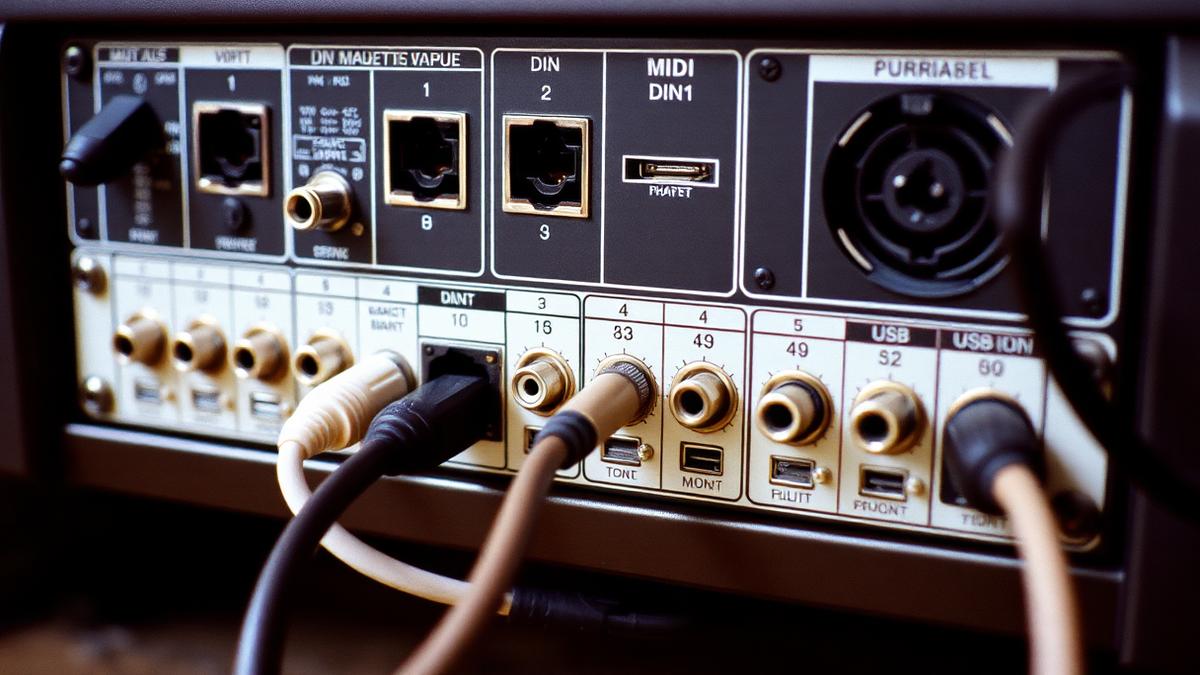
Photo: RME Hammerfall DSP 9652 MIDI connectors (opens in a new tab) by Dan Lynch (opens in a new tab), via Wikimedia Commons — CC BY-SA 2.0 (opens in a new tab)
Key takeaways
- The 2020-era update: bidirectional, higher resolution, per-note controllers and profile-based auto-configuration.
- Devices negotiate capabilities on connection and fall back to MIDI 1.0 when the other end does not support the newer protocol.
- Higher-resolution controller data removes the stepping you hear when automating a filter sweep with 128-step MIDI 1.0 CC values.
- Watch out: assuming a USB cable upgrade enables it.
- Sits under midi, formats and standards in this glossary, with 2 primary sources below.
Quick checklist
- Can you define midi 2.0 in one sentence without looking?
- Can you point at midi 2.0 in a real session, mix or contract?
- Have you tried the practical move above at least once?
- Would you catch the common mistake before it costs you a take?
- Have you opened one of the primary sources below rather than a forum thread?
MIDI 2.0 IN DEPTH
MIDI 2.0 adds bidirectional communication, device profiles, per-note controllers and much higher resolution — 32-bit values instead of 7-bit. Devices negotiate capabilities on connection and fall back to MIDI 1.0 when the other end does not support the newer protocol.
How it works in practice
Higher-resolution controller data removes the stepping you hear when automating a filter sweep with 128-step MIDI 1.0 CC values.
The mistake people make
Assuming a USB cable upgrade enables it. Both endpoints and the host operating system layer have to support MIDI 2.0.
WHERE MIDI 2.0 SITS
MIDI 2.0 belongs to midi, formats and standards in the Sampled music glossary. The plumbing — the specs your gear, files and delivery pipeline agree on.
TEST YOURSELF
0/3 answered · 0 correct
3 quick questions on midi 2.0. Answers are marked instantly — nothing is sent anywhere.
1. Which statement best describes midi 2.0?
2. What is the mistake people most often make with midi 2.0?
3. In practice, which of these applies to midi 2.0?
Ready for the full thing? Take the 25-question terminology test and get a certificate with your name and score.
SOURCES AND CITATIONS
Free, primary references for midi 2.0 — standards bodies, manufacturers, government offices and university course material. Each one lists the line of this entry it backs up.
- MIDI Association — MIDI 2.0 overview (opens in a new tab)
Specification owner · The MIDI Association
“The 2020-era update: bidirectional, higher resolution, per-note controllers and profile-based auto-configuration.”— the claim this source supports
Why it counts: The body that publishes the MIDI specification, so this is the definition hardware and software are built against.
- MIDI Association specs (opens in a new tab)
Specification owner · The MIDI Association
“MIDI 2.0 adds bidirectional communication, device profiles, per-note controllers and much higher resolution — 32-bit values instead of 7-bit.”— the claim this source supports
Why it counts: The body that publishes the MIDI specification, so this is the definition hardware and software are built against.
RELATED TERMS IN MIDI, FORMATS AND STANDARDS
- MPE
- WAV vs FLAC vs MP3/AAC
- Plugin formats (VST/AU/AAX/CLAP)
- ASIO / Core Audio
- Sync: MIDI clock, MTC, Ableton Link
- Metadata (ISRC, UPC, ISWC)
- DDEX
- C2PA / content credentials
Back to the full music glossary or read our latest articles.