 SAMPLED
MIDI, formats and standards · updated 2026-08-16
SAMPLE-ACCURATE AUTOMATION
Parameter changes calculated per audio sample rather than per processing block, so sweeps stay smooth and click-free.
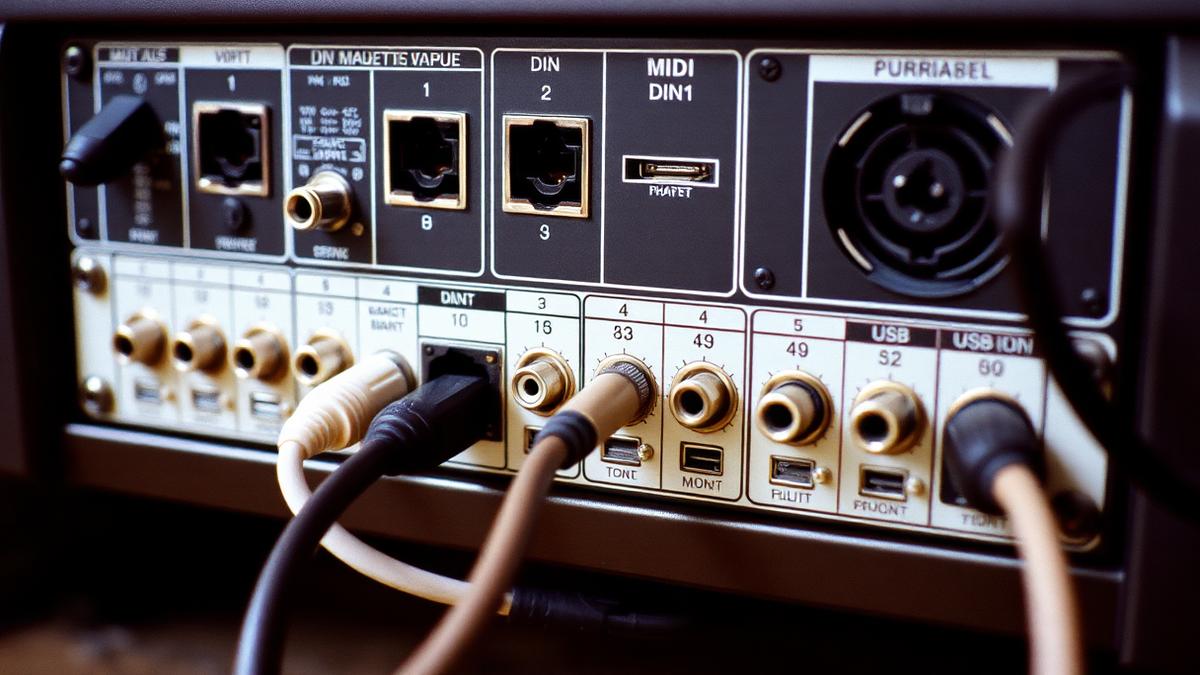
Photo: RME Hammerfall DSP 9652 MIDI connectors (opens in a new tab) by Dan Lynch (opens in a new tab), via Wikimedia Commons — CC BY-SA 2.0 (opens in a new tab)
Key takeaways
- Parameter changes calculated per audio sample rather than per processing block, so sweeps stay smooth and click-free.
- It matters for fast modulation and for offline bounces that must match what you heard in real time.
- A rapid filter sweep automated at block resolution can zipper; sample-accurate handling keeps it smooth.
- Watch out: assuming an offline bounce is always identical to playback.
- Sits under midi, formats and standards in this glossary, with 2 primary sources below.
Quick checklist
- Can you define sample-accurate automation in one sentence without looking?
- Can you point at sample-accurate automation in a real session, mix or contract?
- Have you tried the practical move above at least once?
- Would you catch the common mistake before it costs you a take?
- Have you opened one of the primary sources below rather than a forum thread?
SAMPLE-ACCURATE AUTOMATION IN DEPTH
Sample-accurate automation applies parameter changes at exact sample positions rather than once per processing block. It matters for fast modulation and for offline bounces that must match what you heard in real time.
How it works in practice
A rapid filter sweep automated at block resolution can zipper; sample-accurate handling keeps it smooth.
The mistake people make
Assuming an offline bounce is always identical to playback. Plugins that handle automation per block can render differently at a different buffer size.
WHERE SAMPLE-ACCURATE AUTOMATION SITS
Sample-accurate automation belongs to midi, formats and standards in the Sampled music glossary. The plumbing — the specs your gear, files and delivery pipeline agree on.
TEST YOURSELF
0/3 answered · 0 correct
3 quick questions on sample-accurate automation. Answers are marked instantly — nothing is sent anywhere.
1. Which statement best describes sample-accurate automation?
2. What is the mistake people most often make with sample-accurate automation?
3. In practice, which of these applies to sample-accurate automation?
Ready for the full thing? Take the 25-question terminology test and get a certificate with your name and score.
SOURCES AND CITATIONS
Free, primary references for sample-accurate automation — standards bodies, manufacturers, government offices and university course material. Each one lists the line of this entry it backs up.
- Steinberg developer docs (opens in a new tab)
Primary reference · steinberg.net
“Parameter changes calculated per audio sample rather than per processing block, so sweeps stay smooth and click-free.”— the claim this source supports
Why it counts: Published by the organisation responsible for the thing being defined, so it is a first-hand source rather than a summary of one.
- CLAP standard (opens in a new tab)
Primary reference · cleveraudio.org
“Sample-accurate automation applies parameter changes at exact sample positions rather than once per processing block.”— the claim this source supports
Why it counts: Published by the organisation responsible for the thing being defined, so it is a first-hand source rather than a summary of one.
RELATED TERMS IN MIDI, FORMATS AND STANDARDS
- WAV vs FLAC vs MP3/AAC
- Plugin formats (VST/AU/AAX/CLAP)
- ASIO / Core Audio
- Sync: MIDI clock, MTC, Ableton Link
- Metadata (ISRC, UPC, ISWC)
- DDEX
- C2PA / content credentials
- Loudness normalisation
Back to the full music glossary or read our latest articles.