 SAMPLED
Which Stock Music and Micro-Sync Sites Are Still Accepting Submissions in 2026?
Half the big-name music libraries have closed their doors. Here are the stock music and micro-sync sites still open to independent artists, what each one pays, and the fine print to read first.
Micro-sync is the small-fee side of music licensing: a YouTuber paying $10 for a background track, a wedding videographer buying a cue, a podcast licensing an intro. One license won't change your life, but a deep catalog sitting on the right sites can earn every month.
The catch in 2026 is that many of the famous names aren't taking new artists. According to Orphiq's August 2026 check (opens in a new tab), Artlist, Epidemic Sound, Marmoset's main roster, Music Vine and Soundstripe have paused submissions, and Songtradr's marketplace is winding down. So here's where you can send music right now, based on each site's own terms and two independent guides checked in August and October 2026.
What's the difference between stock music and micro-sync?
- Stock music marketplaces let you upload, tag and price your own tracks. Buyers search and license them directly. Easy to join, lots of competition.
- Micro-sync / creator licensing covers small, high-volume licenses for YouTube, TikTok, podcasts and social video, often handled automatically.
- Curated libraries and sync agencies choose who gets in, then pitch the music to film, TV and ads. Bigger fees, much harder to join.
Most artists do best with a mix: one open marketplace, one creator-licensing route through their distributor, and one curated pitch.
Open marketplaces: upload today
Pond5
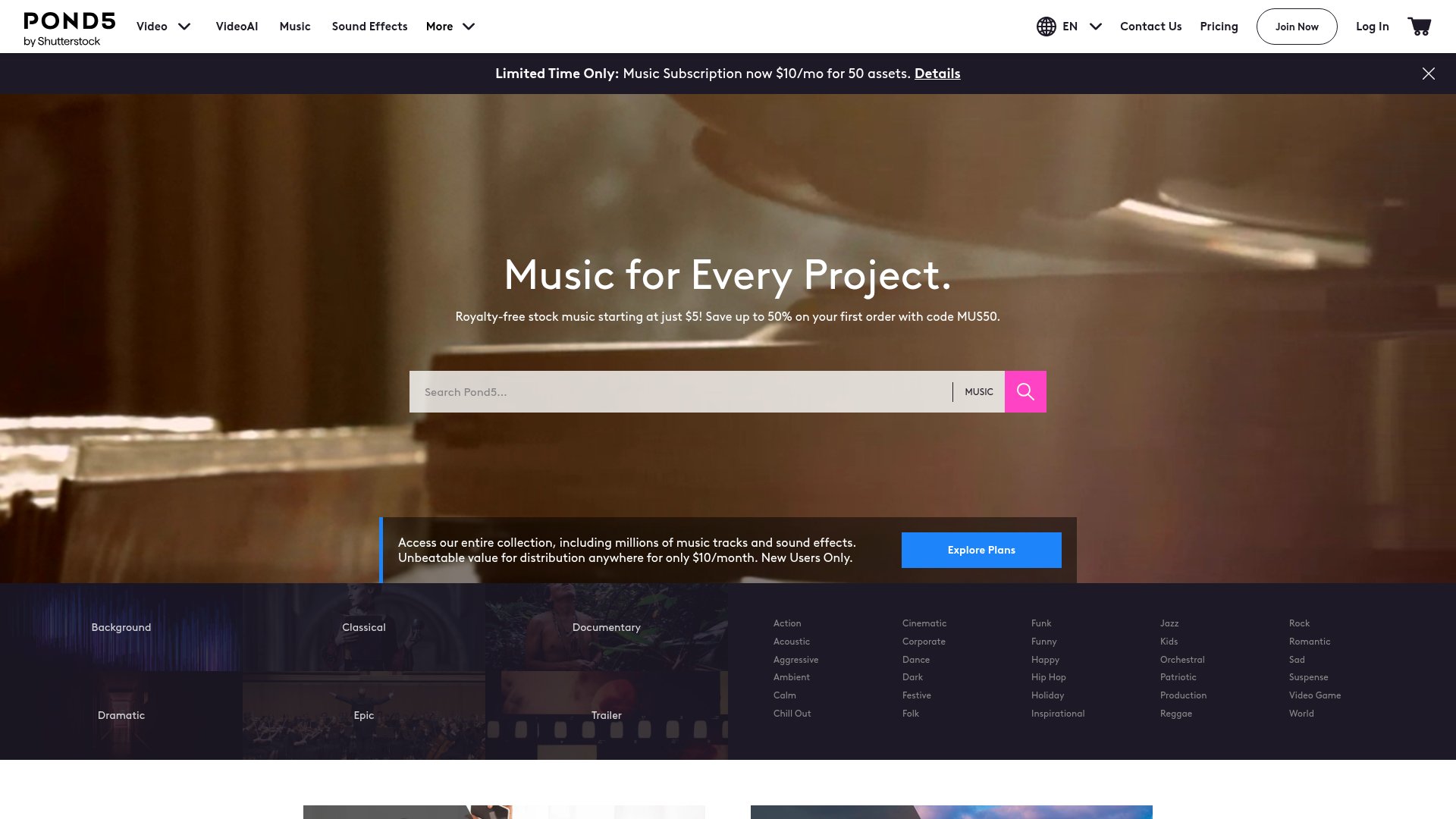
Pond5, now owned by Shutterstock, is the biggest open stock marketplace still taking music from anyone. You sign up as a contributor, upload, set your price, and every file is reviewed before it goes live.
- What you earn: 30% of net license revenue on music, according to both Orphiq (opens in a new tab) and Musuni (opens in a new tab). Some older guides still say 50%, so check your contributor agreement.
- Exclusive? No. Standard music submissions are non-exclusive. The separate Pond5 Publishing program is exclusive for licensed uses, so read it before opting in.
- File rules: Stereo WAV or AIFF only, 16 to 32 bit, under 10 minutes, no MP3 or FLAC, no spaces or special characters in file names, and composer info is required, per Pond5's contributor guide (opens in a new tab).
- Watch for: Pond5 runs a dataset program that can license media for AI training. Check your dataset setting.
Best for: Instrumental cue writers who can upload steadily.
Join Pond5 as a contributor (opens in a new tab)
Jamendo Licensing
Jamendo lets you upload songs for royalty-free licensing to businesses and video makers. Each track is reviewed before it's listed.
- What you earn: 35% to 70% of each license, per Musuni (opens in a new tab).
- Exclusive? No. You keep ownership.
- Watch for: Jamendo licenses catalog tracks for data mining by default. Opt out track by track if you don't want your music used to train AI.
Best for: Electronic, acoustic and background-friendly songs, with modest, low-effort income.
 Image courtesy of Jamendo.
Visit Jamendo Licensing (opens in a new tab)
Micro-sync through your distributor
If your music is already on streaming services, you may be one checkbox away from creator licensing.
DistroKid: YouTube Creator Music
Add DistroKid's Social Media Pack to a release and it enters YouTube Creator Music, where YouTubers can license it for their videos. Per Orphiq (opens in a new tab), DistroKid passes you the fee minus 20%. Creators pay by channel size: $9.99 for 1,000–100,000 subscribers, up to $74.99 for channels above 5 million. DistroKid doesn't pitch your music, though.
CD Baby Sync
CD Baby's sync program comes with CDB Boost, a $39.99 add-on per single or album (free for releases already in legacy CD Baby Pro). It pays 60% of the money CD Baby receives for each licensed use, minus costs, stays non-exclusive, and CD Baby's sync team actually pitches enrolled music.
Thematic
Thematic (opens in a new tab) works differently. YouTube and TikTok creators use your song free in their videos in exchange for credit and exposure. You don't get a license fee, but you get reach, and Thematic takes 20% of Content ID money from other uses, per Musuni (opens in a new tab).
One important warning: Creator Music and Thematic rely on YouTube's Content ID system. Content ID on a song can clash with a library or sync deal on that same song, causing false copyright claims for buyers. Keep your Content ID songs and your library songs separate.
Curated libraries and sync agencies: apply and wait
Musicbed
Musicbed is the premium end: 70,000+ songs, 1,500+ artists, and its team says it accepts less than 1% of artist submissions, according to Musicbed's own site (opens in a new tab). There's no public form. Email their support team to ask about submitting. It doesn't publish its split, so get the terms in writing.
 Image courtesy of Musicbed.
Best for: Finished, cinematic indie, folk and ambient catalogs.
Audiosocket
Audiosocket is a licensing agency that pitches its artists to TV, film, ads and brands. Submitting is free and you keep ownership. Per Musuni (opens in a new tab), the non-exclusive deal leaves you just 25% of each upfront fee, and Audiosocket keeps your publisher share. The exclusive deal splits 50/50.
 Image courtesy of Audiosocket.
More curated options worth knowing
- Track Club by Marmoset: Takes submissions only one week a month, about a 50% split.
- Bodega Sync (Symphonic): You don't need to distribute with Symphonic. You'll need 10+ fully owned songs. It takes 30% of sync fees, with an exclusive two-year term on those songs.
- Crucial Music: Takes 50% of fees plus your publisher share on placements it lands. Its 3-year contract renews automatically unless you cancel 60 days ahead.
- Storyblocks: Exclusive only. You're paid from a shared pool, and the tracks can't sit anywhere else.
- PremiumBeat (Shutterstock): Buys tracks outright, so you give up all future license income.
- APM partner libraries: Production music libraries that want full albums with 60- and 30-second cutdowns.
Who's closed right now?
| Site | Status (2026) | Good to know |
|---|---|---|
| Artlist | Closed to music | Footage and sound effects still open |
| Epidemic Sound | Closed to new applications | Requires leaving your PRO |
| Marmoset (main roster) | Paused | Clearing a backlog |
| Music Vine | Closed, may reopen | 60% exclusive / 35% non-exclusive |
| Soundstripe | Closed | Work-for-hire custom tracks only |
| Songtradr | Winding down | Download your files and withdraw your balance now |
Source: Orphiq (opens in a new tab), August 2026. Sites reopen often, so bookmark them.
How do you make your tracks library-ready?
- Own everything. You need to control both the recording and the song. No uncleared samples, and every co-writer must sign off.
- Deliver an instrumental. Many placements need one, and it roughly doubles your chances.
- Have stems and cutdowns ready. 60-, 30- and 15-second edits sell well in micro-sync.
- Tag like a buyer searches. Mood, tempo, genre and use ("corporate," "vlog," "wedding"). See our metadata guide.
- Register with a PRO if the library allows it. Our ASCAP vs BMI vs SESAC guide explains how.
- Keep a spreadsheet of which song lives on which site, and whether it's exclusive or in Content ID.
The bottom line
The easiest door in 2026 is Pond5 for instrumentals, plus your distributor's creator-licensing option for released songs. Add one curated pitch, like Musicbed, Audiosocket or Track Club, for your strongest material. Read every exclusivity clause before you click "agree," and keep Content ID songs apart from library songs.
Related reading: Where Can I Submit My Music for Sync? · Best Music Sync Submission Websites · CD Baby vs DistroKid