 SAMPLED
Music metadata explained: ISRC, UPC, ISWC and the credits that get you paid
Identifiers and credits decide whether your royalties find you. A practical walkthrough of ISRC, UPC, ISWC and release credits, using the free public standards and databases you can check yourself.
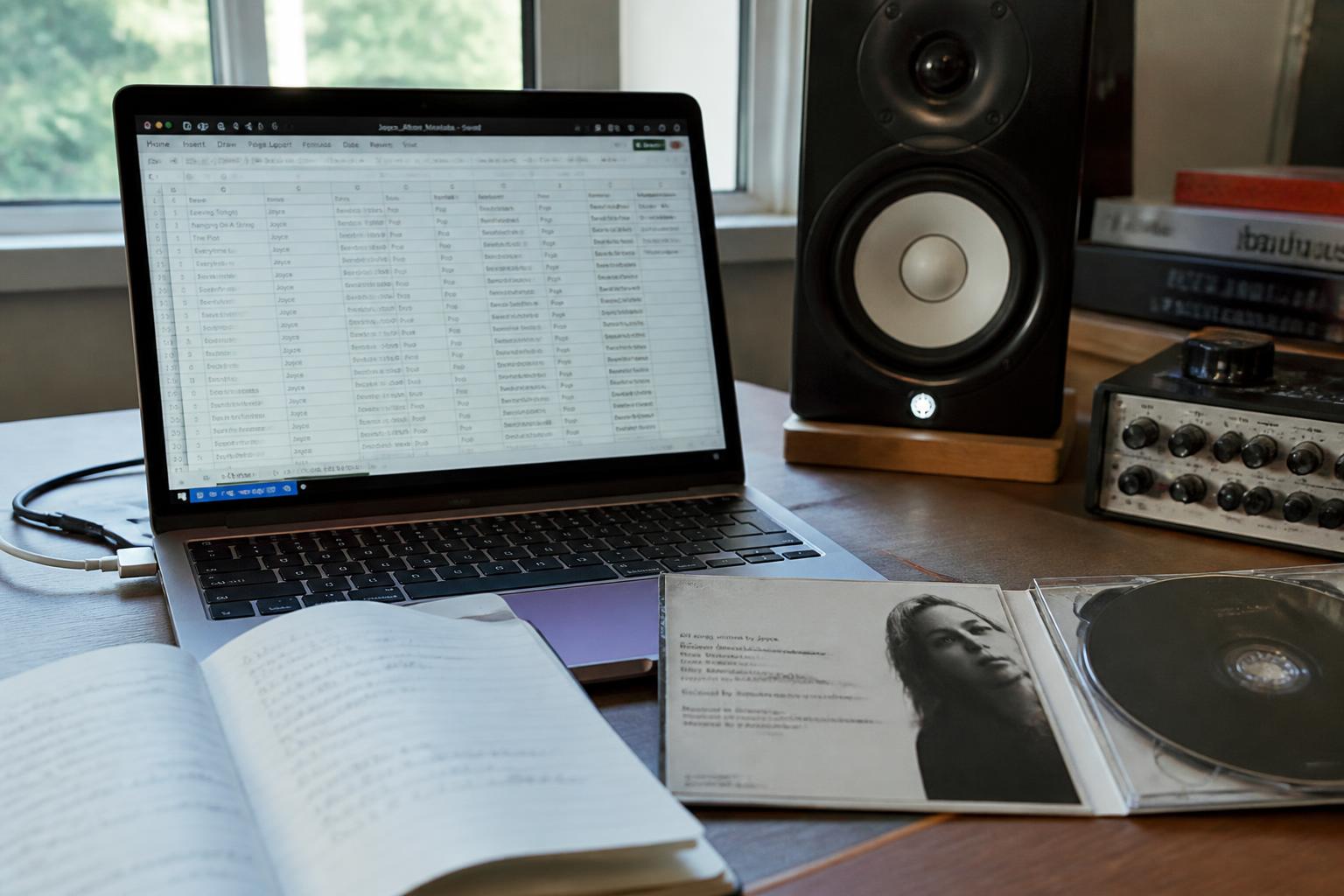
Metadata is the least glamorous part of releasing music and the single most common reason money goes missing. A song can chart, get playlisted, and rack up sync placements while the royalties sit unclaimed in a suspense account, because the identifiers and credits attached to the release don't match what the databases expect.
This is a plain-language walkthrough of the identifiers, credit fields, and registration steps that decide whether you get paid — sourced from the organizations that actually publish the standards.
The two songs inside every song
Almost every metadata problem starts with one misunderstanding: a track is two separate pieces of property.
| Layer | What it is | Who typically owns it | Identifier |
|---|---|---|---|
| Composition | The underlying song — melody, chords, lyrics | Songwriters and publishers | ISWC |
| Sound recording | One fixed recording of that song | Artist, label, or whoever paid for the session | ISRC |
A cover version is a new recording of an existing composition: new ISRC, same ISWC. A remaster is usually a new recording too. Live versions, radio edits, instrumentals, and sped-up edits each get their own ISRC. Get this split wrong and performance royalties chase the wrong party.
ISRC: the fingerprint of a recording
The International Standard Recording Code is a 12-character identifier for a single recording, administered by IFPI's International ISRC Registration Authority. The ISRC Handbook (opens in a new tab) is free and is the definitive reference.
The structure looks like US-S1Z-99-00001:
- Country code (2 characters) — the registrant's country, not where it was recorded
- Registrant code (3 characters) — your prefix, assigned by an ISRC agency
- Year of reference (2 digits) — the year the ISRC was assigned
- Designation code (5 digits) — your sequential number for that year
Rules that trip people up, straight from the handbook:
- Assign the ISRC once and never reuse or change it, even if the track moves to a new label or distributor. The code identifies the recording forever.
- Assign a new ISRC for any recording that differs in audio: edits, remixes, remasters, alternate mixes, live takes.
- The ISRC stays the same across formats — the streaming, download, and CD version of one master share one code.
- You can get a prefix directly from your national ISRC agency, or let a distributor issue codes. Distributor-issued codes work fine, but they sit under the distributor's registrant prefix — worth knowing if you plan to move catalog later.
UPC/EAN: the fingerprint of a release
The ISRC identifies a track; the UPC (or EAN outside North America) identifies the product — a single, EP, or album as a package. Change the tracklist, the artwork bundle, or the territory of a release and you generally need a new product code. Most distributors issue these automatically, which is fine for the vast majority of independent releases.
ISWC and publishing registration
The International Standard Musical Work Code identifies the composition. It's assigned through your performing rights organization when you register the work, not by your distributor. If you write and record your own material, you have two jobs, not one:
- Register the recording — via your distributor and your neighboring-rights collection, where applicable
- Register the composition — with your PRO, and with The MLC (opens in a new tab) in the U.S. for mechanical royalties from streaming
The MLC's public search is a useful reality check: look up your own titles and see whether the writer shares add up to 100%. Unmatched works are exactly how royalties end up held.
Credits: the fields nobody fills in
Beyond identifiers, credits are what feed liner notes, "written by" fields on streaming platforms, and neighboring-rights payments for performers. The industry-standard shape of this data is defined by DDEX (opens in a new tab), the standards body whose message formats distributors and DSPs use to exchange release information.
At minimum, capture per track:
- Primary artist(s), exactly as they should display — no "feat." baked into the title if a featured-artist field exists
- Featured artists in the featured field
- Songwriters with legal names and PRO affiliations, plus split percentages
- Producer, mixing engineer, mastering engineer, and recording studio
- Session performers and the instruments they played
- Language, explicit flag, genre, and original release date
Two conventions worth adopting early: keep a canonical artist name spelling and reuse it everywhere, and keep a master metadata sheet per release that you hand to every partner. Inconsistent name spellings are the second most common cause of split payments after missing splits themselves.
A pre-release checklist
Run this before you hit submit at your distributor.
| Check | Why it matters |
|---|---|
| Every track has a unique ISRC | Prevents streams being credited to the wrong recording |
| Reused tracks keep their original ISRC | Consolidates play counts across releases |
| Release has one UPC/EAN | Retail and chart reporting keys off this |
| Titles match everywhere | DSP, PRO, and MLC matching is largely text-based |
| Writer splits total exactly 100% | Anything else stalls in review |
| Compositions registered with your PRO | Performance royalties have no other route |
| U.S. works registered with The MLC | Streaming mechanicals go unmatched otherwise |
| Producer and engineer credits filled | Feeds credits pages and neighboring rights |
| Explicit flags set per track | Wrong flags get releases pulled from playlists |
| Original release date correct on re-releases | Protects catalog history and chart eligibility |
Where to check your own data
You don't need a paid tool to audit a catalog:
- ISRC Search (opens in a new tab) — the international database of assigned codes
- The MLC Public Search (opens in a new tab) — U.S. mechanical registrations and writer shares
- MusicBrainz (opens in a new tab) — an open, community-run music encyclopedia widely used as a reference dataset
- Copyright Public Records (opens in a new tab) — U.S. Copyright Office registration records
- Your PRO's repertoire search — most publish a free work lookup
Search your own name in each of these. The gaps you find are, in most cases, the money you're not collecting.
FAQ
Do I have to pay for ISRCs? Agencies charge a one-time fee for a registrant prefix in many territories, after which the codes you generate are free. Distributor-issued codes usually cost nothing.
Can I change an ISRC after release? No. The handbook is explicit that codes are permanent and must not be reused. If a wrong code went out, the fix is a correction at the DSP level, not a new code for the same audio.
Does a sped-up or slowed version need a new ISRC? Yes. It's a different recording, and it should carry its own code so its streams are counted separately.
My track is on Spotify but The MLC shows nothing — is that a problem? Yes. Distribution registers the recording, not the composition. Register the work separately or the mechanical royalties accrue unmatched.
What if I forgot credits on a release that's already out? Most distributors accept metadata updates post-release, and DSPs refresh credits on the next delivery. Do it — credits pages are increasingly used for discovery and for crediting session players.
The short version
Identifiers make your music findable to machines; credits make it attributable to people. Neither is optional if you expect to be paid accurately. Spend an afternoon building one clean metadata sheet, use it consistently, and audit yourself once a year against the free public databases above.