 SAMPLED
UMG Is Suing DistroKid Over AI Slop: Does It Put Your Releases at Risk?
Universal sued the biggest independent distributor this week over AI-generated uploads and infringement. Here is what the filing actually says, and what independent artists should do about it.
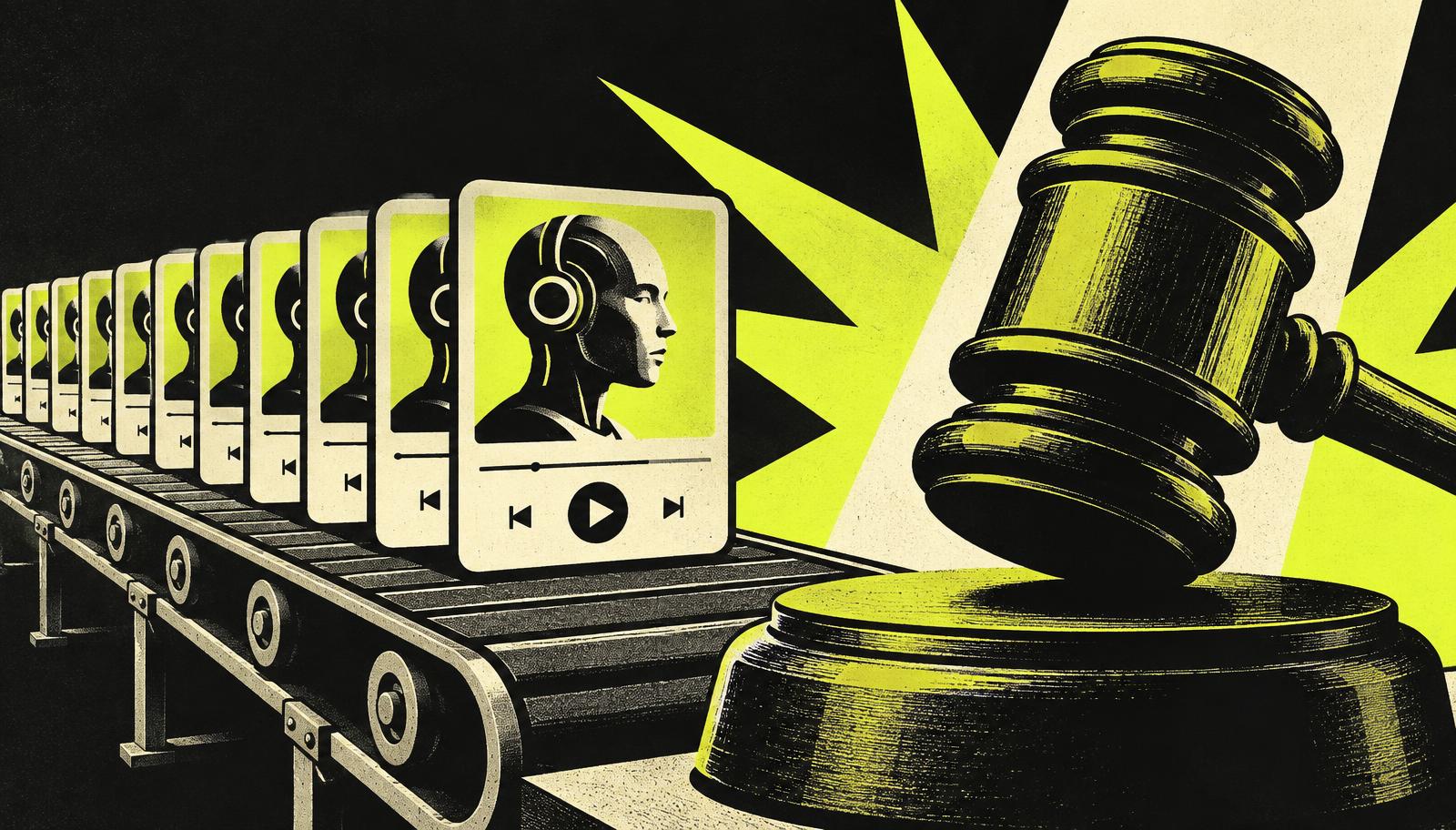
Universal Music Group sued DistroKid on September 15, 2026, in federal court in Delaware, accusing the distributor of running an "AI-slop pipeline" that floods streaming services with machine-generated tracks and of "massive, blatant copyright infringement" involving remixes and altered copies of UMG recordings (Variety (opens in a new tab)). DistroKid denies the allegations.
If you distribute your music through DistroKid — and a lot of independent artists do — the obvious question is whether your releases are at risk. The short answer today is no. The longer answer is that the ground under independent distribution is shifting, and it is worth understanding why.
What UMG is actually claiming
The 52-page complaint makes two separate arguments.
The first is about volume. UMG says DistroKid knowingly acts as the on-ramp for AI content farms, pointing to accounts like one "Lofi Chill" project that pushed out roughly 380 tracks a month, 4,562 in a year (Music Ally (opens in a new tab)). The claim is that these uploads siphon royalties from a shared pool that human artists are also paid from.
The second is about infringement. UMG argues that when YouTube's Content ID or similar systems on Meta and TikTok flag a track as infringing, DistroKid learns about that specific recording — and then leaves the same recording live on other streaming services. That mirrors the case UMG brought against Believe and TuneCore in 2024, which settled in April 2026.
Why this landed this week
Five days before the lawsuit, IFPI launched the Streaming Integrity Initiative in London: a set of five baseline anti-fraud commitments for distributors, backed by 27 companies including Sony, Warner, Universal, CD Baby, The Orchard, AWAL, FUGA, Ditto and Symphonic (Music Week (opens in a new tab)).
Signatories agree to verify customer identity and rights ownership, vet uploads for infringement and AI risk, act against repeat offenders, share fraud intelligence, and measure whether any of it works (The Next Web (opens in a new tab)).
DistroKid did not sign. That absence got noticed immediately, in part because DistroKid reportedly handles 30–40% of all new music released globally (Music Technology Policy (opens in a new tab)).
The numbers behind the panic
| Claim | Figure | Source |
|---|---|---|
| Share of streams industry executives believe are fraudulent | ~10% | IFPI reporting via FT |
| AI tracks ingested daily by Deezer | ~75,000 (about 44% of uploads) | Deezer, 2026 |
| Share of new global releases through DistroKid | 30–40% | MTP / MBW |
| Tracks from one flagged account in 12 months | 4,562 | UMG complaint |
Nearly 10% of streams being fraudulent is the figure that makes this an industry emergency rather than a nuisance (Business Standard (opens in a new tab)). Every fake stream is paid out of the same pro-rata pool your streams are paid from.
Does this affect your releases?
Not directly, and not now. Lawsuits between a major label and a distributor take years, and nothing in the filing asks a court to remove independent artists' music. But three practical things follow from it.
Verification is coming. Know-your-customer checks, rights verification and AI disclosure are about to become normal parts of uploading a song. Have your splits, your publishing registration and your master ownership documented before a distributor asks.
Label your AI use honestly. If you used an AI tool anywhere in a track, disclose it where the distributor asks. Chart bodies and DSPs already have policies on this, and the enforcement side is the part that is hardening.
Do not build your whole business on one pipe. A distributor is a vendor, not a career. Direct sales, a mailing list, physical copies and live income are the parts of your income nobody can freeze pending litigation.
What I would actually do this week
- Export your catalog metadata — ISRCs, UPCs, release dates, splits — out of your distributor and save it somewhere you control.
- Check your publishing registrations are current with your PRO.
- Read your distributor's terms on takedowns and account termination. Know what happens to your releases if the account closes.
- Move at least one revenue stream off streaming entirely. Direct-to-fan sales are the cheapest place to start.
FAQ
Is DistroKid shutting down? No. It is being sued. It has denied the claims and continues to operate normally.
Will my music be taken down? Nothing in the lawsuit targets legitimate independent releases. Takedowns come from infringement claims on specific recordings, not from this case.
Should I switch distributors? Not in a panic. If you are weighing options anyway, our DistroKid vs TuneCore comparison and wider distribution guide cover the trade-offs.
Why does AI music affect my royalties if nobody listens to it? Because streaming pays from a shared pool. Bot-played tracks take real money out of it before it reaches anyone's split.
Is using AI in my music against the rules? Generally no, but disclosure rules and chart eligibility rules are tightening. See our guide to where AI music stands legally.