 SAMPLED
Free Moves That Actually Make Indie Artists Money
Direct-to-fan sales, home-burned CDs, dubbed tapes, and the royalties you may already be owed — none of it costs a thing to start.
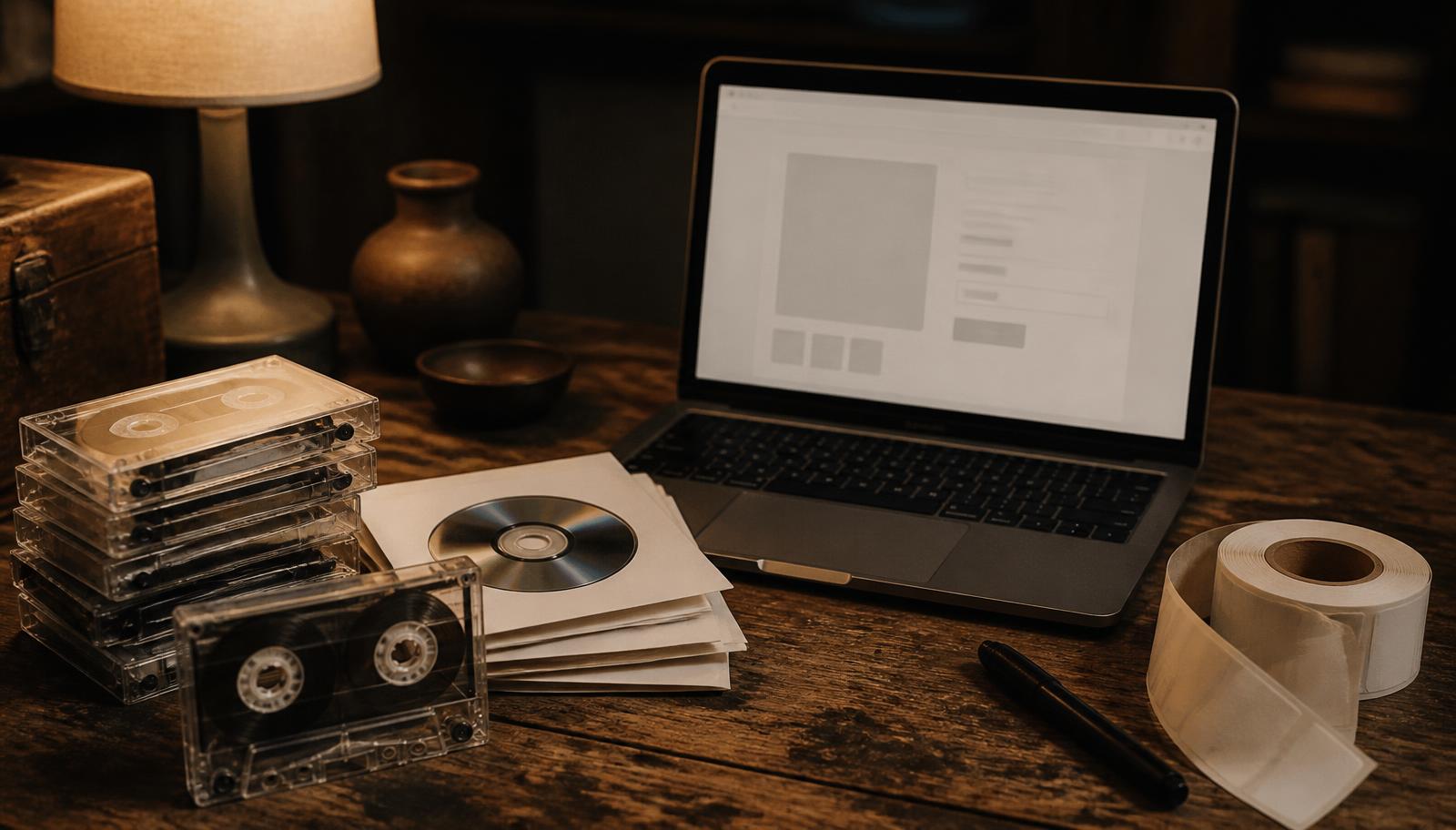
Streaming pays fractions of a cent. Selling something directly to the people who already like your music pays in dollars. The gap between those two facts is where most independent artists leave money on the table — and closing it costs nothing but time.
Everything below is free to start. No storefront fees up front, no minimum orders, no pressing plant deposits. You spend hours instead of dollars, and you get paid before you spend anything.
Sell straight to your fans
Direct-to-consumer means the money goes from a listener's card to your account, minus a payment fee, with nobody in between taking a cut of the master.
- Open a free store. Bandcamp charges nothing to list and takes a revenue share only when something sells. Payment processors take their percentage per transaction. Neither asks for a monthly fee to exist.
- Sell what you already own. Unreleased demos, alternate mixes, instrumental versions, a stems pack, live board recordings from last month's show. These already exist on your drive. Bundling them into a $7 digital release costs one afternoon of file organizing.
- Name your own price with a floor. "Pay what you want, minimum $3" consistently outperforms a fixed price for artists with small, devoted audiences. People who love you overpay. People who are curious still convert.
- Put the link everywhere. Bio, pinned post, video description, email signature, the merch table sign, the last ten seconds of every livestream. Most fans do not buy because they never knew they could.
Make CDs and tapes without a pressing plant
Physical media sells because it is a souvenir, not because anyone needs the audio. That is why a $12 CD-R with a hand-stamped sleeve moves at a show while a free download link does not.
CDs, done at home. A spindle of blank discs and a laptop burner get you sellable product for well under a dollar a unit. Print inserts on regular paper, fold them into paper sleeves or slim cases. Number them by hand. Fifty numbered copies is a limited edition; five hundred unnumbered is inventory you will be storing in your closet in two years.
Tapes, done in a spare room. A single deck dubs in real time — a 30-minute album takes 30 minutes. A dual-deck or a small four-slot duplicator speeds it up. Blank shells, labels, and J-cards printed at home get you a finished tape for a couple of dollars. Tapes forgive lo-fi recordings in a way CDs do not, which is why they suit bedroom releases.
Pre-sell before you spend. Take orders first, make the run second. Announce a limited edition of 40, collect the money, then buy the blanks with the money you just collected. Your out-of-pocket cost is zero and you never overprint.
Bundle the download. Every physical sale should include the digital files. It removes the "but I have no CD player" objection and turns the disc into a keepsake, which is what people are buying anyway.
| Format | Rough cost per unit | Typical price | Best for |
|---|---|---|---|
| Home-burned CD-R with printed sleeve | $0.75 – $1.50 | $10 – $15 | Show merch, small runs |
| Home-dubbed cassette with J-card | $2 – $4 | $12 – $20 | Lo-fi releases, collectors |
| Digital album, no physical | $0 | $5 – $10 | Everyone, always |
| Signed lyric sheet or test-print insert | Under $1 | $5 – $10 add-on | Bundle upsell |
Costs vary by supplier and run size. Price a real cart before you announce anything.
Build the list that pays you later
Every platform you rent an audience on can change its rules overnight. Email cannot.
- Free tiers of the major email services cover the first few hundred to few thousand subscribers.
- Offer one unreleased track as the reason to sign up. That trade converts far better than "join my newsletter."
- Write when you have something to say, not on a schedule. Four good emails a year outsell twelve boring ones.
- A list of 300 real fans who bought once will out-earn 30,000 passive followers. Treat it accordingly.
Free money you may already be owed
None of this requires a release, a manager, or a budget.
- Register with a performing rights organization. In the US, BMI charges nothing for songwriters to affiliate; ASCAP charges a one-time fee. Either way, live performance and broadcast royalties are only paid to people who registered.
- Claim your streaming profiles. Verified artist profiles on the major services are free and unlock stats, pitching tools, and merch shelves that link straight to your store.
- Add your merch to your streaming profile. Several platforms let verified artists surface a store link directly on the artist page at no cost.
- Check for unclaimed royalties. The Mechanical Licensing Collective in the US matches unmatched mechanical royalties to writers who register. Registration is free.
- Collect neighboring rights. If you performed on a recording, performance royalties from non-interactive radio may be sitting unclaimed.
Turn a show into revenue instead of exposure
- Bring physical product to every single show, even ones where you are third on the bill. A table with tapes on it converts strangers.
- Take cash and a phone card reader. The free reader apps cost a percentage per swipe, not a subscription.
- Write your store URL on a piece of cardboard in marker and put it on the table. It looks better than it sounds and it works.
- Trade slots with bands from another city instead of paying to play. Two shows, no promoter, two new audiences.
What to do this week
- Pick a folder of unreleased audio and turn it into a $5 digital release.
- Open a free store, list it, and put the link in every bio you have.
- Announce a hand-numbered run of 30 CD-Rs or tapes, pre-order only.
- Register with a performing rights organization if you have not.
- Start an email list and give away one track to fill it.
None of these cost money. All of them can pay this month. The artists who make a living independently are rarely the ones with the biggest streams — they are the ones with the shortest distance between a fan's enthusiasm and a way to spend it.