 SAMPLED
Where to Find Records: Shops, Antique Stores, and Selling Your Own
Crate digging beyond the algorithm — local shops, antique malls, estate sales, and the underground artists pressing and selling their own vinyl at pop-ups.
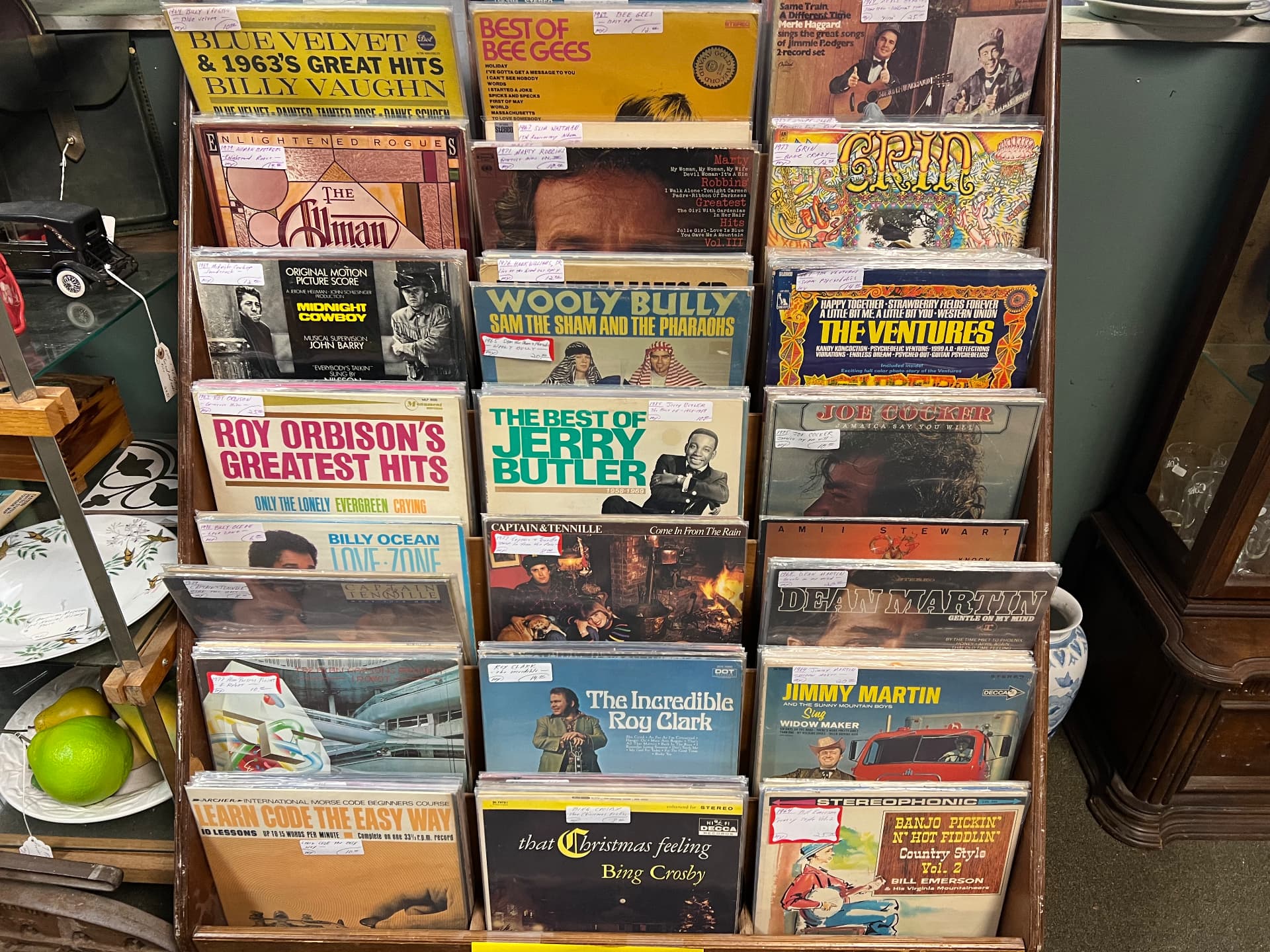
Records are not scarce. Good records at fair prices, found by hand, are. The photo above is a rack in an antique store: Roy Orbison, Jerry Butler, The Ventures, Sam the Sham, a Morse code instructional LP nobody planned to buy. Most of it priced in pen on masking tape. That rack is the whole argument.
Start with your local record shop
The shop is the baseline, and it should be. Staff pull from local collections, grade honestly, and let you listen before you commit. You pay a little more than a flea market, but you get condition you can trust and a person who will tell you what else sounds like the thing in your hand.
Independent shops are also having a moment rather than a decline. Record Store Day 2026 drew record queues and what many retailers called their biggest year ever 1 (opens in a new tab), with UK sales up 25 percent across more than 300 participating shops 3 (opens in a new tab). That matters for buyers and for artists: a shop with foot traffic is a shop that can take your consignment.
Practical habits that pay off:
- Go on weekdays. New trade-ins hit the floor before the weekend crowd.
- Ask what came in this week. Half the good stuff has not been priced yet.
- Buy one thing every visit, even a dollar record. Staff remember regulars, and regulars get first call on collections.
Antique stores and antique malls
This is where the value hides. Antique dealers price records as decor and nostalgia, not as music. They know a Beatles pressing is worth something. They usually do not know which soul, gospel, library, country, or private-press record is worth ten times the sticker.
What to look for in a mall booth:
- Cheap crates with handwritten tags. Dealer pricing, not Discogs pricing.
- Regional and private pressings. Church choirs, high school bands, local country singers, radio station giveaways. These are the drum breaks, choir stacks, and spoken-word oddities nobody else has sampled.
- Instructional and spoken word. Language courses, Morse code lessons, exercise records. Free sample material, usually a dollar or two.
- Sleeves stored upright and out of sunlight. A booth that stacks records flat in a window is a booth full of warps.
Bring a phone light to check the surface at an angle, and do not trust a shrink-wrapped sleeve to mean unplayed.
Estate sales, church sales, and thrift
Estate sales are the best odds in the game because you are buying somebody's actual listening life, in order, unsorted. Get there early on day one for selection, late on the last day for the box-for-ten-dollars pricing. Church and library sales run on the same logic. Thrift stores are the worst hit rate and the cheapest miss, which is a fine trade when you are there anyway.
Online, used correctly
Discogs is the reference, not the destination. Use it to check pressings, matrix numbers, and realistic sold prices, then buy locally when you can. Where online genuinely wins: Bandcamp, where underground artists sell short runs directly and you can hear the whole record before you buy.
The other side of the crate: sell your own
Every rack you dig through is a rack somebody stocked. There is no reason the artist can't be you.
Small runs are actually reachable now
A full pressing plant run is still a real investment with months of lead time. Lathe-cut records are not. Cutters make records to order, one at a time, in runs of ten to a few hundred — labels like Riddim Dub are selling 10-inch lathe dubplates directly on Bandcamp at collector prices 2 (opens in a new tab), and artists write openly about going from digital files to a held object through lathe cutting rather than a plant 5 (opens in a new tab). Labels also bundle a lathe disc as the bonus in a limited numbered edition 6 (opens in a new tab). Fidelity is lower than a pressed record and everyone knows it. Fans buy them anyway, because the object is the point.
Sell at pop-ups
A folding table and a crate is a storefront. Where they work:
- Flea markets and vintage markets. You are already surrounded by people who buy physical things.
- Antique mall booths. Many rent shelf space by the month for less than a single ad spend. Your record sits next to the Bee Gees, and somebody flipping through finds it.
- Record shop consignment. Bring three copies, not thirty. Shops say yes to small.
- Show merch tables and after-parties. The highest-intent buyer is a person who just watched you play.
- Art walks, farmers markets, skate shops, coffee shops. Anywhere with a Saturday crowd and a table you can rent.
Price for the room, take cash and a phone reader, and put a QR code and a download card in every sleeve so the sale keeps working after the buyer gets home.
Make the object worth owning
Hand-numbered editions. Screen-printed or stamped jackets. Insert with lyrics and credits. A short note about where it was recorded. The underground cassette networks of the 1980s ran on exactly this — releases that traveled because they were made by hand and mailed by people who cared 4 (opens in a new tab). Nothing about that has stopped working.
The habit
Dig locally, weekly. Check the antique mall on the way home. Learn what your shop's buyer likes. Cut fifty copies of your own record and get them into the same crates you dig through. Buying and selling records are the same skill pointed in two directions, and both of them start with showing up in person.