 SAMPLED
What Is Antiq, the AI Music Suite Built to Help Artists Instead of Replacing Them?
We talked with Manuel Cossío, CEO of Mexico City startup antiq Labs, about Forge, a co-producer agent you can text, and a workspace where AI agents and real teammates run a music career together.
Antiq Labs reached out to Sampled about coverage, and we interviewed CEO Manuel Cossío over Zoom on November 24, 2026. Screenshots were supplied by antiq Labs. Sampled has not paid for, or been paid for, this article, and we have not tested the product ourselves yet. We saw a live screen-share demo during the interview.
Quick facts
- Company: antiq Labs, Mexico City, founded about four months before this interview
- CEO: Manuel Cossío
- Products: Forge (DAW plugin), antiq for Artists and antiq for Labels (team workspace)
- Works with: Logic Pro, Ableton Live and other DAWs, plus Spotify for Artists, Gmail, calendars and distributors
- Status: Rolling out, with two independent labels testing
- Website: antiq.xyz (opens in a new tab)
Most AI music headlines are about software that writes the song for you. antiq (opens in a new tab) starts from the opposite side. Its pitch is simple: keep the creative choices with the artist, and let software handle the exports, uploads, emails, registrations and spreadsheets that pile up after the music is made.
"Tools like Suno are bringing technology into music, but to replace artists and the creative process instead of boosting their processes," Cossío told us. antiq describes itself as building "advanced tools for people who make and run music."
Watch antiq's story
Video: antiq Labs. Supplied to Sampled.
Who is behind antiq Labs?
antiq Labs was started about four months ago by two founders from Mexico City. Both came from music first. Cossío produced beats and ran recording sessions from age nine to nineteen, and his co-founder followed a similar path.
They then spent about two years building prediction-market products in San Francisco, in the world of platforms like Polymarket and Kalshi. That is where Cossío says their "technology edge" came from. Now they are back in Mexico City and back in music.
Being based there helps them get the product in front of artists, because they know people in the local industry.
What does the Forge plugin do?
Forge is antiq's first product. It is an audio plugin that runs inside the DAW you already use, such as Logic Pro or Ableton Live. According to Cossío, it does three things:
- Builds effects and instruments from a prompt. You describe the plugin or sound you want and Forge creates it, similar to other prompt-to-plugin tools Sampled has covered in How Is AI Changing the Way Audio Plugins Are Made?
- Automates studio setup. Cossío's example comes from his session days. Stuck in traffic, he could text the co-producer agent on WhatsApp and ask it to get the session ready for an artist using saved settings. By the time he walked in, the project would be open and configured.
- Traces samples and stems. With your consent, Forge analyzes a project and keeps track of the samples and stems inside it. The idea is that after release, if someone reuses a sound from your track, you can see where it went and decide whether to act.
That last part speaks to an era where, as Cossío put it, "everybody's sampling and everybody's stealing ideas." The goal is to give labels and independent artists better information about their own rights. We have not seen independent proof of how accurate that tracing is. For more on handling samples in your own releases, see our coverage of AI-assisted versus AI-generated records.
What does antiq for Artists look like?
Here is antiq's own overview of the platform:
The bigger product is a workspace called antiq for Artists, with antiq for Labels for independent labels and larger teams. It is rolling out now, and Cossío said two independent record labels are testing it.
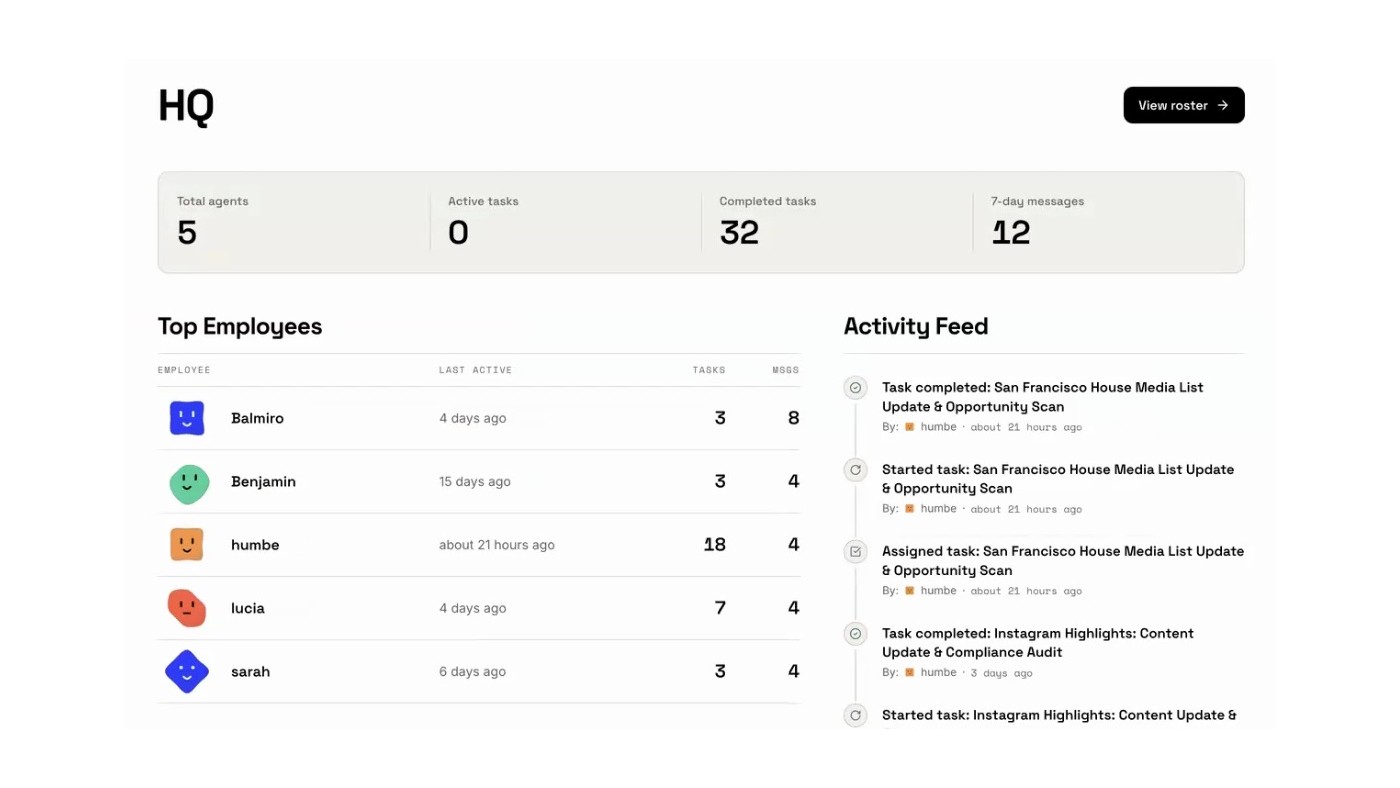
The HQ dashboard shown at the top of this article lists your AI "employees," active and completed tasks, and an activity feed. Each agent has a role, such as personal manager, lawyer, PR, marketing or label. They pull in context from connected services, including Spotify for Artists, Gmail, your calendar, your distributor and your DAW, so tasks start with real data behind them.
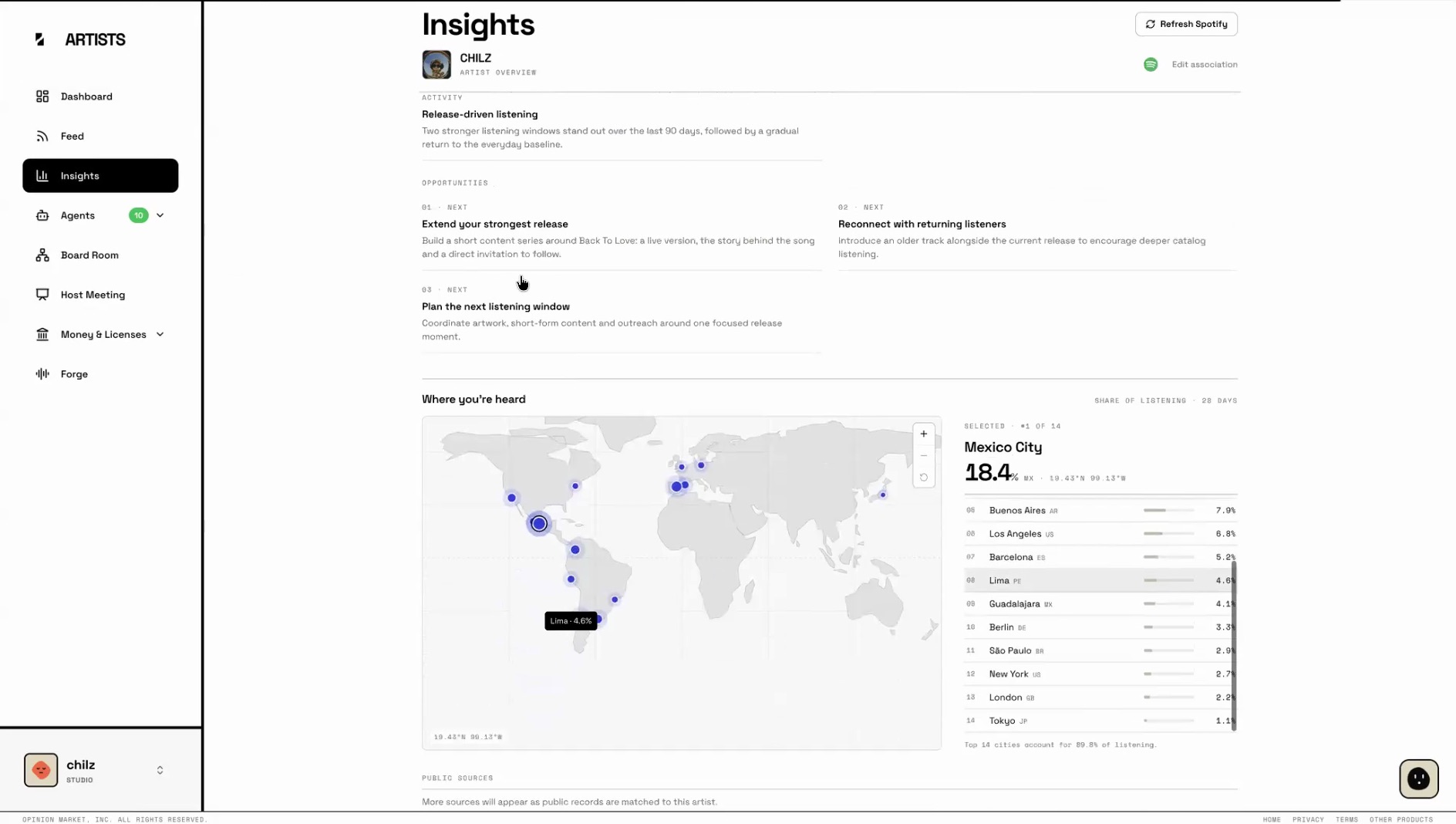
A feed mixes music news picked for your taste with calendar items and emails that need attention. The Insights pages show streams and an audience map from connected accounts.
Screenshot: antiq Labs. Supplied to Sampled.
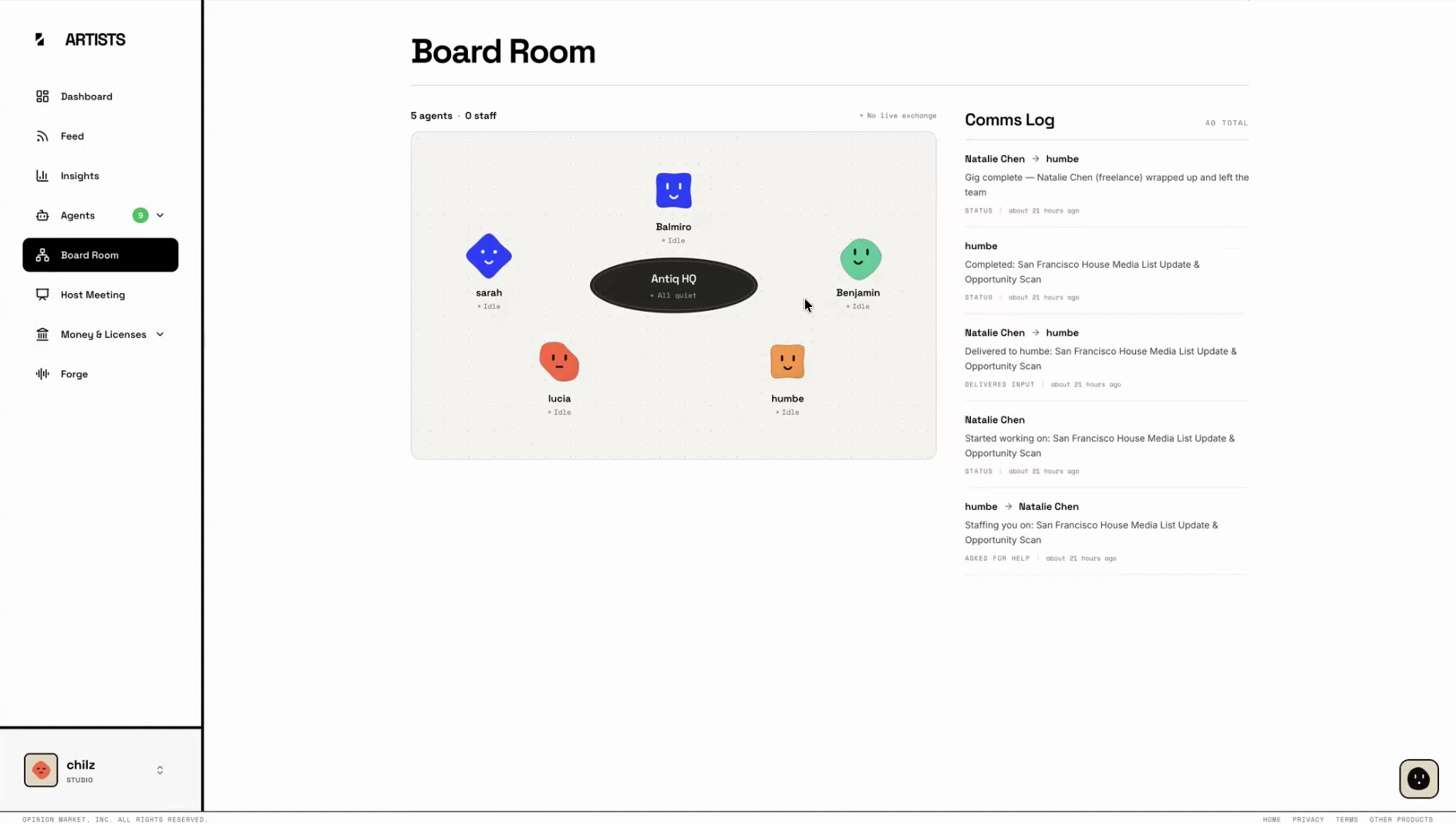
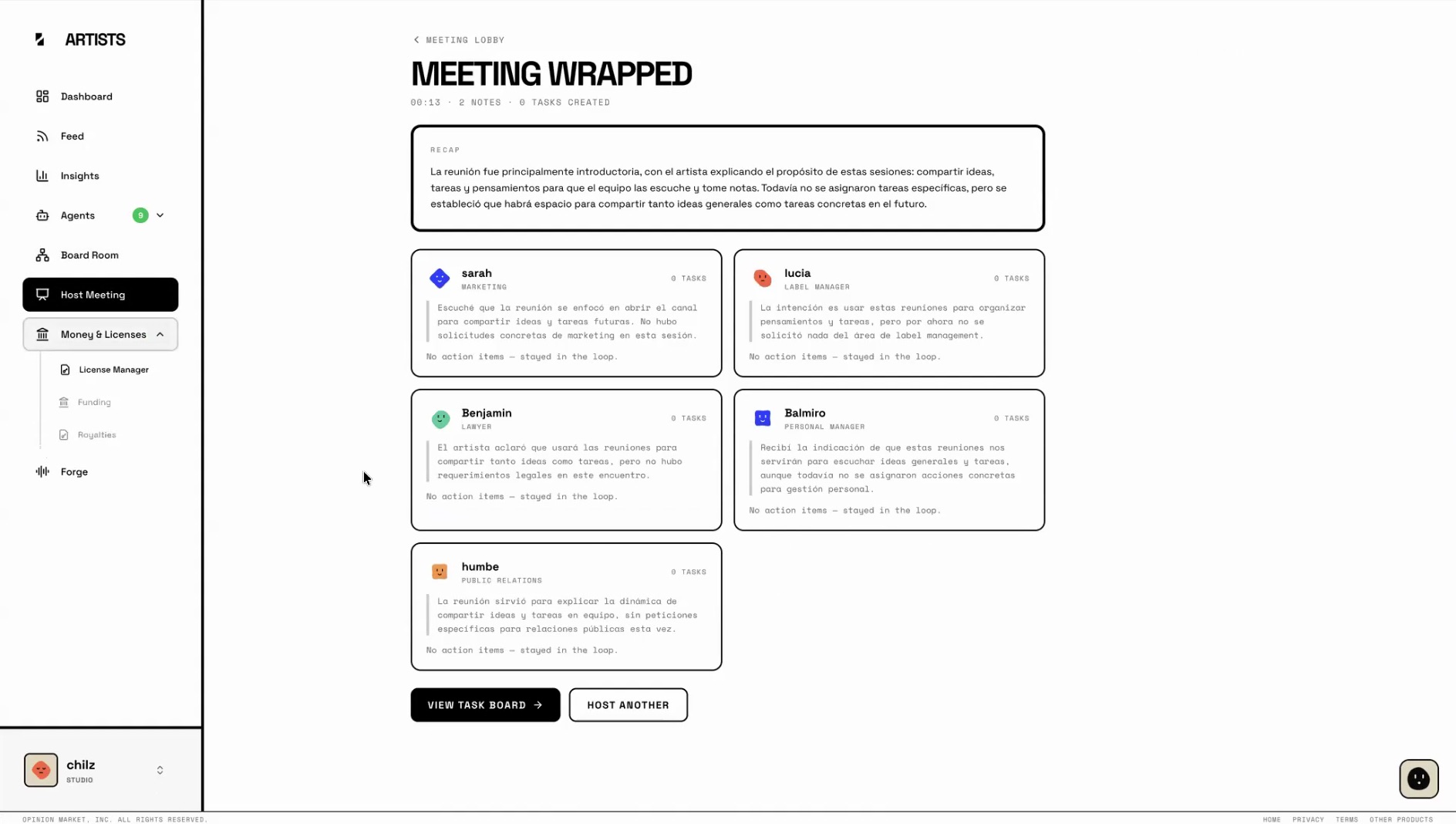
The Board Room is a visual map of agents passing information to each other while they work. Cossío's favorite feature is the meeting room. You talk through ideas out loud, the agents take notes, and when the meeting ends the system turns what you said into tasks and starts on them.
Screenshot: antiq Labs. Supplied to Sampled.
Tying it together is the co-producer, an agent that follows you across the suite and into WhatsApp or other messaging apps. It can take actions in the DAW, the workspace and connected tools.
Why build this instead of another song generator?
Cossío kept coming back to one problem: finished songs that never leave the hard drive.
"Most people create a bunch of tracks and most of them end up in a hard drive, because you never have the ability or the time or the energy to put it out there through a very tedious process," he said.
After a track is done, there is distribution, choosing the artwork, registering the work with the right organizations and handing files to other people. "A creative mind is usually built for creating new things," Cossío said, "not really for these tedious things." He wants antiq to connect the tools artists already use and cover the whole path "from creation to distribution and whatever comes after."
If that middle step is your weak spot, our guide on why you should check your music royalties before 2027 covers the registrations that often get missed.
Screenshot: antiq Labs. Supplied to Sampled.
Is antiq free?
Not entirely. Cossío said the original plan was to make the whole suite free and work out money later, but AI token and running costs made that impossible for now. He left the door open to more free access if the user base grows. antiq has not given us public pricing, so check antiq.xyz/products (opens in a new tab) for current plans.
What should you keep in mind?
- antiq is a very young company, and the workspace is still rolling out with a small number of label partners.
- Features like sample tracing and agents that act on your accounts depend on what you connect and allow. Read what each connection can access before linking it.
- AI agents can draft and organize, but legal, rights and money decisions still deserve a human check.
FAQ
Does antiq make songs for you? No. Cossío says the goal is to support the artist's creative work, not replace it. The AI handles organizing, admin and release tasks.
Do I have to switch DAWs? No. Forge runs as a plugin inside the DAW you already use.
Can I message the co-producer from my phone? Yes. Cossío said it works through WhatsApp and other messaging apps.
Is it available now? It is rolling out now, starting with label partners. Check antiq.xyz/products (opens in a new tab) for access.
The takeaway
antiq is betting that AI in music should work like a studio assistant, not a replacement artist. If the team delivers on the full creation-to-release flow, it could help a lot of finished tracks finally get released. You can follow the project at antiq.xyz (opens in a new tab).