 SAMPLED
Why Is Outkast Suing Ovrkast, and Who Is the Judge Hearing the Case?
André 3000 and Big Boi's trademark company says producer Ovrkast agreed to change his name and then didn't. The case landed in front of Judge Eleanor Ross, who was reprimanded this summer. Here's what's at stake.
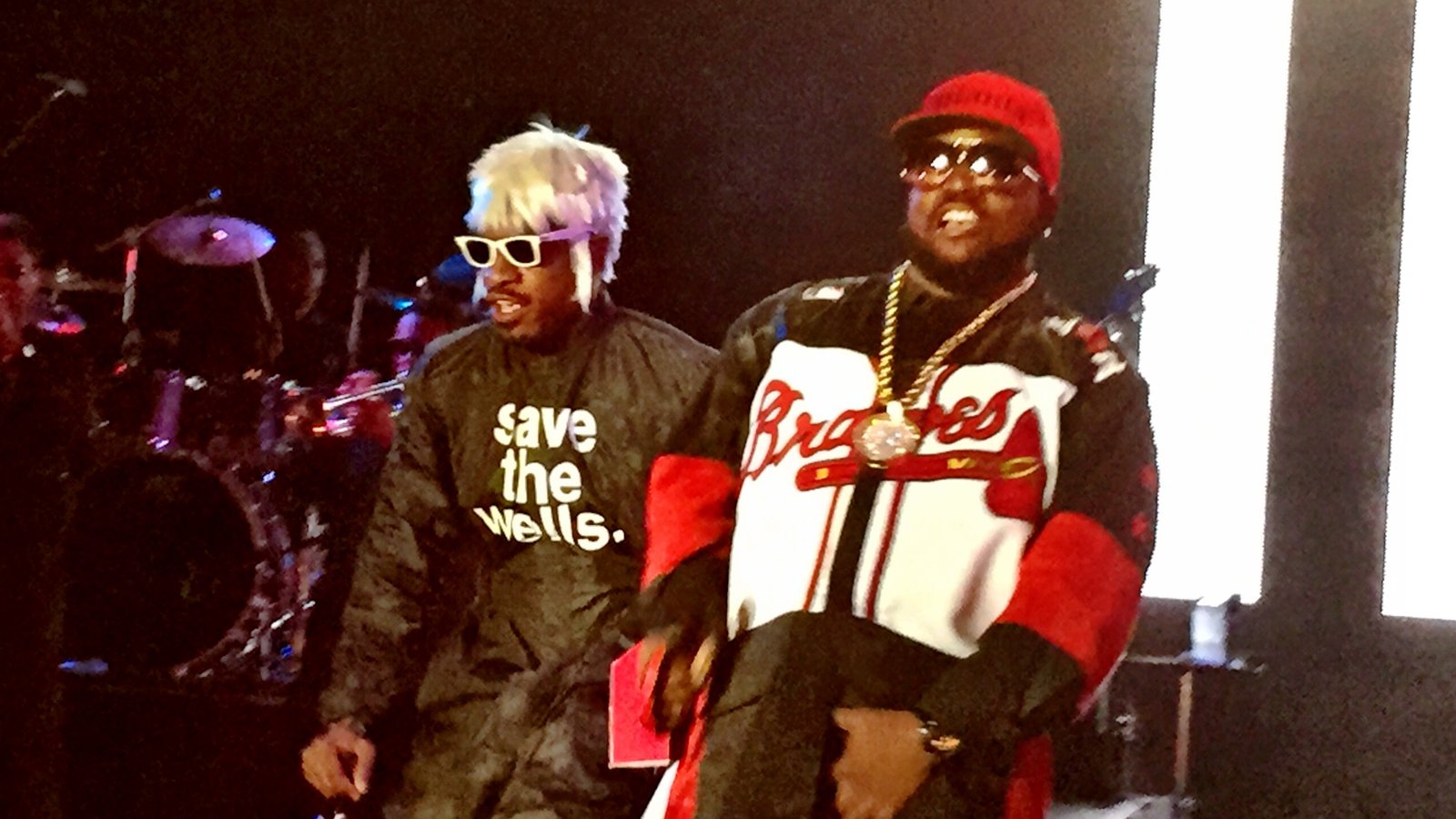
Outkast is taking a younger artist to federal court over a name. On September 16, 2026, High Schoolers LLC, the company that owns the Outkast trademark and is controlled by André 3000 and Big Boi, sued Oakland-raised rapper and producer Ovrkast, whose legal name is Silas Wilson, in the U.S. District Court for the Northern District of Georgia (case no. 1:26-cv-05345), according to Music Business Worldwide (opens in a new tab).
The case was assigned to U.S. District Judge Eleanor L. Ross, a judge who spent the summer in the headlines for her own misconduct. More on that below.
What is Outkast accusing Ovrkast of?
The 31-page complaint brings ten counts, including federal trademark infringement, false designation of origin, trademark dilution, Georgia unfair competition and deceptive trade practices, and breach of contract. It calls Ovrkast a "nearly identical" name and claims Wilson chose it "to trade upon the tremendous fame and goodwill associated with plaintiff's Outkast name and mark."
Outkast wants a court order stopping use of the name, destruction of Ovrkast-branded merchandise, and money damages, according to FOX 5 Atlanta (opens in a new tab).
As evidence of confusion, the complaint points to a 2025 Rolling Stone interview in which Wilson said fans regularly misread his name as Outkast, and that the "worst thing" he heard was people claiming he was imitating the duo.
None of the allegations have been proven in court.
Did Ovrkast agree to change his name?
This is the heart of the fight. According to the complaint, as summarized by Holon Law (opens in a new tab):
- Outkast's lawyers sent a cease-and-desist letter in June 2025.
- The two sides negotiated for about ten months.
- Wilson agreed to switch to OVERKXST and phase out Ovrkast by July 15, 2026, a deadline his own lawyer asked for.
- A final written agreement went out in April 2026, but Wilson never signed it.
- Two days before the deadline, he proposed other names Outkast had already rejected.
Wilson disputes that there was ever a deal. "For the record, I NEVER signed any agreement," he wrote on social media, saying the talks were verbal (Law Commentary (opens in a new tab)). In a statement to Rolling Stone (opens in a new tab), he said he built his name "completely independently" and never meant to "copy, misrepresent or confuse fans with the name of such a legendary act."
Outkast's side argues the deal was binding once the key terms were agreed, signature or not. Georgia courts have enforced settlements reached by lawyers before, so that argument isn't a long shot.
Who is Ovrkast?
Wilson, 28, broke through on Earl Sweatshirt's 2019 EP Feet of Clay. He co-produced "Red Button" and "The Shoe Fits" with Lil Yachty on Drake's For All the Dogs Scary Hours Edition, and produced "Make Them Pay" on Drake's Iceman, released in May. In other words, his name now carries real value in the industry, which is part of why dropping it is a big ask.
Who is Judge Eleanor Ross?
Eleanor Ross was nominated to the federal bench in the Northern District of Georgia in 2014 by President Barack Obama. Before that, she was a prosecutor with the Fulton County District Attorney's Office.
In June 2026, the Associated Press reported that Ross had been disciplined after an investigation opened by William Pryor, chief judge of the 11th Circuit. According to CNN, citing the AP (opens in a new tab), the investigation found that she:
- had sex with a high-ranking uniformed police officer in her courthouse chambers during working hours, within earshot of staff;
- attended a partisan event, an election-night victory party for a district attorney friend;
- initially denied the allegations and suggested the clerk who reported her may have made things up in retaliation.
Ross later admitted the relationship. She received a private reprimand, agreed not to seek the job of chief judge of her district, and wrote apology letters to six former law clerks. In one, she called her conduct "harmful, offensive, and unprofessional" and wrote that her "actions were patently wrong, and there is no excuse." Federal judges serve for life and can only be removed by Congress; two Georgia congressmen filed separate impeachment resolutions against her in June, according to the AP. The Savannah Morning News (opens in a new tab) also covered the fallout.
Does the judge's scandal affect the Outkast case?
Not directly. The reprimand dealt with her personal conduct and management of her chambers, not with how she rules on cases, and she remains an active federal judge. Cases in the district are assigned randomly, and either side could ask her to step aside only if there's a specific conflict with this case, which nothing reported so far suggests.
Where it could matter is attention. A trademark case involving Atlanta's most famous hip-hop act, heard by a judge facing impeachment resolutions, is going to be watched closely. Every ruling she makes, starting with any request for an early court order against the Ovrkast name, will get more scrutiny than a routine name dispute normally would.
What should independent artists learn from this?
- Search before you commit to a name. Check the U.S. trademark database and streaming services before your first release, not after your first Drake placement.
- Similar counts. A name doesn't have to be identical to cause trouble; it just has to be close enough that people mix them up.
- Your own interviews can be used against you. Outkast's lawyers quoted Wilson's own words about fan confusion.
- Don't treat negotiations as casual. Agreeing to terms through your lawyer can create a deal even if you never sign anything.
- Register your own name once you've cleared it, so you're the one with the paperwork.
What happens next?
Wilson will have to respond to the complaint. The early questions are whether a judge finds the unsigned deal binding, and whether Outkast asks for an order stopping him from using the name while the case plays out. A settlement with a new name is still very possible; both sides have said they respect each other. For now, Ovrkast is still releasing music as Ovrkast.