 SAMPLED
Synthesis and sound design · updated 2026-08-16
POLYPHONY / PARAPHONY / MONOPHONY
How many notes a synth can play at once, and whether each note gets its own full voice path or shares a filter.
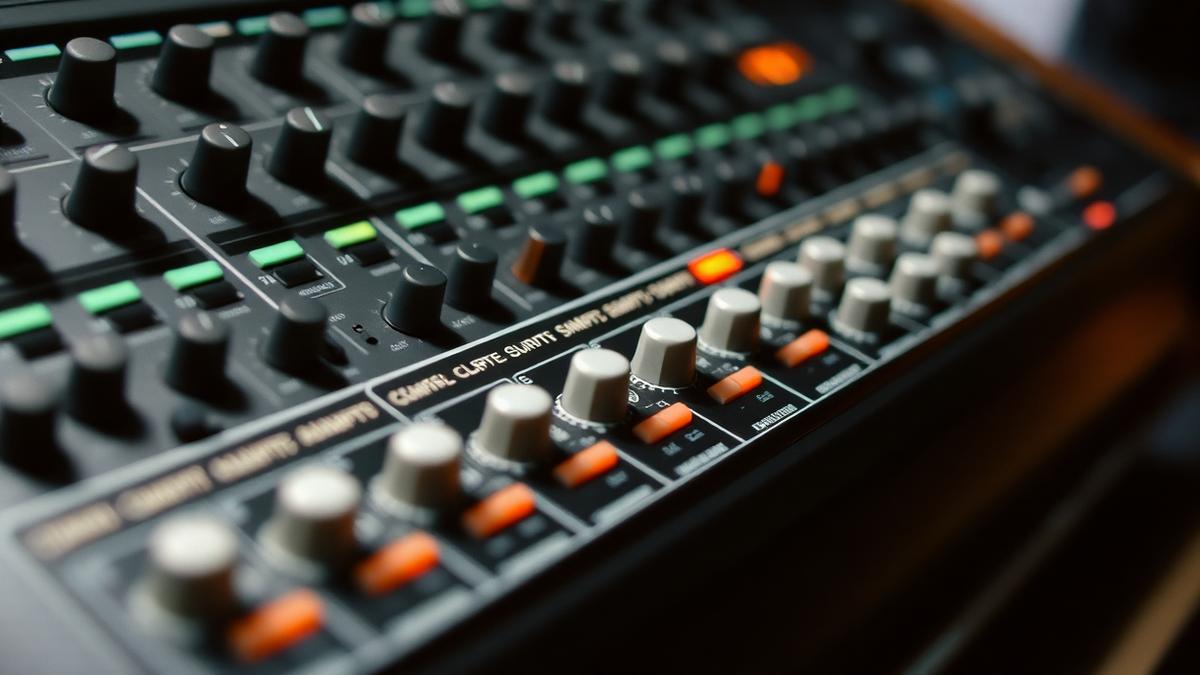
Photo: Eurorack Modular Synthesizer Closeup (opens in a new tab) by Nir Yaniv (opens in a new tab), via Wikimedia Commons — CC BY-SA 4.0 (opens in a new tab)
Key takeaways
- How many notes a synth can play at once, and whether each note gets its own full voice path or shares a filter.
- Paraphony is cheaper to build but chords behave differently — a new note can retrigger the whole envelope.
- A monosynth with glide is the standard choice for basslines because it forces one clear line rather than overlapping notes.
- Watch out: buying a paraphonic synth expecting full polyphonic behaviour on sustained chords.
- Sits under synthesis and sound design in this glossary, with 2 primary sources below.
Quick checklist
- Can you define polyphony / paraphony / monophony in one sentence without looking?
- Can you point at polyphony / paraphony / monophony in a real session, mix or contract?
- Have you tried the practical move above at least once?
- Would you catch the common mistake before it costs you a take?
- Have you opened one of the primary sources below rather than a forum thread?
POLYPHONY / PARAPHONY / MONOPHONY IN DEPTH
Monophonic synths play one note at a time, polyphonic synths give each note its own full voice, and paraphonic synths let multiple notes share one filter and amplifier. Paraphony is cheaper to build but chords behave differently — a new note can retrigger the whole envelope.
How it works in practice
A monosynth with glide is the standard choice for basslines because it forces one clear line rather than overlapping notes.
The mistake people make
Buying a paraphonic synth expecting full polyphonic behaviour on sustained chords.
WHERE POLYPHONY / PARAPHONY / MONOPHONY SITS
Polyphony / paraphony / monophony belongs to synthesis and sound design in the Sampled music glossary. How synths make sound, in the order the signal actually travels.
TEST YOURSELF
0/3 answered · 0 correct
3 quick questions on polyphony / paraphony / monophony. Answers are marked instantly — nothing is sent anywhere.
1. Which statement best describes polyphony / paraphony / monophony?
2. What is the mistake people most often make with polyphony / paraphony / monophony?
3. In practice, which of these applies to polyphony / paraphony / monophony?
Ready for the full thing? Take the 25-question terminology test and get a certificate with your name and score.
SOURCES AND CITATIONS
Free, primary references for polyphony / paraphony / monophony — standards bodies, manufacturers, government offices and university course material. Each one lists the line of this entry it backs up.
- Sequential support and manuals (opens in a new tab)
Primary reference · sequential.com
“How many notes a synth can play at once, and whether each note gets its own full voice path or shares a filter.”— the claim this source supports
Why it counts: Published by the organisation responsible for the thing being defined, so it is a first-hand source rather than a summary of one.
- Korg manuals (opens in a new tab)
Primary reference · korg.com
“Monophonic synths play one note at a time, polyphonic synths give each note its own full voice, and paraphonic synths let multiple notes share one filter and amplifier.”— the claim this source supports
Why it counts: Published by the organisation responsible for the thing being defined, so it is a first-hand source rather than a summary of one.
RELATED TERMS IN SYNTHESIS AND SOUND DESIGN
- Subtractive synthesis
- FM synthesis
- Wavetable synthesis
- Granular synthesis
- Modulation matrix
- CV/Gate
- Aliasing
- Additive synthesis
Back to the full music glossary or read our latest articles.