 SAMPLED
How to copyright your music in the U.S. (and why it actually matters)
You own your song the second you record it — but registering it is what lets you enforce it. Here's how to file with the U.S. Copyright Office, what it costs, and the mistakes producers keep making.
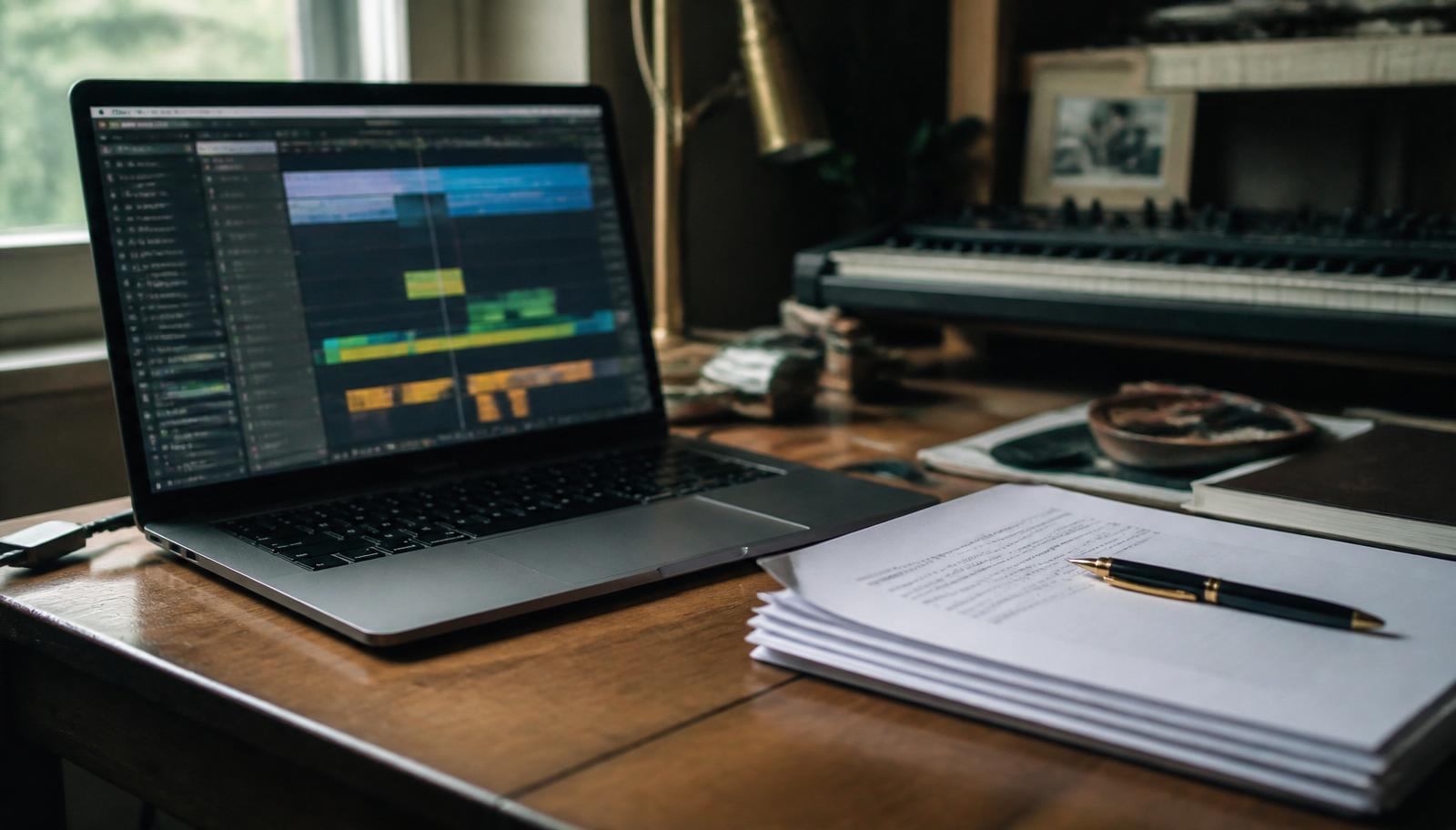
If you make music, you already own the copyright the second the song is fixed in a "tangible medium" — a voice memo, a Logic session, a stem export, a bounced WAV. That's federal law under the U.S. Copyright Act. You don't need a form, a lawyer, or a stamp to own your work.
But owning it and being able to defend it are two very different things. If somebody steals your beat, your topline, or your recording and you never registered with the U.S. Copyright Office, you're walking into court with one hand tied behind your back. Registration is what turns "I made this" into "and here's what you owe me."
Here's exactly how it works, what it costs, and the mistakes producers keep making.
What a music copyright actually protects
Every song has two separate copyrights, and this is the part most artists get wrong.
- The composition (PA) — the underlying song. Melody, lyrics, chord progression, arrangement. Owned by the songwriter(s) and publisher(s).
- The sound recording (SR) — the specific recorded performance. The master. Owned by whoever paid for or made the recording, usually the artist or label.
A cover of your song touches the composition. A sample of your record touches the sound recording. Sync a track in a Netflix show and you need permission for both. If you wrote it and recorded it yourself, congratulations — you own both, and you can register them together as one filing.
Do you actually need to register?
Legally, no. Practically, yes — for anything you plan to release, pitch for sync, or upload to a DSP.
Here's what registration gets you that automatic copyright doesn't:
- The right to sue for infringement in federal court. Without a registration, you can't file the lawsuit. Period.
- Statutory damages up to $150,000 per work for willful infringement, plus attorney's fees. Without a timely registration, you're limited to actual damages, which are usually pennies.
- A public record with a date attached. If someone later claims they wrote the same song first, your registration is your receipt.
- Presumption of validity in court if you register within five years of publication.
If you never register, you still own the song. You just can't really do anything about it when someone else uses it.
How to register a song with the U.S. Copyright Office
Everything happens at copyright.gov (opens in a new tab) through the eCO (electronic Copyright Office) portal. Skip any site that isn't a .gov — the third-party "copyright my song" services are marking up a form you can file yourself in twenty minutes.
The steps:
- Create a free account at the eCO portal.
- Pick the right form. For most independent musicians, that's the Standard Application ($65) or, if you wrote and recorded everything alone with no work-for-hire, the Single Application ($45). If you're filing a batch of unreleased songs together, use the Group Registration of Unpublished Works (GRUW) — up to 10 works for $85, as long as you're the sole author or the author list is identical for every song.
- Fill out the claim. Title, author(s), year of creation, whether it's been published, and who owns the rights. If you're registering both the composition and the sound recording together, check both boxes.
- Pay the fee. Card or ACH.
- Upload a deposit copy — the actual audio file (MP3, WAV, or a lead sheet PDF for the composition). This is what the Library of Congress stores as your official record.
- Wait. Standard processing is anywhere from a few weeks to nine months depending on Copyright Office backlog. Expedited processing exists but costs an extra $800 per claim and is reserved for pending litigation or contract deadlines.
Your registration is effective the day the Copyright Office receives a complete filing, not the day they approve it. Save that submission receipt.
The mistakes that actually cost you
Registering too late. To be eligible for statutory damages and attorney's fees, you need to register before the infringement happens or within three months of publication. Miss that window and you're stuck with actual damages, which for most independent artists is close to nothing. Register when you release, not after somebody rips you.
The "poor man's copyright." Mailing yourself a sealed envelope with a CD in it does nothing. It's not a legal thing. The Copyright Office says so directly on its own site. Stop it.
Confusing copyright with your PRO. ASCAP, BMI, SESAC, and GMR collect performance royalties. They don't register your copyright. If you're not sure how the PRO piece fits in, we broke it down in ASCAP vs BMI vs SESAC: which PRO should you actually join.
Forgetting the sound recording. Producers register the composition and forget the master, or vice versa. If you own both, register both — usually on the same form.
Uncleared samples. Registering a song that samples someone else's recording doesn't launder the sample. You still owe a clearance to the original rights holders. The registration only protects the original parts you contributed.
Splits nobody signed. If two people wrote it, both names go on the registration and both people share the copyright by default. Get your split sheets signed before you file, not after there's money on the table.
What about international protection?
The United States is a signatory to the Berne Convention, which means your U.S. copyright is automatically recognized in 180+ countries the moment the work is created. You don't need to register separately in the U.K., France, Japan, or anywhere else in the Berne system. Enforcement rules vary by country, but ownership travels with you.
When to bring in a lawyer
For a standard single-artist, single-song filing you can absolutely DIY. Bring in an entertainment attorney when:
- You're signing a publishing, distribution, or label deal that assigns rights.
- You're clearing samples or interpolations.
- You're dealing with an infringement claim — either you were ripped, or someone's accusing you.
- You're structuring co-writer splits with multiple parties, work-for-hire agreements, or producer points.
An hour of a music lawyer's time is cheaper than a badly worded contract.
The short version
Copyright exists the moment you press stop on the recorder. Registration is what makes it enforceable. For $45 to $85 and an afternoon, you can register everything you've released this year and make sure that if anyone ever steals from you, you're the one holding the paperwork.
Do it before the song goes anywhere. Not after.