 SAMPLED
Dinner Party is four different schools of production sitting at the same table
Watchu Bringing? landed August 7 on EMPIRE. Terrace Martin, Robert Glasper, Kamasi Washington and 9th Wonder all produce — so the interesting question isn't whether it's good, it's who is doing what.
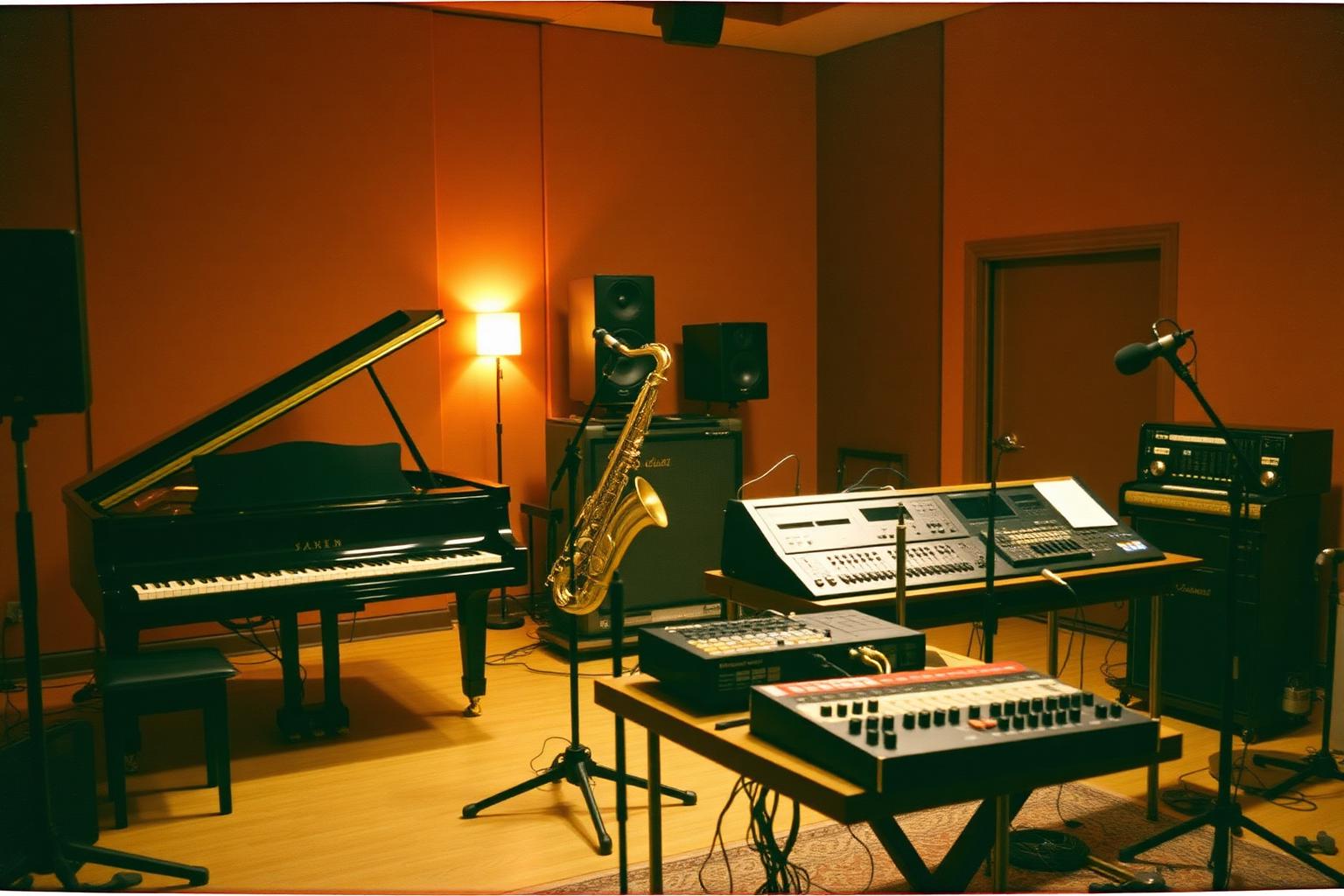
Dinner Party released Watchu Bringing? on Friday, August 7, 2026 via EMPIRE. It is the group's first full-length after two EPs — the self-titled 2020 debut and 2023's Enigmatic Society — and it runs nine tracks, with cover art by Amani Washington, who also handled the group's earlier releases.
The line-up is the story: Terrace Martin, Robert Glasper, Kamasi Washington and 9th Wonder. Poet J. Ivy features on the opener, and multi-instrumentalist and producer Phoelix appears on every track except the first and last.
Four people who can each independently produce a record are on one record. That is a structural problem before it is a musical one, and it is far more interesting than a star rating.
The tracklist
| # | Track |
|---|---|
| 1 | Stop Being Late (ft. J. Ivy) |
| 2 | If It Ain't Broke (Love Wins) (ft. Phoelix) |
| 3 | Stargazing |
| 4 | Breakfast at Sharkey's |
| 5 | I Wonder |
| 6 | Just My Type |
| 7 | I'm Yours |
| 8 | Mutual Respect |
| 9 | Peace of Mind |
Nine songs, most of them under three and a half minutes. For a group with this much instrumental firepower, the brevity is itself a production decision — nobody is being given room to solo their way through six minutes.
Four different definitions of "producer"
The word means something different to each member, and that is the whole point.
9th Wonder — the sample-based architect. His training is loop-first: find a source, chop it, let the imperfection of the sample dictate the swing. In a room full of live players, that instinct produces the opposite of what you'd expect — it argues for restraint, repetition, and a beat that stays out of the way.
Robert Glasper — the harmonic editor. Glasper's contribution is usually reharmonisation: taking a simple loop and changing what sits under it so the same melody reads as hopeful, unresolved, or bittersweet. In a group context he functions less as a soloist and more as the person deciding what chord the song is actually about.
Kamasi Washington — the arranger of scale. Washington thinks in ensembles. His default is layered horns, counter-melody, and long-form structure. On short tracks that instinct has to be compressed into single statements — a horn line as a hook rather than a movement.
Terrace Martin — the translator. Martin moves between saxophone, keys, vocoder and full hip-hop production, and his practical role in projects like this is usually the connective one: making a jazz idea sit correctly on a programmed drum pattern, and vice versa.
Then there is Phoelix, on seven of nine tracks — the collaborator who most often supplies the vocal and textural glue in this circle. His near-total presence suggests he is functioning as the record's continuity layer.
Where does a beatmaker end and an arranger begin?
This is the genuinely useful question for anyone making music with other people.
In a traditional session there is a hierarchy: someone makes the beat, someone writes on it, someone arranges, someone mixes. When everybody in the room can do all four, the roles have to be negotiated in real time — and the negotiation is audible.
Some markers to listen for:
- Does the drum pattern change with the harmony, or stay fixed? A fixed loop under shifting chords is a beatmaker's instinct. Drums that follow the harmonic movement are an arranger's.
- Who gets the last four bars? Outros tend to reveal whose idea the song was.
- Is the horn line a hook or a solo? Hooks are written; solos are played. A record that turns improvisers into hook-writers has been arranged tightly.
- How much room is in the low end? Jazz records leave the bass playing. Hip-hop records carve space for a sub. Hybrid records have to choose.
Why this format keeps working
Supergroups usually fail because everyone brings their own record and the result is a compromise. This one has survived three releases across six years because the members share a scene rather than a genre — the Los Angeles/Inglewood jazz-and-hip-hop overlap that produced To Pimp a Butterfly and a decade of adjacent work.
Shared scene means shared reference points, which means the negotiation over roles happens quickly. That is not a small thing. It is the difference between four producers making one record and four producers making four records at the same time.
Listen once for the songs. Listen again for the arguments.