 SAMPLED
Country has the entire Hot 100 top five — the interesting part is how the records are produced
For the first time since 1958, every song in the Hot 100's top five is country. Ella Langley's "Choosin' Texas" is at No. 1 for a 16th week. The chart story is easy; the production story is the one worth having.
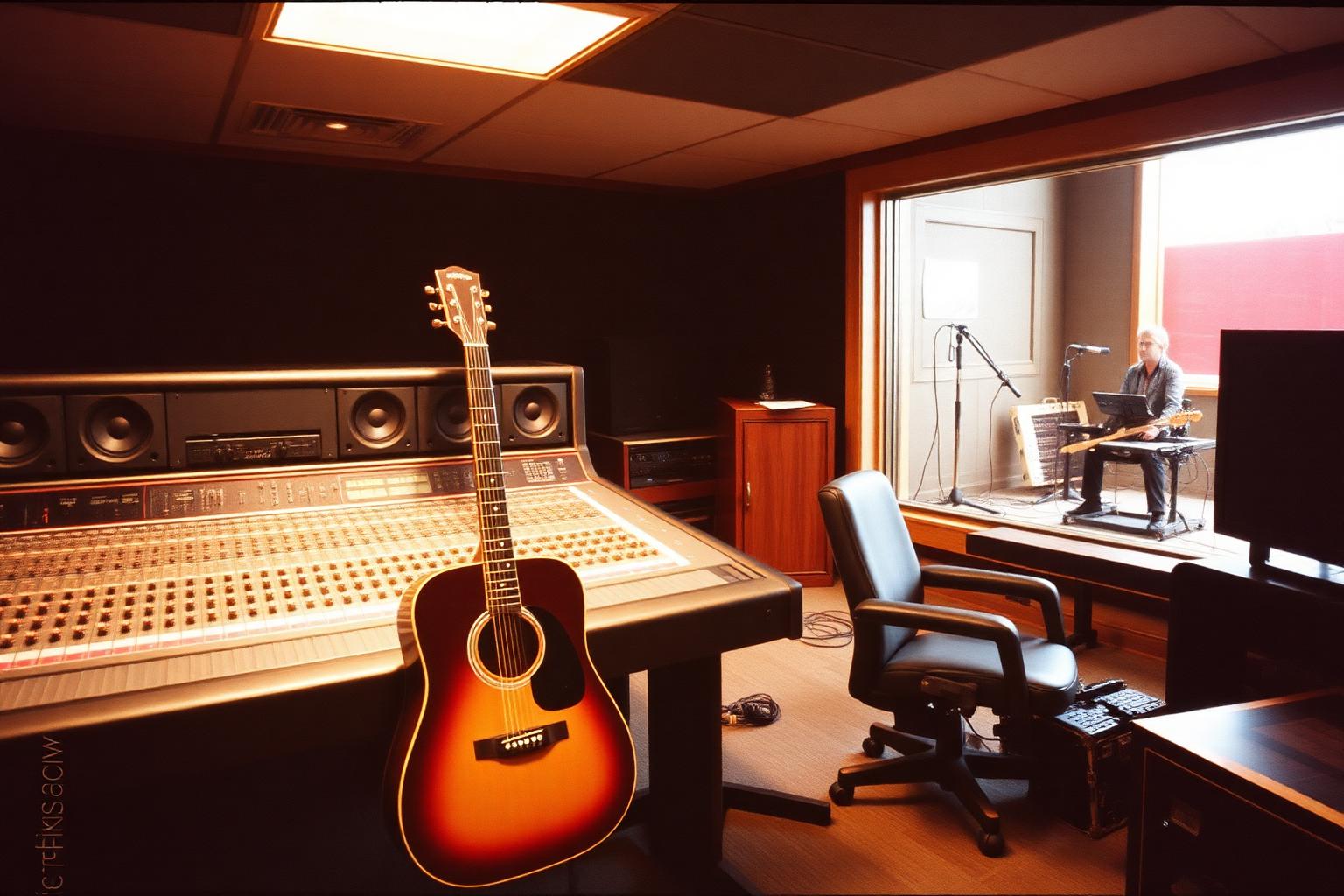
On the Billboard Hot 100 dated August 8, 2026, the top five is entirely country — the first time that has happened since the chart launched in 1958.
Ella Langley's "Choosin' Texas" holds No. 1 for a 16th week, tying for the fourth-longest run in Hot 100 history alongside Morgan Wallen's "Last Night," "Despacito," and "One Sweet Day." Wallen debuts at No. 2 with "Been by Now," Taylor Swift is at No. 3 with "I Knew It, I Knew You," and Langley and Wallen return at No. 4 with their duet.
"Country is popular now" is not an article. The useful question is why records made in Nashville in 2026 are competitively streamable against pop and hip-hop — and the answer is that the production conventions of those genres converged years ago.
Where the convergence actually happened
Drums
The clearest tell. A modern country single is rarely a live kit alone. The standard build is a real kit — usually recorded tight, with heavy close-mic emphasis and controlled room — layered with programmed reinforcement: a sampled kick for sub content, a clap or snap doubling the backbeat, and often a programmed hat pattern running underneath the live one.
That layered approach came out of pop and hip-hop, and it exists for one reason: consistency on small speakers. A purely live kit loses definition on a phone. A layered kit does not.
Low end
Traditional country mixes put the bass guitar in the 80–200 Hz range and left the bottom two octaves largely empty. Contemporary country singles frequently carry real sub content below 60 Hz — a sine layer under the kick, or a synth bass doubling the electric.
This is the single biggest sonic change, because it is what makes a country record sit at the same perceived loudness as everything else in a playlist.
Vocals
Country's traditional advantage was a dry, forward, intelligible vocal. That has not gone away — but the processing chain has. Tuning is universal and usually fast enough to be inaudible. Parallel compression and de-essing are heavier. Doubles and octave-down layers on chorus lines are borrowed straight from pop.
Guitars
The distinguishing element that survives. Pedal steel, acoustic strumming, and telecaster parts still define the genre's identity. What changed is placement: guitars are increasingly used as texture and hook rather than a full harmonic bed, leaving space for the vocal and the sub.
| Element | Country, 2006 | Country, 2026 |
|---|---|---|
| Kick | Live, mid-forward | Live + sampled sub layer |
| Bass | Electric, 80–200 Hz | Electric + synth sub below 60 Hz |
| Vocal | Light tuning, dry | Heavy chain, layered doubles |
| Acoustic guitar | Harmonic bed | Rhythmic texture |
| Tempo/feel | Band-driven, some drift | Grid-locked with intentional swing |
Songwriting and personnel
Nashville's songwriting-camp model — three to five writers in a room on a schedule — is structurally identical to how most pop hits are written. Titles-first, hook-first, and built around a concept that can survive being stated in the first eight bars.
Meanwhile the feature economy that pop and hip-hop normalised has fully arrived: duets, cross-genre guests and rap features are ordinary rather than novel. A duet occupying a top-five slot alongside both artists' solo singles is a pop chart strategy, executed in country.
The playlist question
Categorisation is now the messiest part. A record with a pedal steel, an 808-adjacent sub, a rap-cadence pre-chorus and a stadium-rock chorus is coded country by the vocal accent, the lyrical vocabulary, and the guitar tone — not by the rhythm section.
That is why "western-influenced" keeps appearing in chart write-ups. Genre is functioning as a marketing and playlisting layer sitting on top of production choices that are, technically, shared across the whole chart.
What producers should take from it
- Sub content is not a genre choice. If your record competes in a mixed playlist, it needs low end that translates.
- Layer, don't replace. The live kit is still the character. The samples are the consistency.
- Protect intelligibility. Country's structural advantage is that you can hear every word. Do not process that away chasing loudness.
- Identity lives in one or two instruments. Steel, tele, fiddle — one clearly-recorded signature instrument does more genre work than an entire arrangement of hints.
The chart record is the headline. The convergence underneath it is the actual trend.