 SAMPLED
What Cheap Instruments Make Your Tracks Sound Human?
A kalimba, a dinner bell, a plastic recorder, and a harmonica cost less than one plugin — and they put something in a track that no sample pack can.
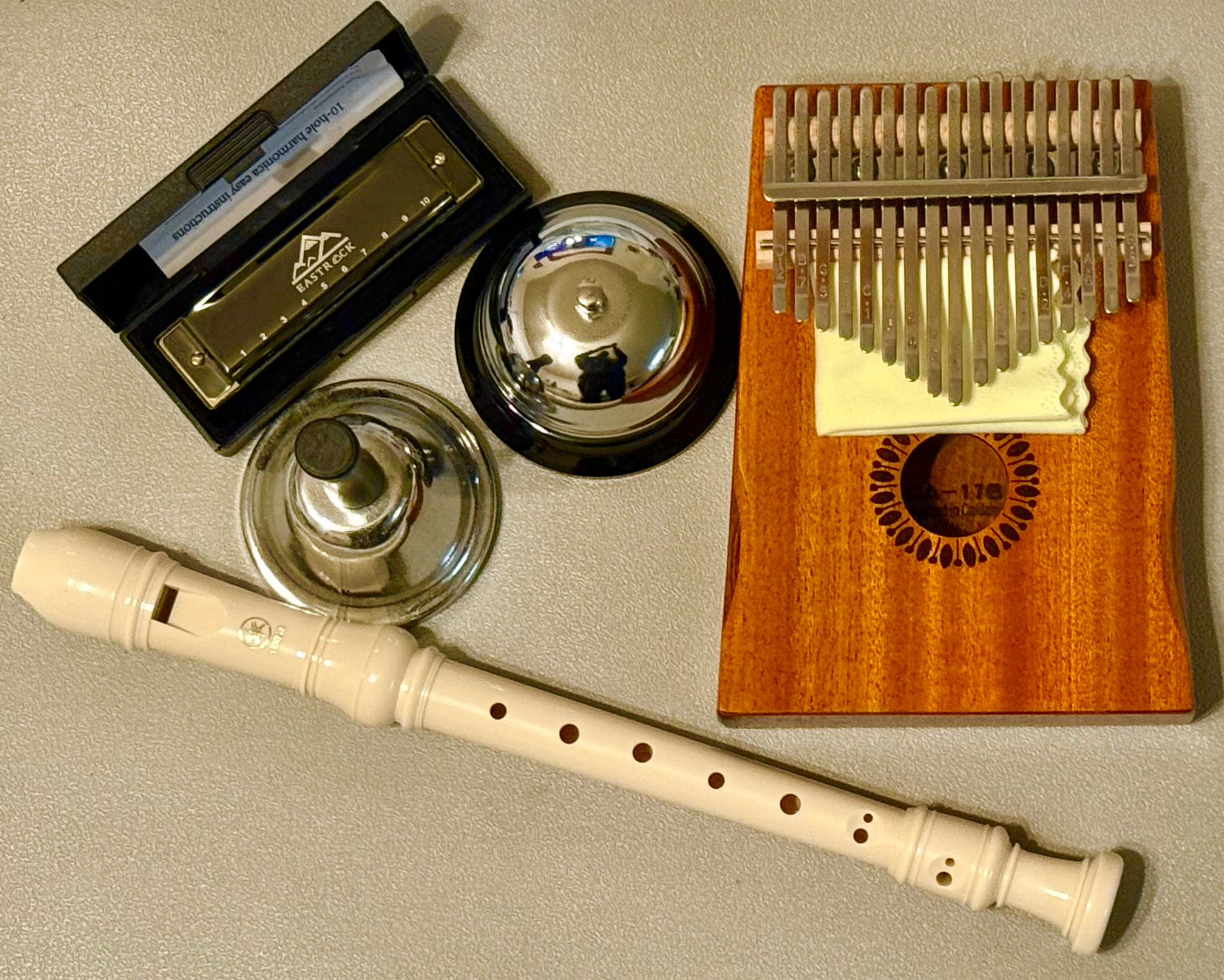
Everything on this table cost less than a single boutique plugin. A kalimba, a call bell, a plastic school recorder, and a ten-hole harmonica. Together they are the fastest way I know to break a beat out of the sample-pack sameness that makes so much bedroom music blur together.
Sample packs are fine. Everybody has them. That is the problem. The second you record something real — a thumb piano played slightly off the grid, a bell struck with the flat of your hand, breath moving through a plastic tube — the track stops sounding like a preset and starts sounding like a person made it.
The kalimba is the melody machine
The kalimba (opens in a new tab) is the one that earns its keep first. Seventeen tines, tuned, note letters stamped right on the metal, so you do not need to read anything to find a melody. Pluck three tines in a row and you have a hook. It is almost impossible to play a genuinely ugly note on one.
Recording tips: get close with whatever mic you have, keep the body of the instrument off the desk (that hollow box wants air around it), and record more takes than you think you need. Pitch it down an octave in your DAW and it turns into something else entirely — a dark, woody mallet sound that sits beautifully under a vocal. Pitch it up and it is a music-box top line.
The dinner bell is your transition
That chrome call bell (opens in a new tab) is the cheapest percussion in the room. Struck normally it is a bright, clean ping with a long tail — perfect on the last beat before a drop, or as a hi-hat replacement when you want one accent to cut. Muted with your palm it becomes a tight, dry tick.
Try it as the tail end of a reverse: reverse the sample, put it in front of a downbeat, and you get a swell no plugin gave you. Two bells at slightly different pitches, panned wide, is an instant intro.
The plastic recorder is not a joke
The Yamaha YRS-24B (opens in a new tab) is the same recorder they hand out in elementary school, and that is exactly why it is useful. It sounds like memory. It is soft, slightly breathy, and it records well because it does not have the dynamic range to overload anything.
Play it badly on purpose. Double the line an octave up. Run it through a tape saturation plugin and a short room reverb and it starts sounding like a sampled flute off an old record — because in a sense it is one. It is also a fast way to sketch a melody if you do not play keys.
The harmonica is the texture
The EastRock 10-hole harmonica in C (opens in a new tab) is diatonic, which means the wrong notes are mostly not there. Draw and blow across a few holes and it is in key. For most producers this is not a lead instrument — it is a layer. A single sustained chord under a hook, filtered down, adds a reedy warmth that pads never quite get.
Cup it with your hands while you play and move them; that wah is free and it is real. Record it in a bathroom if you have one. Distant, roomy harmonica behind a beat is one of the more underused sounds going.
How to actually use them
| Instrument | Best job in a track | Quick trick |
|---|---|---|
| Kalimba | Melody, music-box top lines | Pitch down an octave for mallets |
| Call bell | Transitions, accents | Reverse it into the downbeat |
| Recorder | Soft lead, doubling | Tape saturation + short room |
| Harmonica | Sustained texture layer | Hand-cup wah, record in a bathroom |
None of this requires a real studio. A phone mic in a quiet room will get you something usable, and a basic USB mic will get you something you can release. The point is not fidelity — it is that the performance is yours, timing imperfections and all, and that is the part listeners feel without being able to name.
Buy one. Play it for twenty minutes. Sample the three seconds that sounded good and build the beat around that.
Photo: Sampled. As an Amazon Associate, Sampled earns from qualifying purchases. Links in this article may be affiliate links, at no extra cost to you.