 SAMPLED
Mixing and mastering · updated 2026-08-16
DYNAMIC RANGE
The distance between the quietest and loudest moments. Crushing it flat is why some masters feel exhausting.
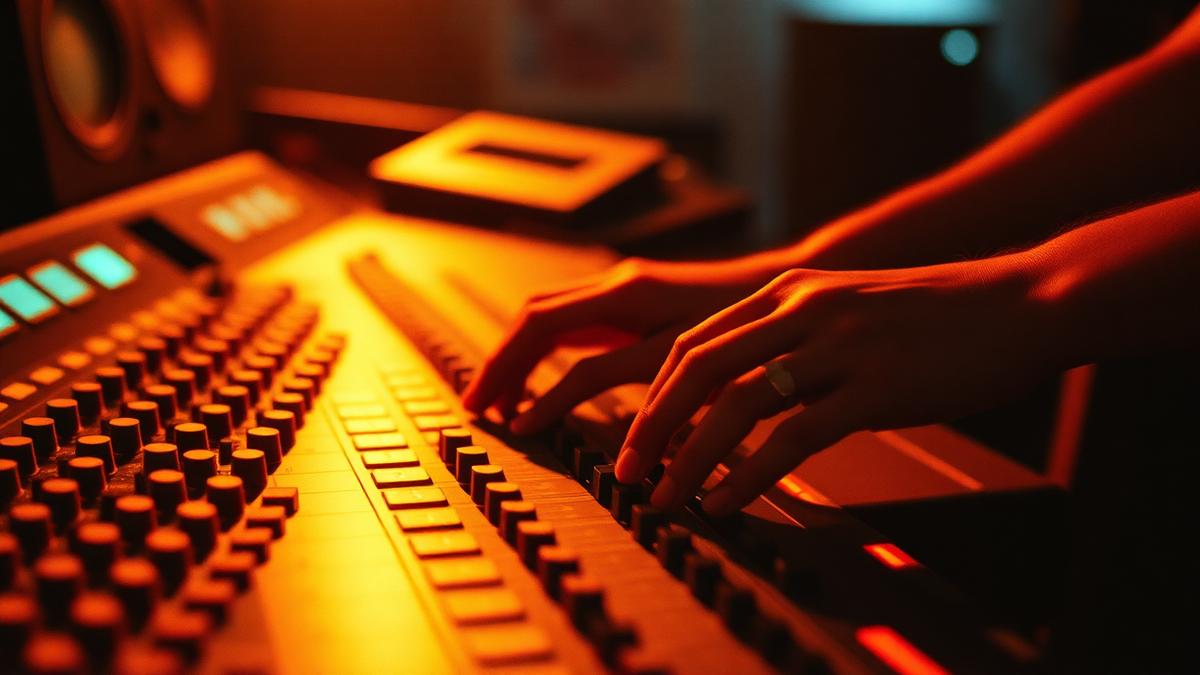
Photo: Solid State Logic (SSL) Matrix Mixing Console at Audio Mix House, Studio C (opens in a new tab) by Audio Mix House (opens in a new tab), via Wikimedia Commons — CC BY 2.0 (opens in a new tab)
Key takeaways
- The distance between the quietest and loudest moments.
- Crushing it flat is why some masters feel exhausting.
- It gives arrangements contrast — a chorus only lifts if the verse sits below it — and it is the first thing lost when a master is pushed for level.
- Automate the verse down a decibel instead of compressing the chorus up; the lift survives loudness normalisation either way.
- Watch out: equating small dynamic range with a bad master.
Quick checklist
- Can you define dynamic range in one sentence without looking?
- Can you point at dynamic range in a real session, mix or contract?
- Have you tried the practical move above at least once?
- Would you catch the common mistake before it costs you a take?
- Have you opened one of the primary sources below rather than a forum thread?
DYNAMIC RANGE IN DEPTH
Dynamic range is the distance between the quietest and loudest parts of a piece. It gives arrangements contrast — a chorus only lifts if the verse sits below it — and it is the first thing lost when a master is pushed for level.
How it works in practice
Automate the verse down a decibel instead of compressing the chorus up; the lift survives loudness normalisation either way.
The mistake people make
Equating small dynamic range with a bad master. Some genres are intentionally dense; the problem is only when the density was not a choice.
WHERE DYNAMIC RANGE SITS
Dynamic range belongs to mixing and mastering in the Sampled music glossary. The processing vocabulary, plus the loudness standards streaming services actually measure you against.
TEST YOURSELF
0/3 answered · 0 correct
3 quick questions on dynamic range. Answers are marked instantly — nothing is sent anywhere.
1. Which statement best describes dynamic range?
2. What is the mistake people most often make with dynamic range?
3. In practice, which of these applies to dynamic range?
Ready for the full thing? Take the 25-question terminology test and get a certificate with your name and score.
SOURCES AND CITATIONS
Free, primary references for dynamic range — standards bodies, manufacturers, government offices and university course material. Each one lists the line of this entry it backs up.
- EBU R128 (opens in a new tab)
Broadcast standards body · European Broadcasting Union
“The distance between the quietest and loudest moments.”— the claim this source supports
Why it counts: The EBU tech document sets the delivery targets broadcasters and platforms actually enforce.
- AES technical library (opens in a new tab)
Professional standards body · Audio Engineering Society
“Crushing it flat is why some masters feel exhausting.”— the claim this source supports
Why it counts: AES writes and reviews the engineering standards and peer-reviewed papers this terminology comes from.
RELATED TERMS IN MIXING AND MASTERING
Back to the full music glossary or read our latest articles.