 SAMPLED
Gear, instruments and tools · updated 2026-08-16
OPEN-BACK VS CLOSED-BACK HEADPHONES
Closed-back seals in sound and blocks bleed, which is why they live on the mic stand for tracking. Open-back leaks both ways but images wider and fatigues less when mixing.
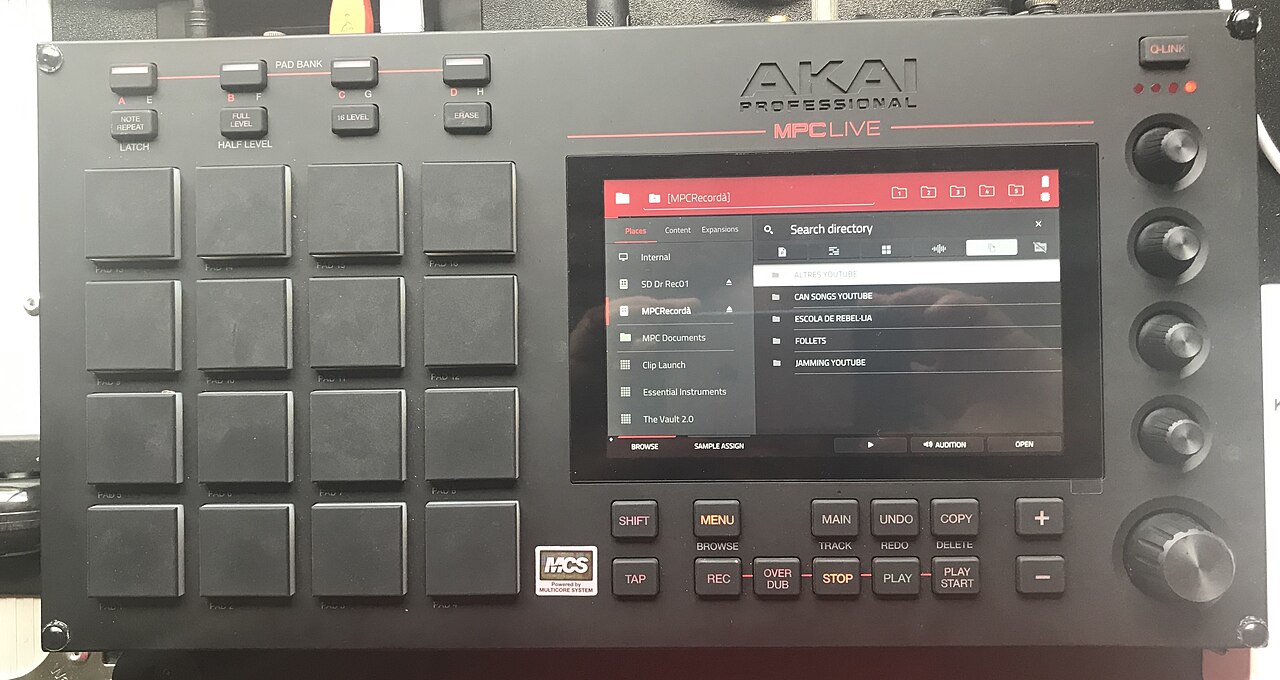
Photo: Akai MPC Live (2017) (opens in a new tab) by Joan Recordà (opens in a new tab), via Wikimedia Commons — CC BY-SA 4.0 (opens in a new tab)
Key takeaways
- Closed-back seals in sound and blocks bleed, which is why they live on the mic stand for tracking.
- Open-back leaks both ways but images wider and fatigues less when mixing.
- Open-back headphones let air move through the rear of the driver: wider imaging, more natural decay, less listening fatigue, and total bleed, which makes them a mixing tool rather than a tracking one.
- Track vocals on closed-backs, then switch to open-backs for balance and reverb decisions once nothing is being recorded.
- Watch out: mixing bass on open-backs alone.
Quick checklist
- Can you define open-back vs closed-back headphones in one sentence without looking?
- Can you point at open-back vs closed-back headphones in a real session, mix or contract?
- Have you tried the practical move above at least once?
- Would you catch the common mistake before it costs you a take?
- Have you opened one of the primary sources below rather than a forum thread?
OPEN-BACK VS CLOSED-BACK HEADPHONES IN DEPTH
Closed-back headphones seal against the head, keep click and backing tracks out of the microphone and block outside noise — which is why they live on the mic stand. Open-back headphones let air move through the rear of the driver: wider imaging, more natural decay, less listening fatigue, and total bleed, which makes them a mixing tool rather than a tracking one.
How it works in practice
Track vocals on closed-backs, then switch to open-backs for balance and reverb decisions once nothing is being recorded.
The mistake people make
Mixing bass on open-backs alone. Headphones of either kind bypass the room, so check low end on speakers or a familiar reference before committing.
WHERE OPEN-BACK VS CLOSED-BACK HEADPHONES SITS
Open-back vs closed-back headphones belongs to gear, instruments and tools in the Sampled music glossary. The boxes, controllers and sample formats a producer is expected to know by name — from the MPC to a one-shot.
TEST YOURSELF
0/3 answered · 0 correct
3 quick questions on open-back vs closed-back headphones. Answers are marked instantly — nothing is sent anywhere.
1. Which statement best describes open-back vs closed-back headphones?
2. What is the mistake people most often make with open-back vs closed-back headphones?
3. In practice, which of these applies to open-back vs closed-back headphones?
Ready for the full thing? Take the 25-question terminology test and get a certificate with your name and score.
SOURCES AND CITATIONS
Free, primary references for open-back vs closed-back headphones — standards bodies, manufacturers, government offices and university course material. Each one lists the line of this entry it backs up.
- Sampled — best studio headphones
Primary reference · Sampled — best studio headphones
“Closed-back seals in sound and blocks bleed, which is why they live on the mic stand for tracking.”— the claim this source supports
Why it counts: Published by the organisation responsible for the thing being defined, so it is a first-hand source rather than a summary of one.
- NIOSH — noise and hearing loss (opens in a new tab)
Government agency · U.S. federal agency
“Open-back leaks both ways but images wider and fatigues less when mixing.”— the claim this source supports
Why it counts: Official measurement and exposure guidance — the reference the numbers in this entry are taken from.
RELATED TERMS IN GEAR, INSTRUMENTS AND TOOLS
Back to the full music glossary or read our latest articles.