 SAMPLED
Where Should You Buy Studio Gear? Try Antique Stores and Thrift Shops
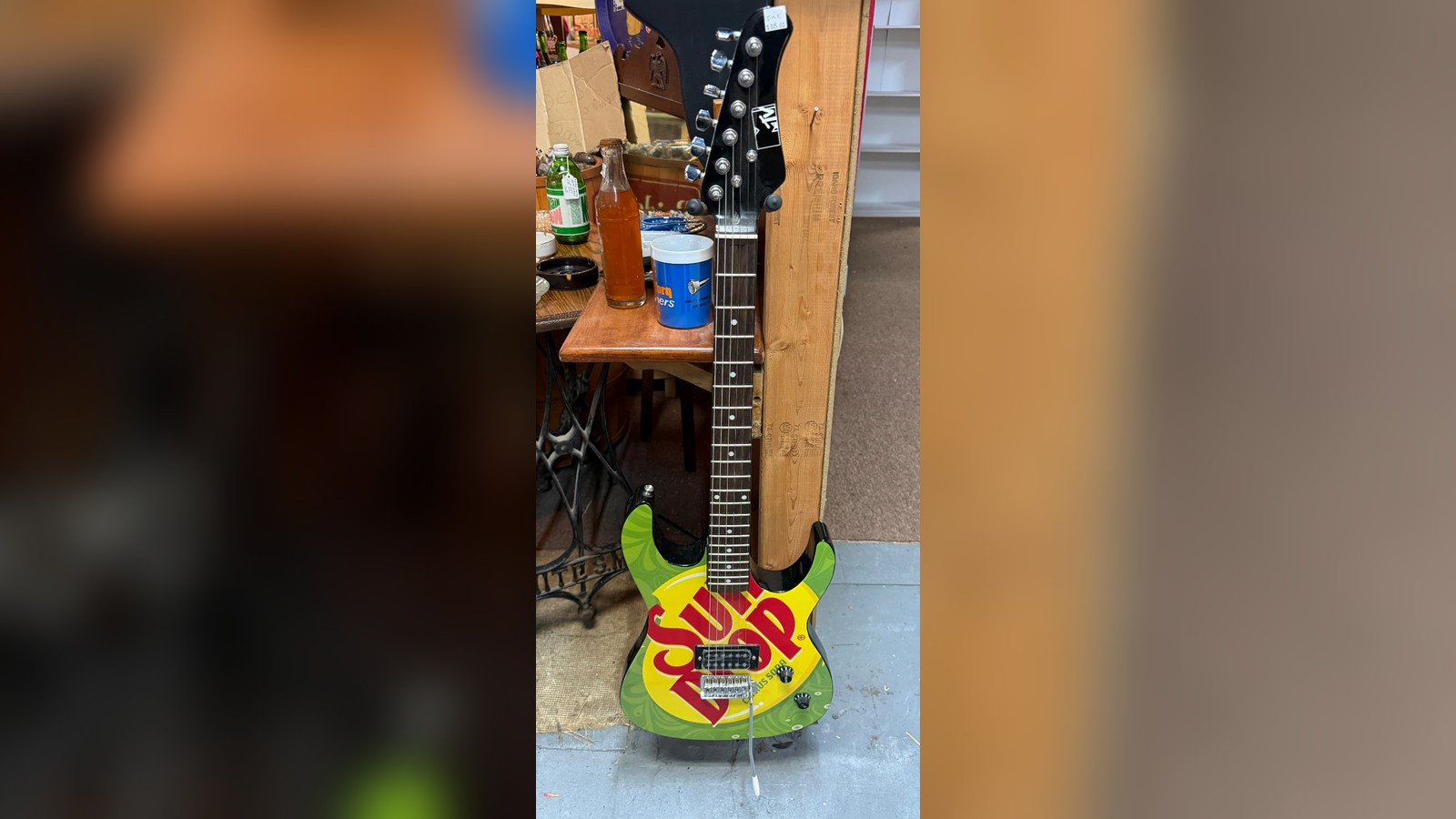
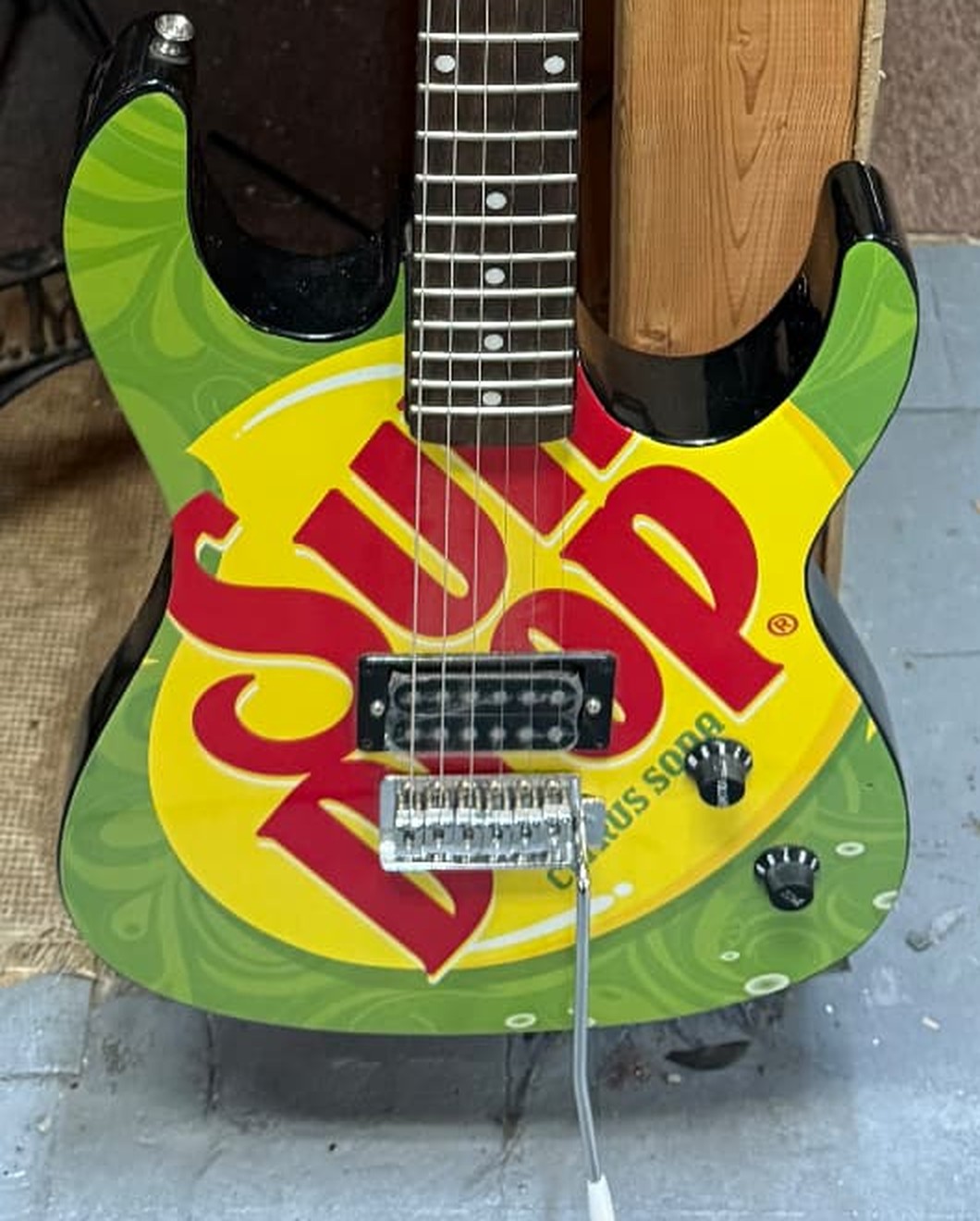
A $35 Sun Drop promo guitar in an antique booth is a reminder: the best studio finds are rarely in music stores.
Nobody sells you a studio all at once. It gets built out of whatever you can find, and the people with the most interesting-sounding rooms are almost never the ones who bought everything new from one website. They are the ones who look in places that are not music stores.
I found this in an antique mall. A Sun Drop guitar — a promo instrument in green and yellow with the logo screened across the body — leaning against a plank in a booth full of soda bottles, ashtrays, and a McDonald's mug. Tagged $35. It was not filed under "guitars." It was filed under "old stuff."
Why the antique store beats the guitar store sometimes
Guitar shops price by what a thing is. Antique booths price by what the seller thinks somebody will pay for a decorative object. A promo guitar in a music store is a collectible with a collector's price. The same guitar in a booth between a sewing table and a crate of Mason jars is priced like a wall hanging.
That gap is where your studio budget goes further than it should. And the risk is small — at $35 you can afford for it to need a setup, new strings, or a pot cleaned out.
What is actually worth hunting for outside music retail
- Odd or promo instruments. Cheap pickups, weird woods, and short-scale necks make sounds a clean modern guitar will not make. That is not a flaw when you are tracking a hook.
- Furniture. Solid wood desks, low bookshelves for monitor stands, heavy tables that do not resonate. A $40 oak table beats a $300 flat-pack desk that hums.
- Soft goods. Wool blankets, heavy curtains, and rugs are acoustic treatment with a smaller price tag and better looks than foam.
- Cases, stands, and hardware. Old flight cases, mic stands, and hardware bins turn up constantly at estate sales and flea markets.
- Speakers and radios. A junk-store boombox or console radio is a reference cabinet — track a guitar or a drum bus through it and mic the result.
- Records, tapes, and CDs. Cheap listening material and cheap sample material in the same bin.
- Set dressing. If you shoot video in your room, the antique mall is your prop department.
How to hunt without getting burned
- Set a walk-away price before you plug in. With no way to test it, pay only what you would pay for the object as-is.
- Check the things that cost money to fix. On a guitar: neck straightness, fret wear, cracks at the headstock. On anything electric: cord condition and whether the jack is loose.
- Assume it needs work. Strings, a setup, contact cleaner, maybe a jack. Budget another $40–$60 and you are still ahead.
- Do not fall for the story. Rarity does not make an instrument useful to you. Sound does.
- Go often, buy rarely. The finds come from repetition, not from one heroic trip.
The real point
Thinking outside the box about sourcing is not a thrift-flex. It is how you get an instrument or a piece of gear with a character nobody else's session has. Every producer buying from the same three stores ends up with the same three sounds. A $35 soda-logo guitar with a slightly wrong pickup is a fingerprint.
Look in the antique mall. Look at the estate sale, the church rummage sale, the pawn shop two towns over, the marketplace listing with the bad photo. Your room does not care where the stuff came from. Neither does the record.