 SAMPLED
Are CDs Worth It? Why You Should Be Listening to More of Them
Uncompressed audio, original masters, full albums in order — and a used bin where good records still cost fifty cents.
Somewhere between the last burned mix and the first month of unlimited streaming, most of us quietly stopped owning music. It did not feel like a loss at the time. It felt like winning — every record ever made, in a pocket, for the price of two sandwiches.
Then the catalog started moving around. Albums vanished over licensing disputes. Mixes got quietly swapped for remasters nobody asked for. Playlists rearranged themselves. And the thing you thought you owned turned out to be a rental with a landlord who never answers the phone.
Compact discs are the cheapest fix for that problem in the history of recorded sound.
The bin is full and nobody is looking
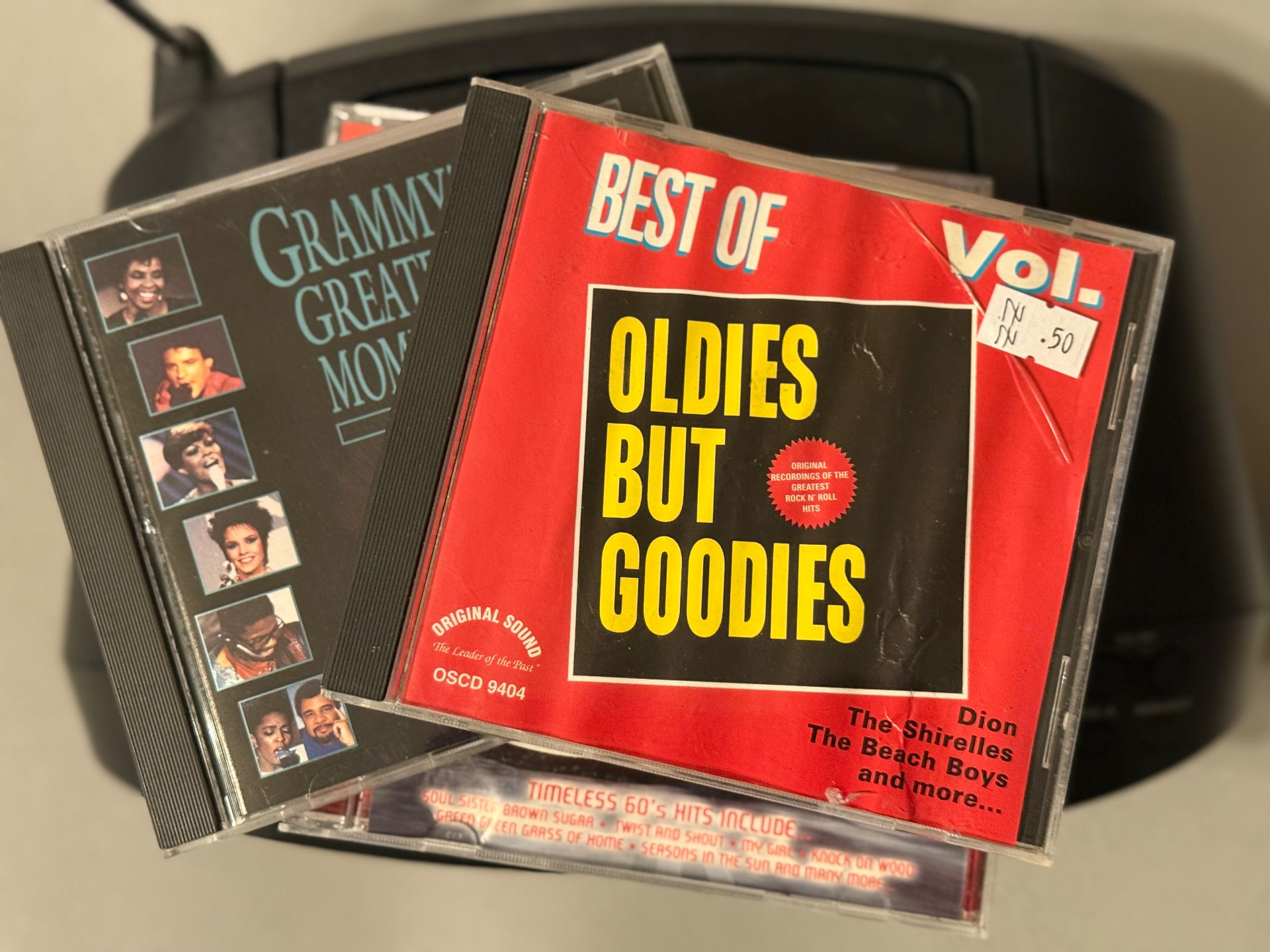
Go to a thrift store, a flea market, a library sale, the sad shelf at the back of a record shop where the vinyl kids do not look. The CD in the photo above cost fifty cents. Not a typo — a fifty-cent sticker on a compilation that includes Dion, The Shirelles, and The Beach Boys.
Vinyl reissues run $30 to $45. A used CD of the same album is routinely one to three dollars, and it has never been played by someone who set the tonearm down like they were dropping an anchor. Discs are physically tough. They skip when they are filthy, and then you wipe them and they stop skipping.
This is the last format where a serious collection is still a hobby you can fund out of your coat pocket.
It actually sounds like the record
A CD is 16-bit, 44.1 kHz, uncompressed. Not "high resolution," not a marketing tier — just the full file, sitting on a disc, with no bitrate negotiation happening between you and a server in another state.
Most streaming defaults are lossy. Most people never change the setting. And even on the lossless tiers, what you get is whatever master the rights holder uploaded last — which, for a lot of catalog from 1995 to 2010, is a brickwalled loudness-war remaster with the dynamics crushed out of it. That original CD pressing in the bargain bin often has the earlier, quieter, more open master. Producers hunt these down on purpose.
It makes you listen to albums again
This is the part that changes how you hear music.
A disc plays in order. There is no autoplay, no algorithmic slide into something adjacent, no skip button three feet away that costs you nothing to press. You put the thing in, you sit down, and track seven — the one you always scrolled past — gets a chance.
Sequencing is a craft. Artists spend weeks on running order, on what follows what, on where the slow one lands. Shuffle deletes all of that work. A CD hands it back.
For producers: your reference library is sitting in a bin
If you make records, the used CD section is a free education.
- Rip a disc to WAV and you have a clean, uncompressed reference to A/B against your mix — no streaming codec smearing the top end, no platform loudness normalization skewing your read on level.
- Compilations are the fastest way to hear how twelve different engineers handled the same era. Fifty cents for a survey course.
- Older pressings preserve masters that no longer exist anywhere else. That is genuine research material.
- CD players are the last cheap piece of hi-fi. A used deck or a boombox goes for the price of a cable.
It survives the internet
Streaming catalogs shrink. Artists get pulled during disputes. Deluxe editions replace originals. Regional licensing means an album available in one country is a gray tile in another. None of that reaches a disc on your shelf.
You do not need a subscription, a login, a signal, or permission. You need a player and a wall socket. In thirty years that disc will still play, and whatever app you are using today will not exist.
How to start this weekend
- Buy a used CD player or boombox. Thrift stores are full of them, usually under $20.
- Hit a thrift shop, library sale, or flea market with $10. Come home with eight to fifteen albums.
- Do not curate on the way in. Buy the weird compilation, the soundtrack, the artist you only know one song by.
- Rip everything to your computer as WAV or FLAC. Now you own backup copies too.
- Play one album a night, start to finish, doing nothing else.
Streaming is a phenomenal discovery tool and a terrible ownership model. Keep the subscription. But build a shelf next to it — one that nobody can edit, expire, or remaster without asking you.
Fifty cents at a time.