 SAMPLED
Dolly Parton's impact on music: the songwriter who rewrote what a country star could own
She built a catalog, a business and a blueprint — and you can trace the line from "Jolene" and "I Will Always Love You" straight through Reba, Carrie Underwood, Miranda Lambert, Kacey Musgraves, Miley Cyrus and Lainey Wilson.
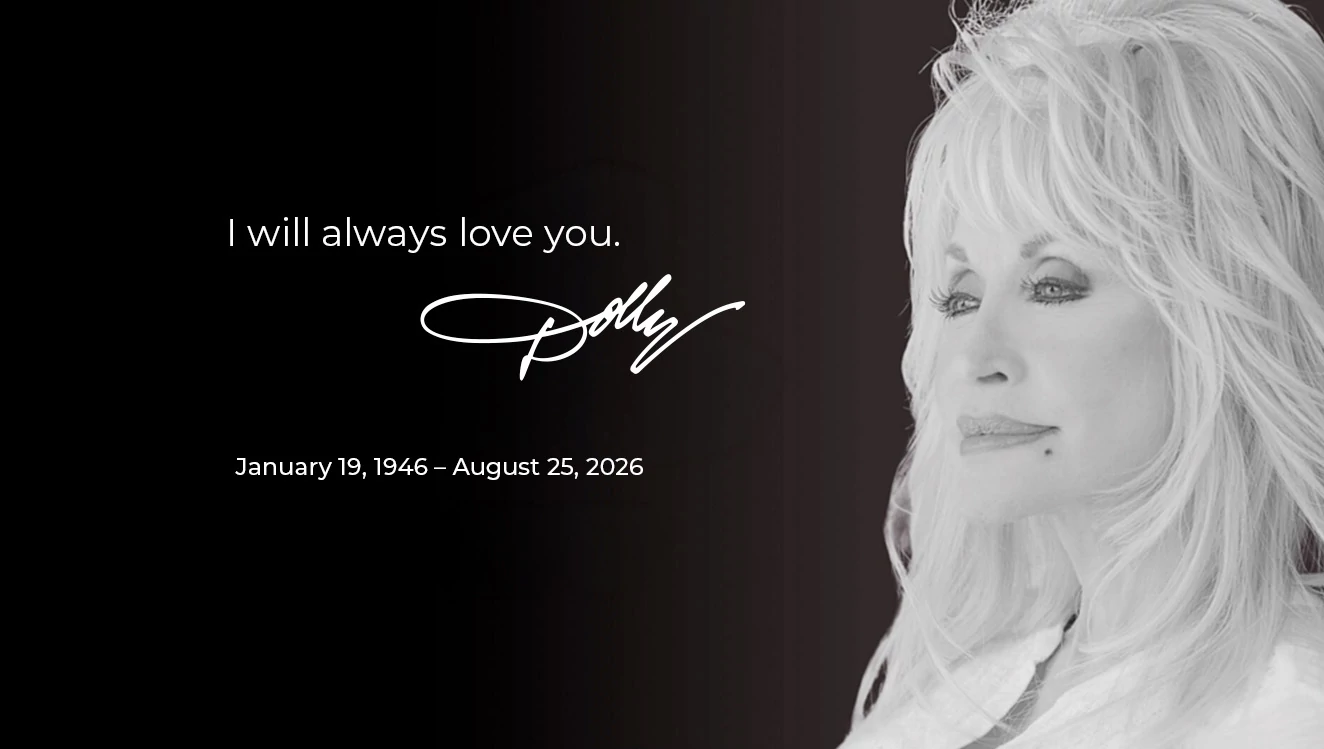
Dolly Parton has died at 80. Sampled is in Pigeon Forge this week, and a fuller report from the ground is coming. This piece is about the thing that outlasts everything else: the music, and how much of what modern country and pop sound like was drafted by one songwriter from Sevier County, Tennessee.
Her official tribute, posted to her own channels, carries the line she has effectively been saying to her audience for fifty years — I will always love you — over her signature and her dates: January 19, 1946 – August 25, 2026.
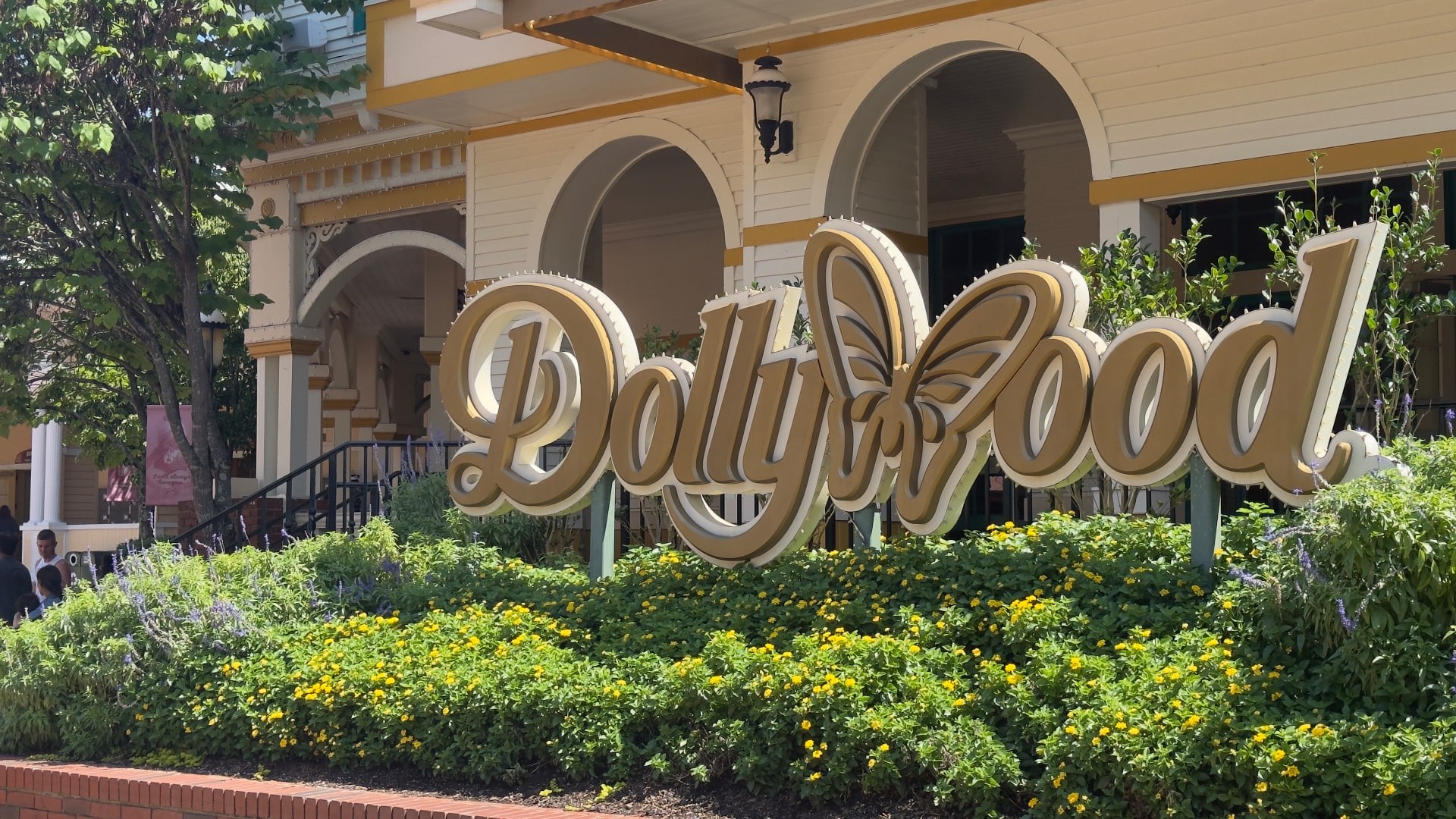
On the ground at Dollywood, Pigeon Forge — August 26, 2026. Photo: Robert Clemons for Sampled.
The catalog is the legacy
Parton wrote. That is the first and most important fact about her, and it is the one most often buried under the wigs-and-jokes shorthand she cheerfully encouraged. She is credited with thousands of songs, and she owned her publishing at a time when very few women in Nashville — and not many men — controlled that side of their careers.
The two songs everyone can hum arrived in the same stretch of 1973. For years she told the story that she wrote "Jolene" and "I Will Always Love You" on the very same day — though she later admitted on Clubhouse that may not strictly be true. True or not, the legend survives because it is believable: she really was writing that well, that fast. "Jolene" (1973) is a masterclass in economy: one repeated guitar figure, one modal melody, one narrator, and a rival who never gets a line of dialogue. "I Will Always Love You" (1974) was written as a goodbye to Porter Wagoner and his television show — a resignation letter that became one of the most valuable copyrights in popular music, first as her own country No. 1, again on the Best Little Whorehouse in Texas soundtrack, and then in 1992 through Whitney Houston's recording (opens in a new tab), which turned it into a global standard.
The business decision behind that song is the part young writers should study. Parton declined to hand over half the publishing when Elvis Presley's camp wanted to cut it — a story she told repeatedly and without bitterness — and kept the copyright. Every cover since has paid the writer. That is not trivia. That is the template.
Then there is "9 to 5" (1980): a song about clock-punching labor, written on the set of a film about clock-punching labor. She only agreed to make the movie on the condition that she be allowed to write its theme song. According to People (opens in a new tab), Parton recalled developing lyrics on set, then going back to her hotel at night with her guitar and putting those rough recordings down on tape. She also worked out the rhythm by clacking her acrylic nails together, which she said sounded like typewriter keys punching. The nails made it onto the final record as percussion — the album credits read "Nails by Dolly." It topped the country and pop charts at once and remains one of the very few genuine working-class anthems that people actually dance to.
What she actually changed structurally
Three shifts, all of them still in force:
- Ownership. Publishing, masters where she could get them, her name, her likeness, and eventually a theme park and a foundation. Parton treated intellectual property as the asset, not the promo cycle. Dollywood in Pigeon Forge and the Imagination Library (opens in a new tab) exist because the songwriting royalties paid for them.
- Crossover without abandonment. She moved into pop, film and Vegas-scale spectacle in the late '70s and '80s and kept coming home to bluegrass, gospel and Appalachian material — most explicitly on The Grass Is Blue (1999) and the Trio records with Linda Ronstadt and Emmylou Harris. The lesson absorbed by everyone after her: leaving the format is not the same as leaving the craft.
- Persona as armor. The glitter was deliberate cover for a serious writer who wanted to be underestimated and then read the room. Countless artists since have used a heightened public character to protect the actual work.
The line of influence
The reach of her work is easiest to measure on other people's records — in the writing credits, the vocal choices and the way a whole generation of women built careers on the doors she kicked open.
| Artist | What she passed on |
|---|---|
| Reba McEntire | A songwriter's instincts, careful vocal placement, and the blueprints for being a country entertainer who could carry TV and arena stages at once |
| Carrie Underwood | Has named Parton as a root influence and took her own turn on "I Will Always Love You" |
| Miranda Lambert | Narrative-driven songs, the refusal to hand over creative control, and a tone that lets toughness and tenderness sit in the same verse |
| Kacey Musgraves | Plain-spoken lyrics that take on social topics with warmth instead of a fight |
| Miley Cyrus | The most direct link of all — Parton is her godmother, she has covered her songs and recorded alongside her |
| Tanya Tucker | One of the women whose careers became commercially possible because Parton had already broken through |
| Alison Krauss | Direct, unguarded singing drawn from acoustic country and the bluegrass lineage Parton kept returning to |
| Trisha Yearwood | The way a phrase bends and the emotional weight a ballad can carry |
| Jennifer Nettles | Has pointed to Parton's writing and one-of-a-kind vocal tone as core influences on her own work |
| Ashley McBryde | Character-rich, first-person country songwriting rooted in autobiography |
| Lainey Wilson | Old-school country mechanics paired with humor, warmth and a stage presence built to fill a room |
The influence is not confined to Nashville. Linda Perry — the writer and producer behind hits for Pink, Christina Aguilera and Gwen Stefani — belongs to the lineage of women who write the song, produce the song and keep the paperwork, a path Parton made legible decades earlier. The two of them worked together on the 2018 Netflix film Dumplin', co-writing songs for its soundtrack, most notably "Girl in the Movies." They reunited on Parton's 2023 album Rockstar, recording a duet cover of Perry's 4 Non Blondes hit "What's Up?" Katy Perry built a pop career on the same trick Parton perfected: a heightened, funny, visually maximal persona wrapped around disciplined, hook-first songwriting. Neither sounds like a Dolly Parton record. Both operate inside a model she proved could work.
Miley Cyrus is the sharpest illustration because the link is literal and musical at once. She grew up around Parton, covered her, sang with her, and then spent a career refusing to be contained by one genre — which is, more or less, exactly what her godmother did in 1977.
What to listen to today
If you want the writer rather than the icon, start narrow:
- "Jolene" (1973) — three chords, no wasted syllable.
- "Coat of Many Colors" (1971) — the autobiographical writing everyone from McBryde to Musgraves is descended from.
- "I Will Always Love You" (1974) — hear the original tempo and the restraint before the world learned it as a power ballad.
- "9 to 5" (1980) — arrangement, groove and a hook made from fingernails.
- The Grass Is Blue (1999) — proof she could walk back into acoustic tradition at any moment and win.
- Trio (1987, with Ronstadt and Harris) — harmony singing as its own argument.
She wrote her own exit line in 1974 and let the rest of us borrow it for half a century. Sampled will have more from Pigeon Forge shortly.