 SAMPLED
How a creative writing course actually makes you a better songwriter
Better verses, cleaner hooks, songs that actually say something. Here is what a 16-week creative writing diploma teaches — and where it earns its keep for a working songwriter.
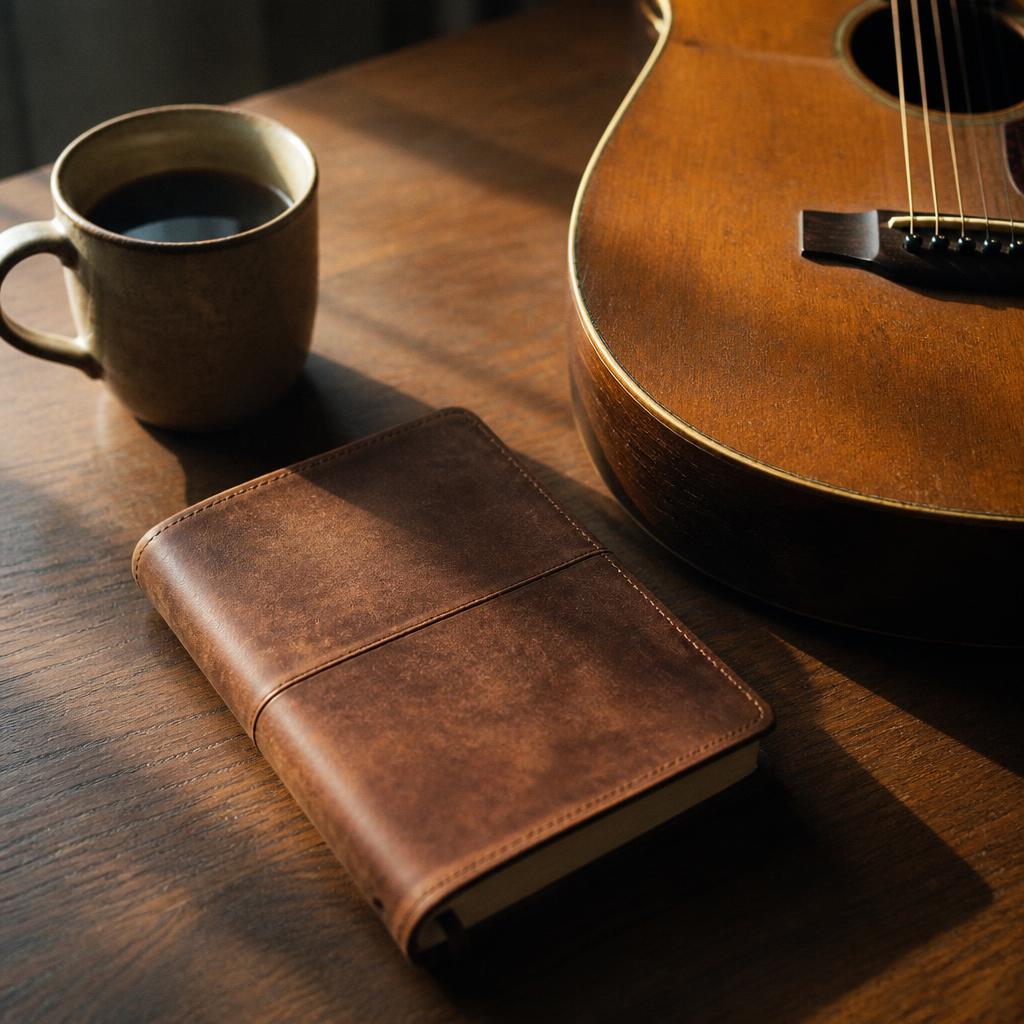
Disclosure: This article contains affiliate links to Upskillist. If you sign up through one of these links, Sampled may earn a commission at no extra cost to you. We only recommend courses and tools we think are worth a creative's time.
28 days. No card. No excuses. Every Upskillist course opens with a full 28-day free trial — you don't hand over a card, nothing auto-charges, and you keep everything you learn. That is four weeks to actually change what you can do. Claim your 28 days free → (opens in a new tab)
Every songwriter eventually hits the same wall. The beat is a 10. The topline is fine. The verse says nothing. You cycle through the same three rhyme schemes, the same worn-out imagery, and the song ends up being another mid post-chorus that nobody remembers on second listen.
The fix is not another plugin. It is the writing.
Upskillist runs a Diploma in Creative Writing (opens in a new tab) that is built for people who want to write real prose and poetry, but the muscles it trains — imagery, point of view, tension, restraint — are the exact ones a lyric needs. This is what is inside the course and where it actually cashes out for a songwriter.
What the course actually covers
The diploma is 4 modules, 32 lessons, self-paced across 16 weeks. It moves through the craft in order: fundamentals, then the two lanes most writers pick between (fiction and non-fiction), then poetry, then a final project.
The four modules are:
- Introduction to creative writing — voice, tone, showing versus telling, how to actually start a piece instead of staring at the page.
- Fiction writing — character, setting, plot, dialogue. The stuff that turns a song from a mood into a story.
- Non-fiction and memoir — writing from your own life without it sounding like a diary entry. This one hits hard for singer-songwriters.
- Poetry — meter, imagery, compression. Poetry is the closest cousin lyric writing has, and this module is where the biggest gains live.
The end deliverable is a portfolio piece, not a worksheet. You finish with something you can actually show.
Where it actually helps a songwriter
Four places where the skills cash out fast:
- Imagery that is not a cliche. "Broken heart, city lights, whiskey glass." Everyone writes those. The fiction and poetry modules force you to write specific — a chipped mug instead of a whiskey glass, a bus stop instead of a city. Specificity is what makes a lyric feel true.
- Point of view. Most songwriters default to first person because it is easy. Learning to write in second person ("you") or a narrator voice opens up entire song ideas you would never have reached otherwise.
- Tension. Fiction lives on tension — something is wrong, something is coming. Songs work the same way. A verse that sets up a real question makes the hook land twice as hard.
- Editing. Poetry teaches you that every syllable has to earn its place. Once you learn to cut, your topline sessions get faster and your songs get sharper.
Stop reading, start doing. The next 28 days are already happening whether you use them or not. Open your free Upskillist trial → (opens in a new tab) — no card, no auto-charge — and finish this article knowing you already pressed go.
Where it does not help
This is not a songwriting course. There is no melody work, no song structure (verse / pre / chorus / bridge), no rhyme scheme drills, no co-writing etiquette. If you are looking for the mechanics of a hit, this is not that. Pair it with something like a topline course or a Holistic Songwriting YouTube deep-dive for the structural side.
It also is not going to teach you how to sing your own words. That is a different discipline.
Cost vs value
The diploma runs on Upskillist's standard subscription pricing after the trial. Compared to a single co-write session with a working topliner ($200 to $500 an hour in most cities), a full 16-week diploma is comfortably cheaper — and the skills stick with you across every session, not just one song.
The 28-day free trial is the real move here. You can genuinely get through the intro module and most of the fiction module inside 28 days if you actually sit down and do it, which means you can test whether the writing side of your brain lights up before you spend anything.
The honest verdict
If your beats are stronger than your lyrics, this is the highest-leverage course you can take right now. Not because it teaches songwriting, but because it teaches the underlying craft that separates a lyric that gets skipped from a lyric that gets tattooed.
Start the free trial, do the poetry module first (yes, really), and see how the next topline session feels.
Your move
Four weeks from now you will either have a new skill or the same feed. Start your free 28-day Creative Writing diploma → (opens in a new tab) — no card, cancel anytime, keep the momentum.