 SAMPLED
Best Condenser Microphones for Home Recording
A practical guide to condenser microphones for vocals, acoustic guitars, podcasts, and home-studio sessions.
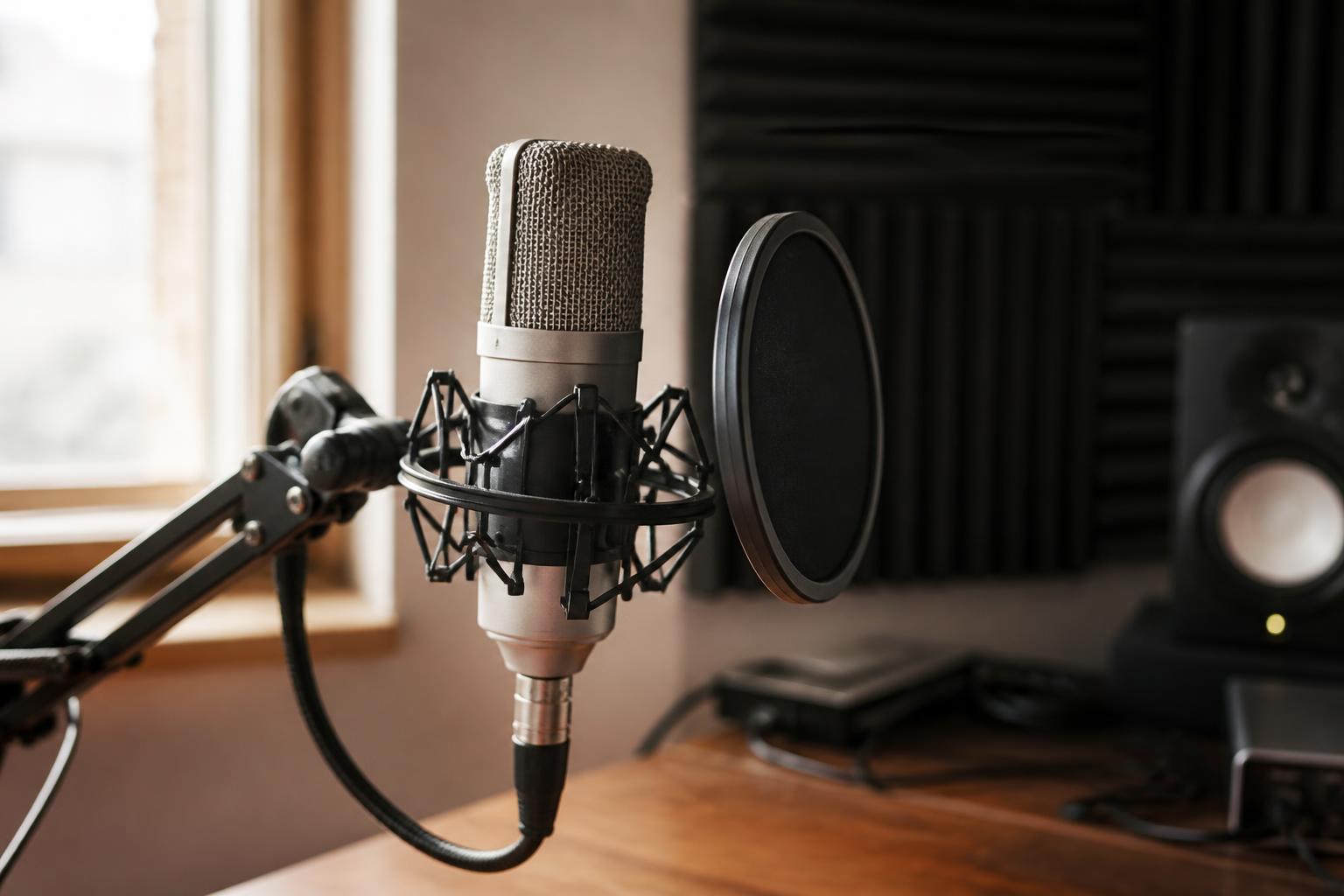
A condenser microphone can make a home recording feel expensive fast.
It can also expose every problem in the room.
That is the tradeoff. Condenser microphones are sensitive. They capture detail, breath, string noise, room tone, and vocal texture. For singers, acoustic instruments, podcasting, and voiceover, that detail can be beautiful. In an untreated room with computer fans, street noise, and hard walls, it can also become unforgiving.
The best condenser microphone for home recording is not just the “best sounding” one. It is the one that fits your voice, your room, your interface, and your experience level.
The Audio-Technica AT2020 (opens in a new tab) is one of the safest entry points into XLR condenser recording. It is a side-address cardioid condenser microphone for musicians, podcasters, streamers, and creators, with high SPL handling and reliable performance. For home studios, the AT2020 works because it is simple, affordable, and versatile enough to handle vocals, acoustic instruments, and spoken content.
The RØDE NT1 Signature Series (opens in a new tab) is a stronger option for artists who want a more polished vocal sound from the beginning. It is a workhorse studio condenser with a warm character, low noise, and high SPL handling. That makes it attractive for vocalists, songwriters, and home producers who want one microphone to cover a lot of ground.
The LEWITT LCT 240 PRO (opens in a new tab) is built specifically for home recording, with vocals, podcasts, live streaming, and acoustic instruments named as core uses. That clarity matters. Some microphones are adapted for home creators. The LCT 240 PRO is clearly aimed at them.
The sE Electronics X1 A (opens in a new tab) is another strong home-studio condenser because it focuses on value without feeling disposable. It is built around sonic performance, speed, accuracy, and balanced frequency response. For artists building a first serious vocal chain, that kind of straightforward design can be more useful than chasing a vintage-style microphone before the room is ready.
The sE Electronics X1 S (opens in a new tab) is the step-up option in the same family, an affordable hand-crafted condenser with strong dynamic range, SPL handling, and flexibility. That makes it worth considering if vocals are the center of your home studio and you want a microphone that can stay useful beyond beginner projects.
Before buying any XLR condenser, remember the hidden costs.
You need an audio interface with phantom power. You need an XLR cable. You should have a pop filter. You need a stable stand. Most importantly, you need to think about the room. A condenser mic in a reflective bedroom will capture the bedroom.
Choose the Audio-Technica AT2020 if you want the standard first XLR condenser. Choose the RØDE NT1 Signature Series if low noise and a smoother studio vocal sound matter. Choose the LEWITT LCT 240 PRO if you want a mic designed clearly for home recording. Choose the sE X1 A if you want a practical budget condenser. Choose the sE X1 S if you want more flexibility in the same lane.
The microphone is not the whole vocal chain.
But it is where the chain begins.