 SAMPLED
Live sound and performance · updated 2026-08-16
OCCUPATIONAL NOISE EXPOSURE LIMITS
In the U.S., OSHA sets a 90 dBA eight-hour limit and NIOSH recommends 85 dBA. Every 3 dB above halves the safe exposure time.
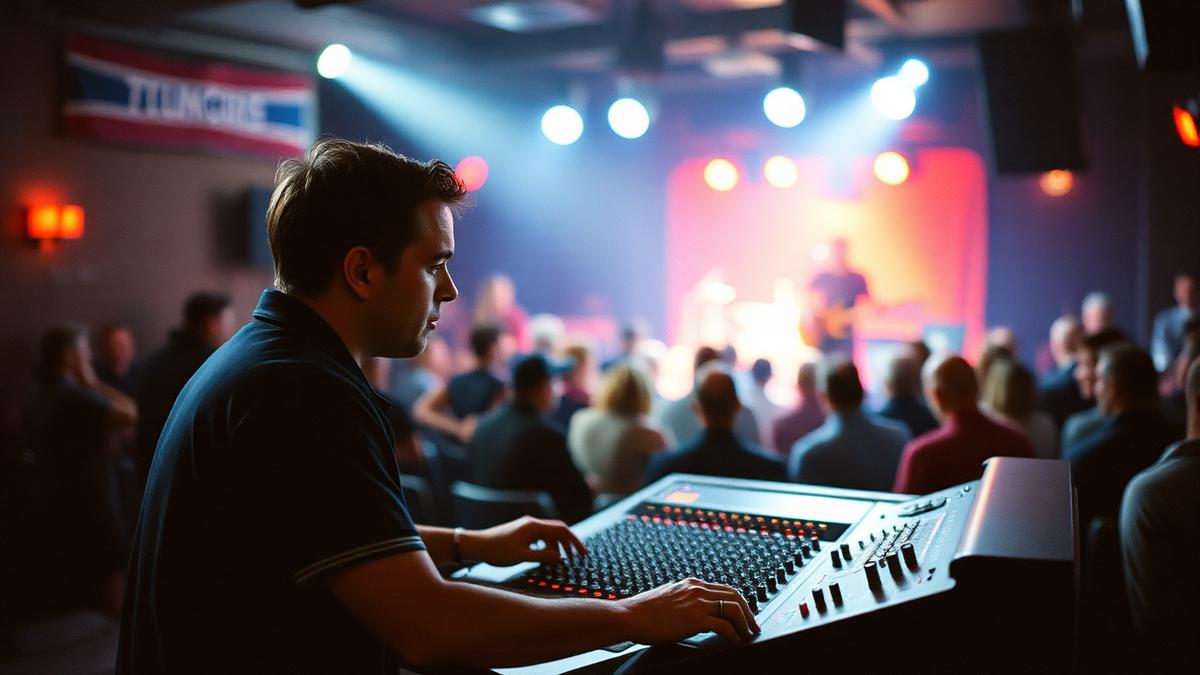
Photo: McFly Power to Play Tour, Bridlington Spa front-of-house pre-show (opens in a new tab) by Hullian111 (opens in a new tab), via Wikimedia Commons — CC BY-SA 4.0 (opens in a new tab)
Key takeaways
- In the U.S., OSHA sets a 90 dBA eight-hour limit and NIOSH recommends 85 dBA.
- Every 3 dB above halves the safe exposure time.
- NIOSH recommends 85 dBA over eight hours with a 3 dB exchange rate; OSHA's enforceable limit is higher with a 5 dB rate.
- At 100 dBA under the NIOSH recommendation, safe exposure is measured in minutes, not hours.
- Watch out: reading the legal enforcement limit as a health-based safe level.
Quick checklist
- Can you define occupational noise exposure limits in one sentence without looking?
- Can you point at occupational noise exposure limits in a real session, mix or contract?
- Have you tried the practical move above at least once?
- Would you catch the common mistake before it costs you a take?
- Have you opened one of the primary sources below rather than a forum thread?
OCCUPATIONAL NOISE EXPOSURE LIMITS IN DEPTH
Regulators publish exposure limits combining level and time — an exchange rate that halves the permitted duration for each few decibels of increase. NIOSH recommends 85 dBA over eight hours with a 3 dB exchange rate; OSHA's enforceable limit is higher with a 5 dB rate.
How it works in practice
At 100 dBA under the NIOSH recommendation, safe exposure is measured in minutes, not hours.
The mistake people make
Reading the legal enforcement limit as a health-based safe level. Hearing conservation guidance is deliberately stricter.
WHERE OCCUPATIONAL NOISE EXPOSURE LIMITS SITS
Occupational noise exposure limits belongs to live sound and performance in the Sampled music glossary. The stage vocabulary: what the engineer means when they wave at you.
TEST YOURSELF
0/3 answered · 0 correct
3 quick questions on occupational noise exposure limits. Answers are marked instantly — nothing is sent anywhere.
1. Which statement best describes occupational noise exposure limits?
2. What is the mistake people most often make with occupational noise exposure limits?
3. In practice, which of these applies to occupational noise exposure limits?
Ready for the full thing? Take the 25-question terminology test and get a certificate with your name and score.
SOURCES AND CITATIONS
Free, primary references for occupational noise exposure limits — standards bodies, manufacturers, government offices and university course material. Each one lists the line of this entry it backs up.
- OSHA — occupational noise exposure (opens in a new tab)
Government agency · U.S. federal agency
“In the U.S., OSHA sets a 90 dBA eight-hour limit and NIOSH recommends 85 dBA.”— the claim this source supports
Why it counts: Official measurement and exposure guidance — the reference the numbers in this entry are taken from.
- NIOSH — noise and hearing loss (opens in a new tab)
Government agency · U.S. federal agency
“Every 3 dB above halves the safe exposure time.”— the claim this source supports
Why it counts: Official measurement and exposure guidance — the reference the numbers in this entry are taken from.
RELATED TERMS IN LIVE SOUND AND PERFORMANCE
- Stage plot and input list
- Backline
- Hearing protection and exposure limits
- Gain before feedback
- Line array
- Splitter and multicore
- Wireless frequency coordination
- Ringing out a room
Back to the full music glossary or read our latest articles.