 SAMPLED
This Week in Music: Catalog Control, New Eras, and the Artists Rebuilding the Room
Phoebe Bridgers frames a return, Charli xcx turns pop into a full creative system, Daisy Chain Fields treats the festival as social infrastructure, and yasiin bey reopens a complicated catalog. The week's real story was access — who gets to control the doorway.
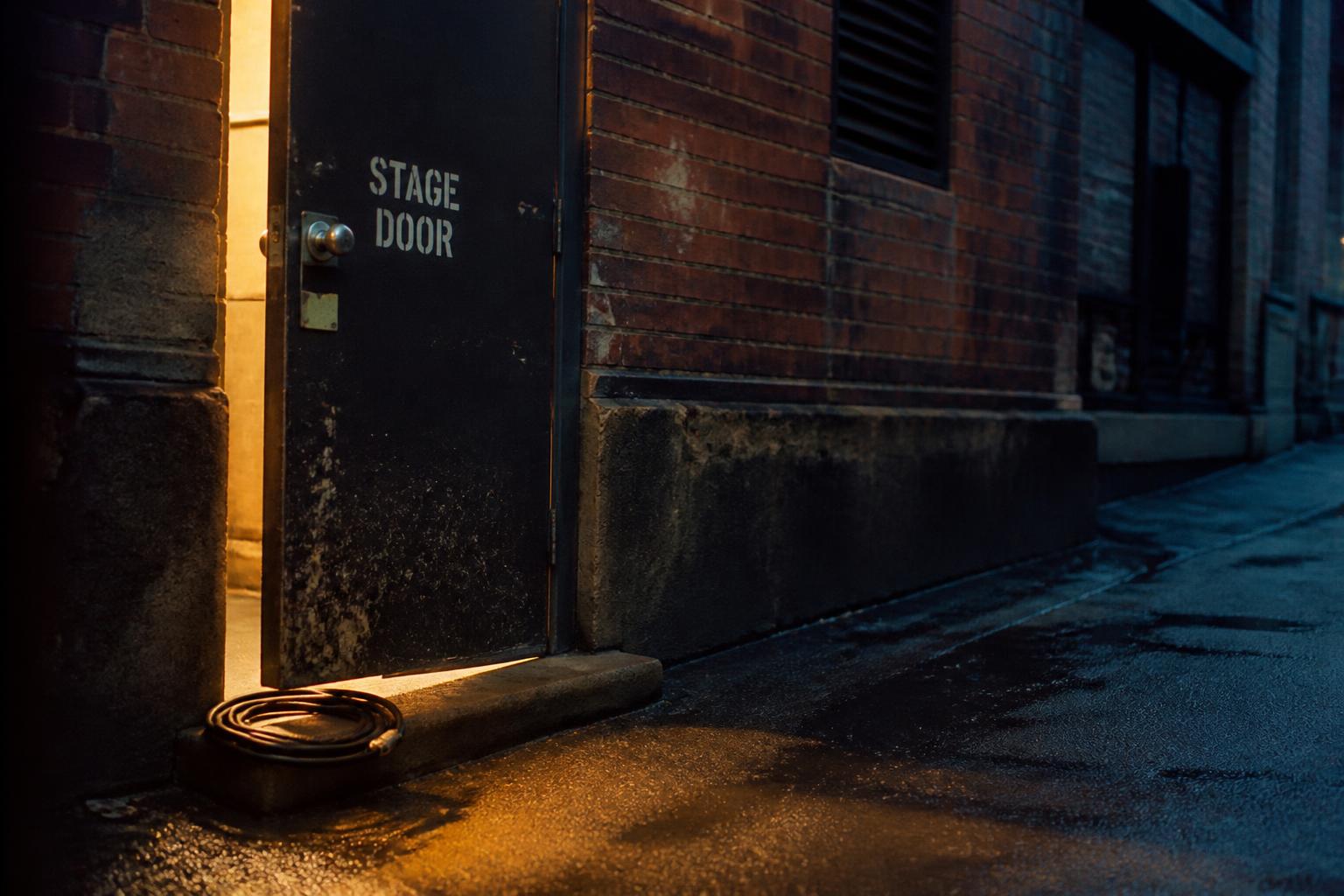
This week in music was not defined by one dominant release or one viral moment. It was defined by control: who gets to frame a comeback, who gets to bring a catalog back into circulation, who gets to build a festival with a mission beyond ticket sales, and who gets to turn a rollout into a full creative world.
From Phoebe Bridgers announcing Lost Weekend through Dead Oceans to yasiin bey and Rhymesayers reintroducing The Ecstatic through Qobuz, the week carried a clear message: music culture is no longer just about what drops on Friday. It is about who controls the doorway.
Phoebe Bridgers returns with a carefully framed new chapter
The biggest official album announcement of the week came from Phoebe Bridgers, whose third solo album Lost Weekend is set for release August 14 via Dead Oceans (opens in a new tab). The announcement is significant not only because it marks her first solo album since Punisher, but because the rollout itself feels deliberately shaped.
Dead Oceans framed the album around renewed demand, surprise activity, and a sold-out arena tour that moved quickly across North America and the U.K. That matters. Bridgers' music has always understood the power of absence, distance, and emotional negative space. Now, the campaign around her return appears to be using those same instincts at scale — even the Bandcamp pre-order page (opens in a new tab) is treated more like a doorway than a marketing tile.
In an era when most rollouts are flattened into snippets, pre-saves, and algorithm-ready fragments, Bridgers' return feels intentionally physical: a record, a room, a tour, a re-entry.
Charli xcx keeps building pop as a full-system language
While Bridgers is leaning into intimacy and atmosphere, Charli xcx's official site for music, fashion, film (opens in a new tab) suggests something broader and more architectural. The title says exactly what the project is trying to do: collapse sound, image, styling, performance, and cinema into one connected world.
The official store (opens in a new tab) is built around formats, visuals, and moving parts — vinyl variants, cassette and CD editions, tour information, and official videos including "Wink Wink". That is not just a release page. It is a blueprint for how pop operates when the artist understands that the album is only one piece of the object.
Charli has long treated pop as both a machine and a playground. What makes this era compelling is that she is no longer disguising the machine. She is showing the wires, lighting them up, and making the infrastructure part of the performance.
Daisy Chain Fields turns festival culture toward purpose
One of the most important music announcements of the week came from outside the album cycle. Daisy Chain Fields (opens in a new tab) is set for August 29 at Great Park in Irvine, California (opens in a new tab), and the festival positions itself around performances from leading women artists, immersive creative spaces, women-led businesses, and nonprofit impact.
The most important detail is not simply the lineup concept. It is the structure. The festival states that net proceeds will support nonprofit organizations advocating for women and girls, with listed partners including Baby2Baby, Black Mamas Matter Alliance, Center for Reproductive Rights, FreeFrom, Jhpiego, Johns Hopkins Center for Indigenous Health, National Domestic Workers Alliance, National Institute for Reproductive Health, National Women's Law Center, and Planned Parenthood.
That gives the festival a different kind of weight. Daisy Chain Fields is not only selling a day of music. It is using pop visibility as a resource pipeline. At a time when festivals often compete through spectacle, exclusivity, and brand placement, this model points toward something more durable: the festival as infrastructure.
yasiin bey and Rhymesayers bring The Ecstatic back into the conversation
The return of yasiin bey's The Ecstatic through Qobuz and Rhymesayers (opens in a new tab) is one of the week's most meaningful catalog stories. Qobuz is the exclusive streaming partner (opens in a new tab) for the album, with Rhymesayers handling a broader reissue program that includes physical formats.
That matters because The Ecstatic has lived a complicated life in the digital era. Sample-rich albums often expose the gap between music history and platform availability. Streaming can make music feel permanent, but it is still a licensing system, not a true archive. When an album disappears, listeners are reminded that access is conditional.
For a culture built on sampling, that distinction matters. A sample is never just a sound. It is a chain of rights, histories, hands, and memory. Bringing The Ecstatic back into circulation is not only a reissue. It is a restoration of access.
The industry remembers Clive Davis
This week also brought the death of Clive Davis at 94 (opens in a new tab). Davis' career helped shape multiple eras of popular music, and tributes poured in from Bruce Springsteen, Alicia Keys, Carlos Santana and others (opens in a new tab), emphasizing his instinct for artists and his impact across genres.
Davis represented a different version of the music executive: the label head as career architect, tastemaker, and long-range builder. The modern industry often talks about discovery through data, but Davis belonged to an older model built around judgment, conviction, and the ability to hear potential before a market had fully formed around it.
That model had flaws. It was gatekept and deeply centralized. But it also produced careers that were developed rather than simply measured. His passing is a reminder that the industry's current obsession with performance metrics has not replaced taste. It has only changed where taste hides.
Don Toliver's arena routing shows the scale of the live market
On the touring side, Don Toliver unveiled the second leg of his Nitrous World Tour (opens in a new tab), a major arena run (opens in a new tab) stretching from the West Coast through Texas, the Southeast, the Midwest, the Northeast, and Europe.
The routing is a reminder of where contemporary rap and melodic trap sit in the live economy. Streaming may break songs, but arena touring proves durability. For an artist like Toliver, whose sound is built on atmosphere, hooks, and scale, the live framework is not just a commercial extension. It is where the catalog becomes architecture.
Release day showed the range of the current music grid
The June 26 release slate showed how wide the modern music field has become.
Beth Orton's The Ground Above arrived through Partisan Records (opens in a new tab), framed by the label as a self-produced work shaped by survival, renewal, motherhood, identity, and political unease. Orton's continued evolution is important because she has never fit neatly into one lane — folk, electronics, songwriting, atmosphere, and emotional directness have always moved through her work at once.
Chanel Beads' Your Day Will Come (opens in a new tab) was presented by Jagjaguwar as a new body of work rather than a simple continuation of the 2024 debut that shared its title. The project points to a more layered studio process, more players, and a sharpened sense of sonic evolution. It treats repetition not as a loop, but as a way to test how much a name, phrase, or feeling can change when placed in a new frame.
DJ Plead's Please (opens in a new tab) arrived via Smalltown Supersound, bringing together club forms with rhythms and textures informed by Lebanese wedding music, dabke, mijwiz, shaabi keys, techno, house, and dub. That hybrid language is part of what makes the release stand out. It does not approach club music as a sealed genre. It treats rhythm as migration, inheritance, and pressure.
Country also had a major release moment with Cody Johnson's Banks of the Trinity (opens in a new tab), a 16-track album underscoring the continued strength of country's album-and-road ecosystem.
Alternative artists are preparing the next wave
Beyond this week's immediate releases, several official artist channels pointed toward the next wave of 2026 projects.
beabadoobee's Pylon (opens in a new tab) is positioned as her fourth studio album, written while on the road and shaped with collaborators including Hayley Williams, Brendan Yates, Chino Moreno, and Evan Stephens Hall. The project is framed around heavier textures, grunge, midwest emo, and '90s radio rock, suggesting a more direct and amplified turn.
Blondshell's Violins (opens in a new tab) is also on the horizon, with the title track available now and the album set for September 25 via Partisan. Blondshell's work has always carried the charge of alternative rock without treating the genre as costume. The next chapter looks positioned to keep that tension alive: sharp writing, heavy edges, and emotional immediacy without nostalgia flattening the sound.
The week's real story was access
Taken together, this week's music news points to a larger shift. Artists and labels are not only releasing songs. They are managing access.
Bridgers is controlling the atmosphere around return. Charli is turning pop into a multi-format creative system. Daisy Chain Fields is treating festival visibility as social infrastructure. yasiin bey and Rhymesayers are restoring a complicated catalog object. Don Toliver is translating streaming-era scale into arenas. Independent and alternative artists are using official channels to frame their next moves before the wider commentary cycle takes over.
That is the real story of the week: music culture is becoming more intentional about the doorway. Who opens it, who profits from it, who gets left outside, and who gets to decide what the room feels like once listeners enter.
The music still matters most. But this week made something else clear: the frame around the music is now part of the art.