 SAMPLED
Why Tracktion's JUCE and Waveform Free are quietly the most generous toolkit in music software
One company maintains the C++ framework that runs most of your plugins and gives away a full-fat DAW with unlimited tracks. The catch: there isn't one.
Walk into almost any plugin developer's workspace and you'll find the same thing on screen: a C++ project built on JUCE (opens in a new tab). It's the framework behind Serum, Arturia's entire V Collection, FabFilter's UI layer, iZotope's newer tools, Spitfire's LABS, and a long tail of indie audio software that ships every week on KVR. JUCE belongs to Tracktion Corporation — the same small UK/US team that also makes Waveform Pro (opens in a new tab) and gives the Waveform Free (opens in a new tab) DAW away with no track limits, no plugin caps, and no nag screens. Taken together, it's one of the most quietly generous setups in modern music software.
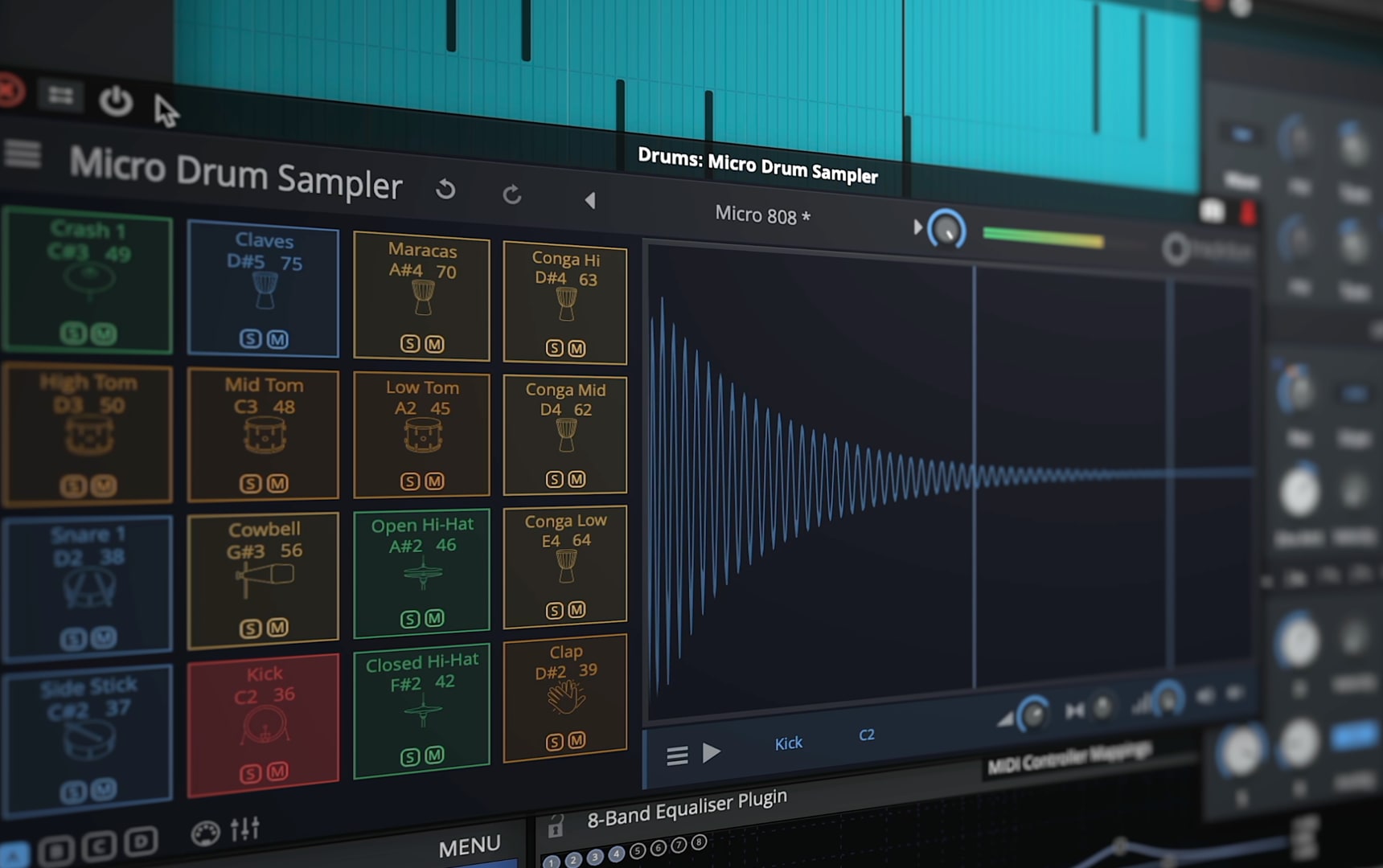
JUCE is the reason your plugins exist
JUCE is a cross-platform C++ framework purpose-built for audio. It abstracts away the parts of plugin development that used to eat months of a developer's life — VST3, AU, AUv3, AAX, and standalone wrappers, MIDI I/O, audio device handling, GUI rendering, DSP primitives, file formats — and exposes them through one coherent API. Write the plugin once, hit the Projucer, and you get builds for macOS, Windows, Linux, iOS, and Android targeting every major plugin format from a single codebase.
For a solo developer or a two-person studio, that's the difference between shipping and not shipping. You don't have to learn the Steinberg VST3 SDK, the Apple AudioUnit conventions, and Avid's AAX requirements separately. You don't have to write your own oscillator class, your own FFT, your own resampling. JUCE's dsp module gives you filters, convolution, oversampling, and a clean processor graph; the GUI side gives you a real component system with affine transforms, OpenGL acceleration, and accessibility hooks that work on every OS.
The framework is dual-licensed: free for GPL/open-source work and for personal/educational projects, with a paid commercial tier for closed-source releases. Importantly, the source is on GitHub, so you can read every line of the audio thread that's running inside your plugins. That transparency is a big part of why JUCE became the de facto standard — when something behaves oddly at 96 kHz on Apple Silicon, you can actually go look.
Image: Spotify Pedalboard (opens in a new tab) — open-source Python audio effects library.
Tracktion Engine: the bit hobbyists sleep on
Sitting on top of JUCE is Tracktion Engine (opens in a new tab), the same playback and editing core that powers Waveform. Tracktion open-sourced it on GitHub a few years back, which means anyone building a sampler, a loop app, a DJ tool, or a full-blown DAW can start from a working timeline, mixer, automation system, MIDI sequencer, plugin host, and offline render — instead of writing all of that from scratch. It's the audio equivalent of getting a game engine for free when you sit down to build a game.
If you're a developer who has ever tried to roll your own transport, you understand how much that matters. Sample-accurate looping, plugin delay compensation, tempo ramps, freeze tracks — these are months of debugging that someone else has already done.
Waveform Free: an actually-free DAW
Most "free" DAWs are demos. Cakewalk got bought, dropped, and revived. GarageBand is Mac-only and locked to the Apple ecosystem. The free tiers of Studio One, Live, and Pro Tools cap your tracks somewhere insulting.
Waveform Free (opens in a new tab) doesn't. The current version (Waveform 13 Free, with 14 in active rollout) gives you:
- Unlimited audio and MIDI tracks
- Unlimited plugins per track
- VST3 and AU plugin hosting on macOS, Windows, and Linux (the Linux build is first-class, not an afterthought)
- The same edit clip and modifier system Waveform Pro ships with — pattern generators, LFOs, step sequencers as automation sources
- Built-in effects, a sampler, and a usable starter set of instruments
- ARM Linux builds, which is why Waveform shows up on Raspberry Pi audio rigs that other DAWs can't touch
The business model is simple: the free version is the on-ramp. If you outgrow it, you buy Waveform Pro or add expansion packs (DAW Essentials FX, the Collective synth, etc.). If you don't outgrow it, you keep making records for free and nobody emails you about an upgrade.
What it's actually good at
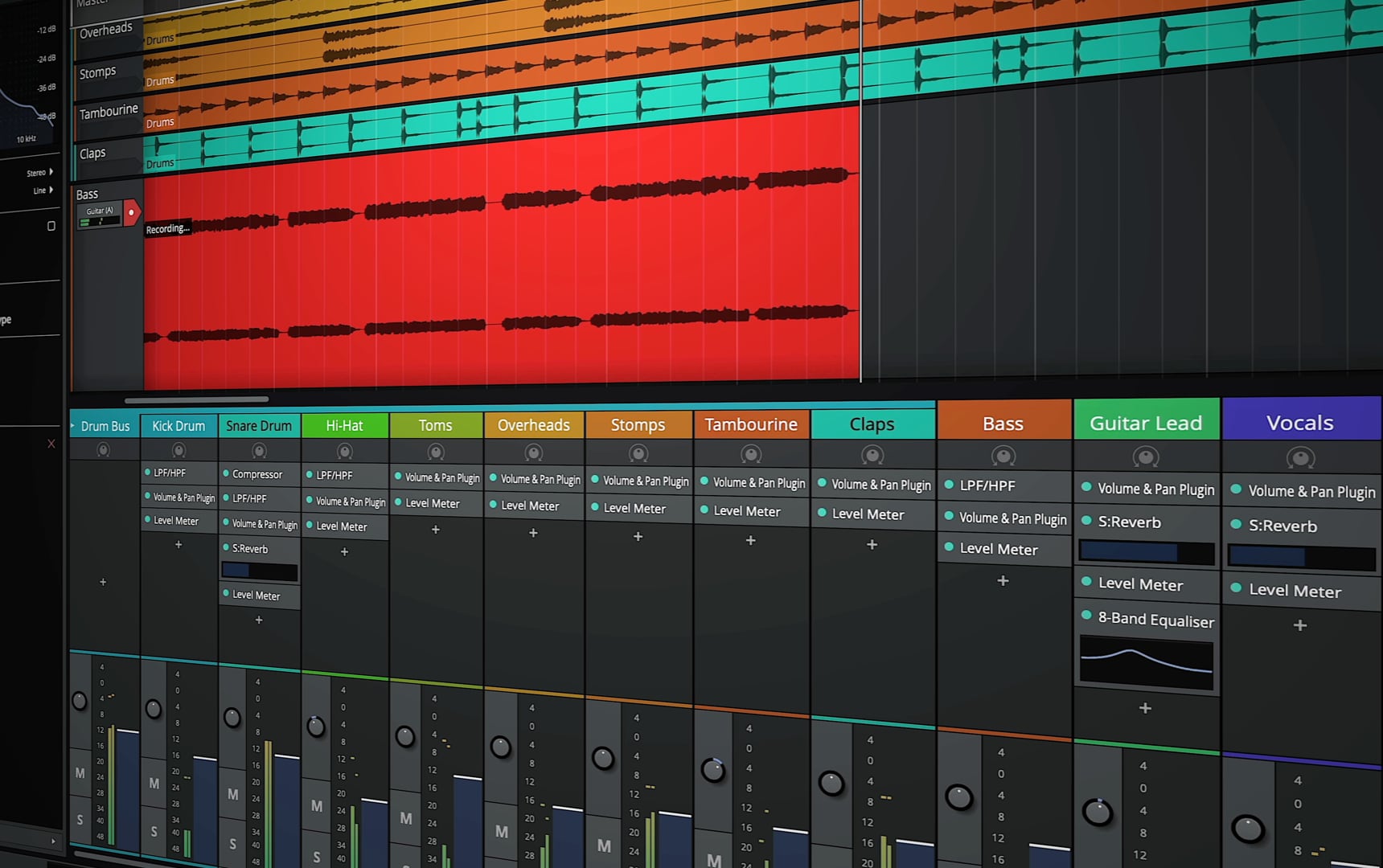
Waveform's personality is different from the big four. The single-screen edit window — no separate arrange/mix view — feels closer to Reaper than to Logic, and the edit clip concept (every clip is a container that can host its own plugins and modifiers) is genuinely original. Pattern generators let you sketch chord progressions and arpeggios as live, editable modifiers rather than baked MIDI, which makes it shockingly fast for sketching beats and synth parts.
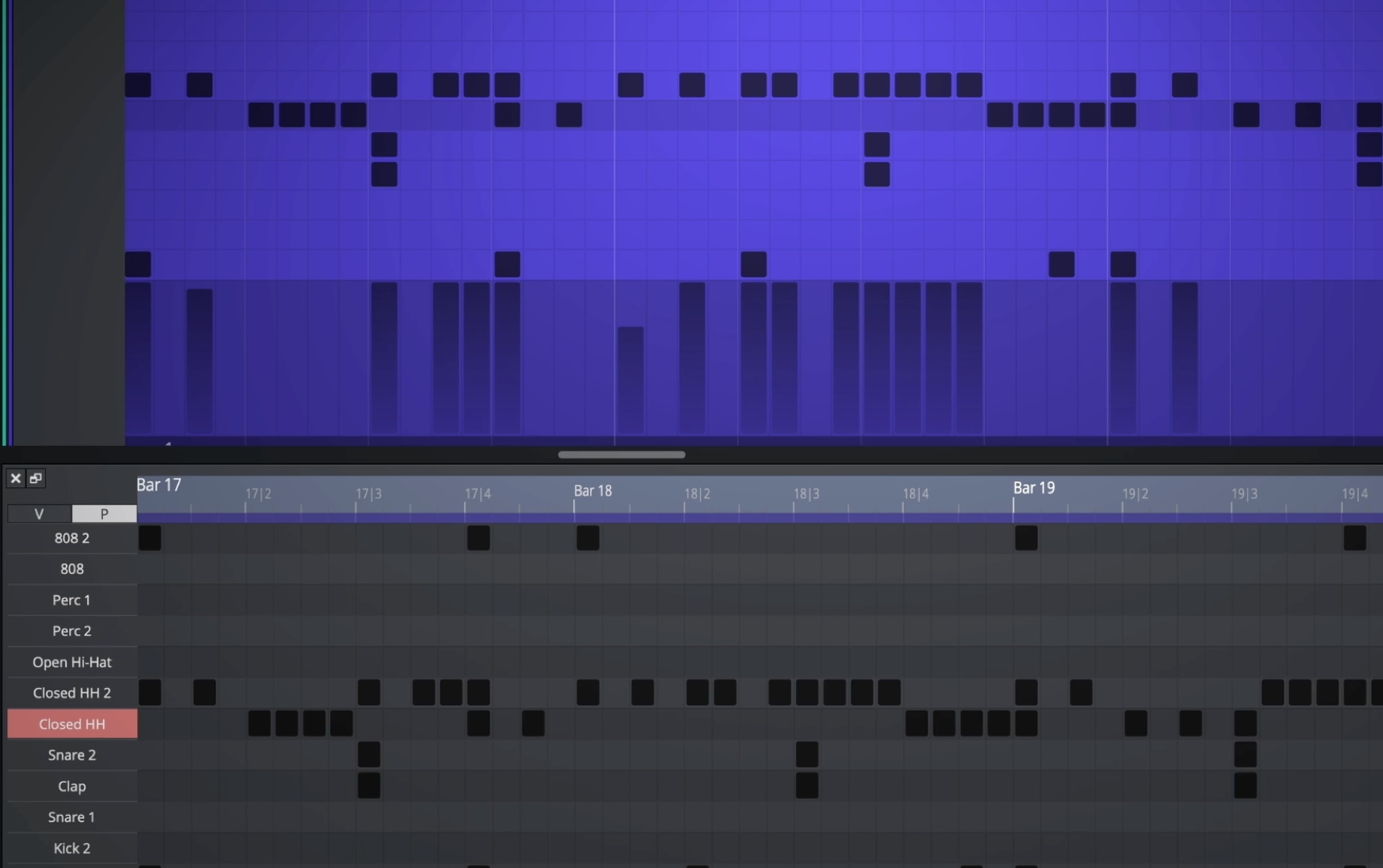
The MIDI editor is one of the strongest in any free DAW — chord track, scale snapping, MPE support, micro-tuning, and a step sequencer that doesn't feel bolted on. For producers coming from FL Studio or trackers, this is where Waveform stops feeling like a backup and starts feeling like a primary.
The throughline
There's a coherent story across all three products. JUCE (opens in a new tab) lowers the cost of building audio software to something a single person can absorb. Tracktion Engine (opens in a new tab) lowers the cost of building a DAW to something a small team can absorb. Waveform Free (opens in a new tab) lowers the cost of using a serious DAW to zero, on every desktop OS including Linux and Pi.
For a producer, that means a no-excuses path from "I have a laptop" to a session that competes with anything coming out of a commercial studio. For a developer, it means the gap between "I have an idea for a plugin" and "I shipped it on Splice" is measured in weeks, not years. Almost everything else in the music software business is moving in the opposite direction — more subscriptions, more iLok, more friction. Tracktion's stack is the rare counterexample, and it's worth paying attention to.