 SAMPLED
Spotify's live-video pivot meets its Universal AI deal — the bundle thesis gets real
Concert streaming, narrated magazine articles, emoji reactions, AI licensing. In two weeks Spotify has quietly become a different kind of company.
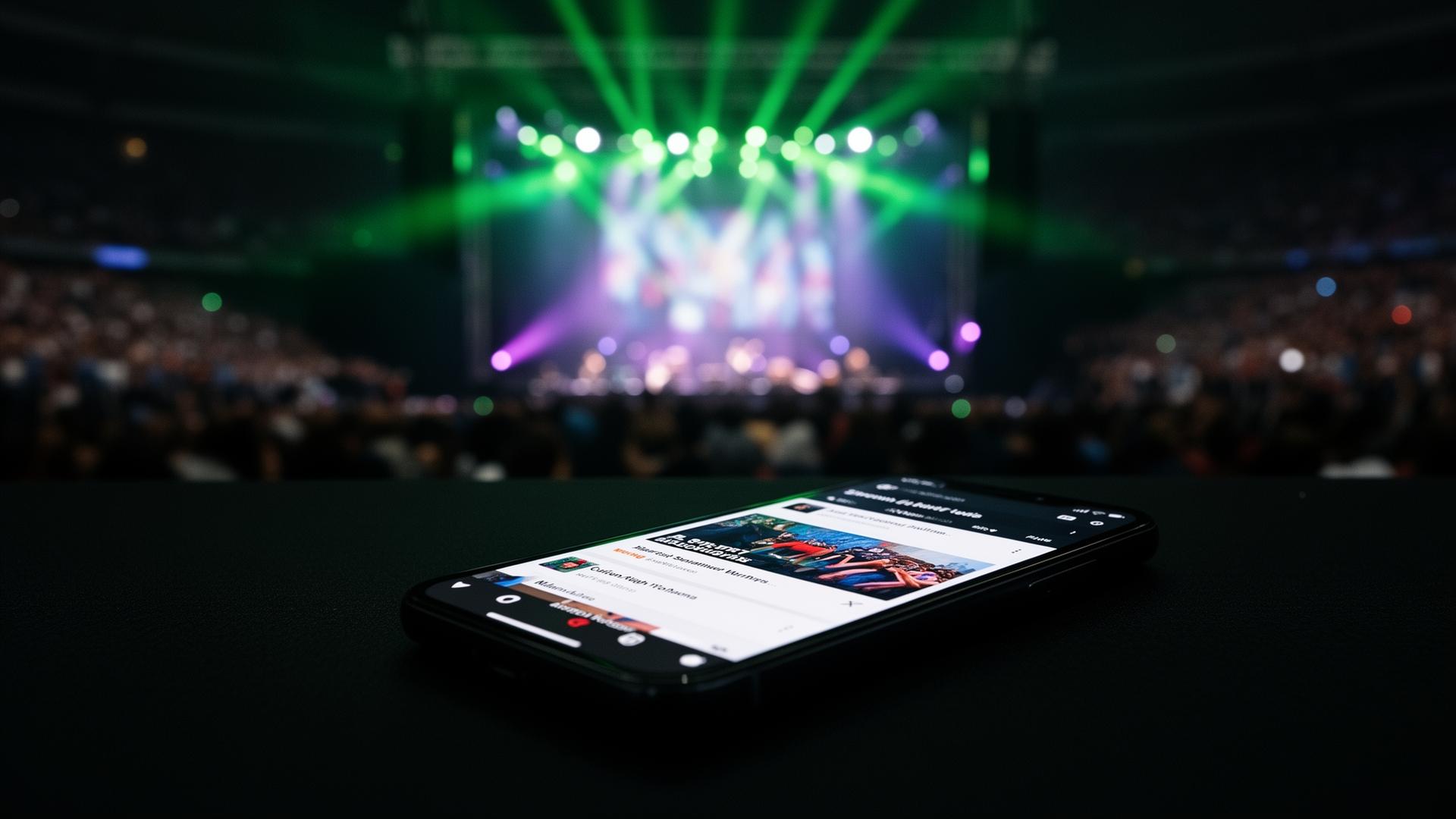
Two weeks ago, reporting surfaced (opens in a new tab) that Spotify is in talks with concert promoters (opens in a new tab) to secure live video rights for festivals and tours, with Live Nation named as a likely partner. In the same news cycle, Spotify signed a licensing deal with Universal Music Group (opens in a new tab) covering AI covers and remixes as a paid Premium add-on.
Today, the company shipped emoji reactions (opens in a new tab) on collaborative playlists. Three weeks ago, it turned 650+ magazine features into narrated audio (opens in a new tab) from a roster of premier print brands. Last week, Apple Music expanded lyrics translation and AutoMix (opens in a new tab) for iOS 27 — the same week reports surfaced that Apple is readying its own free tier (opens in a new tab), borrowing from Spotify's playbook.
Put it on a single timeline and you can see the shape of the year.
Spotify is quietly becoming a multi-format media app. Photo: Sampled.
The bundle thesis
Spotify spent a decade being a music streamer that occasionally added podcasts. In 2026, it is becoming something stranger: an audio-and-video bundle that wants to own the spaces between songs, shows, articles, and live events. The components shipped in the last six weeks alone:
- Live video streaming rights from major concert promoters (in active negotiation, per Music Business Worldwide and The Verge)
- AI licensing deal with Universal, paying for usage rights to UMG-owned recordings in Spotify's AI tooling
- 650+ narrated long-form magazine articles from premier print brands
- Collaborative playlist reactions — a TikTok-coded social layer
- DJ AI and AI Playlist continuing to expand their personalization story
The play is not subtle. Spotify wants to be the app you keep open between songs — the place you read Rolling Stone on the way to a festival you also watch on Spotify, in a playlist your friend is reacting to with a 🔥, scored by an AI-curated set the platform licensed properly so it does not get sued.
Where the analysts land
MIDiA Research's June analysis of "atomised concentration" (opens in a new tab) explains the pressure underneath this strategy: even as streaming keeps expanding, scale and attention concentrate around a few winners, so the path to revenue lift runs through adjacent formats — video, longer-form audio, live, advertising-supported tiers. Spotify's moves are not random feature drops; they are the textbook response to a saturated subscription market.
Whether it works depends on two things the bundle thesis cannot solve on its own.
Live rights are not a Spotify-native business. Live Nation's role in the reported Spotify ticketing angle is already part of The Next Web's reporting, and Live Nation has no structural reason to give Spotify favorable terms on the same content it could sell directly through its own platforms. DICE's partner materials (opens in a new tab) show the other side of the fight: ticketing companies already sell discovery, conversion, and anti-resale infrastructure as their own fan layer.
Apple is going to copy the working parts. The free-tier reporting and the AutoMix expansion show Apple is content to let Spotify run the feature-spec experiment, then ship whatever sticks. Spotify's window to lock in differentiation is narrowing, not widening.
The Netflix-for-music problem
The obvious comparison — Spotify becoming the Netflix of music — falls apart on inspection. Netflix wins because original content is durable, exclusive, and bingeable. Music's equivalent of "originals" is the catalog, and Spotify does not own it. Universal, Sony, and Warner do, and they have already taught Spotify what an AI licensing deal costs.
The honest read is that Spotify is not becoming Netflix. It is becoming a media app: many formats, one subscription, none of them exclusive. That is a real business. It is also a much lower-margin one than the original streaming bet was supposed to be.
Six weeks in, the strategy is at least coherent. Ask again at year-end whether all this extra stuff actually lets Spotify charge more per subscriber — or whether Apple has already started copying the parts that worked.