 SAMPLED
GForce x Sequential: the first official Prophet-5 plugin, and what 'official' is worth
A soft Prophet-5 with the actual Sequential logo on it dropped today. In a market full of unofficial clones from Arturia and u-he, the question is whether a license still moves the needle.
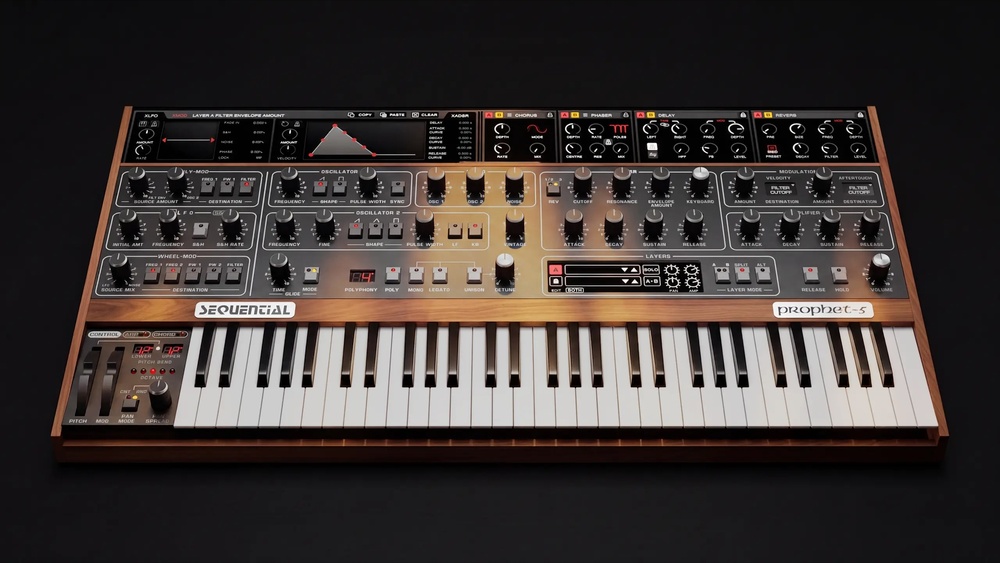
For roughly four decades, the Sequential Prophet-5 has been one of the most cloned synthesizers in existence. Arturia has Prophet-5 V (opens in a new tab). u-he has Repro-5 (opens in a new tab). Cherry Audio has P-10 (opens in a new tab). Native Instruments' Monark sits in the same lineage. Hardware-wise, Behringer has its own take. What none of them had until today was Sequential's actual blessing.
That changed Tuesday morning. GForce Software — the British developer best known for its officially licensed Oberheim recreations — launched the first authorized software Prophet-5, with the Sequential name on the box and the company's full cooperation on the model.
The new GForce Sequential Prophet-5 plugin. Press image: GForce Software, via Sound On Sound (opens in a new tab).
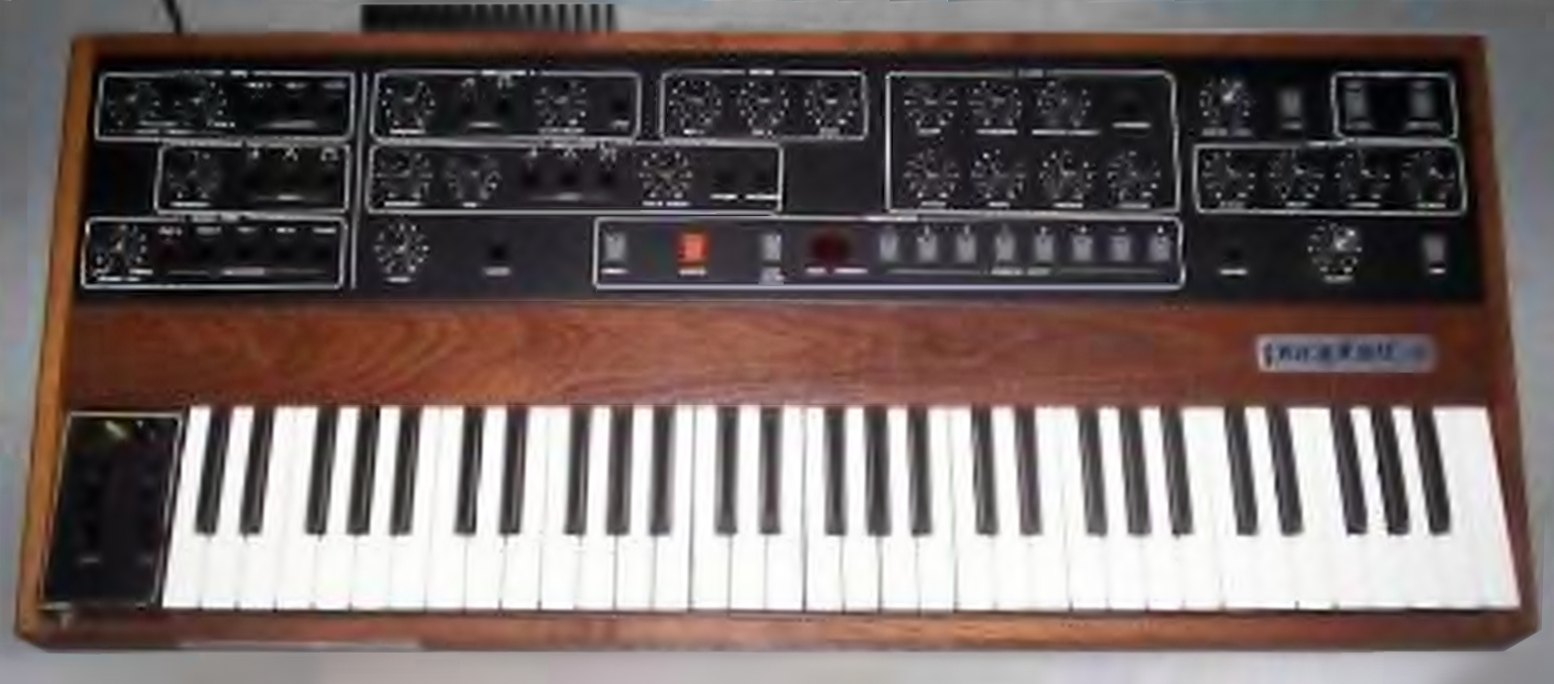 The 1978 Sequential Circuits Prophet-5 hardware the plugin is modeled on. Photo: Felix2036 / Clusternote, public domain, via Wikimedia Commons (opens in a new tab).
Peter Kirn's tested review at CDM (opens in a new tab) calls it "the best soft Prophet" in a crowded field, and MusicTech has its own coverage of the launch (opens in a new tab) up as of this morning. Both note the same thing: the GForce build models the Rev 1, 2, and 3.3 separately, and Sequential's engineering team was in the loop on the component behavior.
What "official" actually buys
In analog modeling, "official" historically meant: the plugin developer paid the trademark holder for naming rights, and got access to schematics, original units, and sometimes engineers. It did not, until recently, mean the result sounded categorically different from a good unofficial clone — Repro-5 has shipped for years and is widely considered excellent.
What is changing is the marketing context. As AI-generated audio and rapid-fire VST clones flood plug-in marketplaces, "officially licensed" is becoming a trust signal the way "remastered from the original tapes" became one for reissue vinyl. The Sequential signoff is partly engineering, partly authentication theater — and authentication theater is its own product category now.
GForce has been building toward this. Its Oberheim work established the template: same developer, same licensing structure, same "officially endorsed by the people who made the original" pitch. The Prophet-5 is the bigger trophy because Sequential joined the Focusrite family (opens in a new tab) in 2021, putting one of synth history's most valuable names inside a larger audio-brand portfolio.
The competitive shape
This release puts pressure on three groups:
Arturia. V Collection still ships a Prophet V, modeled with Arturia's own TAE engine. It is good, established, and unofficial. The pricing-and-positioning conversation just got harder.
u-he. Repro-5 is the connoisseur's pick — small, focused, exceptional on filters. Urs Heckmann does not chase brand licensing. That is now a deliberate stance, not a default one.
The Behringer-and-friends hardware crowd. A blessed software Prophet at plugin prices changes the spec-vs-cost calculus for anyone shopping a sub-$1,000 hardware Prophet clone.
Sequential parent Focusrite has spent the post-acquisition years quietly normalizing this kind of portfolio logic: Novation framed Sequential as a sibling brand (opens in a new tab) when the acquisition closed, and the GForce deal fits the same pattern — monetize the brand IP without diluting the hardware halo.
For everyone else making vintage emulations, the message is now explicit. The companies that made the originals — or the conglomerates that bought them — are going to start picking partners. The unauthorized middle is about to get squeezed.