 SAMPLED
How to build a fanbase as an independent musician: the 2026 playbook
The evergreen, no-hype guide to turning strangers into superfans without a label — the habits, platforms, and skills that actually compound.
Disclosure: This article contains affiliate links to Upskillist. If you sign up through one of these links, Sampled may earn a commission at no extra cost to you. We only recommend courses and tools we think are worth a creative's time.
Nobody is coming to save your music. No label scout is refreshing your SoundCloud at 2am. No algorithm is quietly building your career in the background while you sleep. The independent artists who break through in 2026 all have one thing in common — they stopped waiting to be discovered and started building the room they wanted to be discovered in.
That room is your fanbase. Not followers. Not passive streams. A real, small, loyal group of people who know your name, open your emails, show up to the shows, and tell their friends. Everything else in a modern music career — playlisting, sync, touring, merch, a label deal if you still want one — sits on top of that foundation. Without it, nothing compounds. With it, everything does.
This is the evergreen playbook. Not a hack list. The habits, platforms, and skills that actually build a fanbase from zero and keep it growing five years from now. Start the 28-day free Upskillist trial → (opens in a new tab) if you want to learn the marketing, writing, and design skills that make every step below ten times more effective.
Step 1: Define the person you are actually making music for
Every real fanbase starts with a specific listener, not a genre. "Fans of indie pop" is not a person. "A 23-year-old who drives home from a hospital night shift listening to sad synth-pop and cries in the parking lot before going inside" is a person. You can write for that person. You can design merch for that person. You can shoot a music video that stops that person's thumb.
Sit down with a notebook — actual paper, no laptop — and answer three questions:
- Who am I when I make my best work? What am I feeling, what am I afraid of, what am I proud of?
- Who is the one person on the other end of that song? Age, city, job, what they do on a Sunday, what they scroll at midnight.
- What do they get from my music that they cannot get anywhere else? A permission, a feeling, a scene, a language for something they could not name.
Write it as a paragraph, not a demographic. Pin it above your desk. Every post, every visual, every song from this point forward should feel like a private letter to that one person. Fanbases scale from that specificity. They never scale from "everyone."
Step 2: Own the house, rent the yard
Social platforms are yards. You rent them from a landlord who can change the rules, throttle your reach, or delete your account tomorrow. Do not build your career inside a rented yard.
The house you own is:
- An email list. Boring, unsexy, worth more than every follower you have combined. A 500-person email list converts more show tickets and merch than 50,000 casual followers.
- A simple website with your name as the domain. Not a Linktree. Not a bio link. A page you control that lives at yourname.com and holds every link, every release, every show, every email signup.
- A phone number list or Discord. Direct line, no algorithm.
Everything else — TikTok, Instagram, YouTube, Spotify — is a yard. Use them aggressively to bring people back to the house. Every post should have a reason for a real fan to leave the platform and join your world: a demo only email subscribers hear, a signed test press only Discord members can buy, a livestream only the list gets an invite to.
The single highest-leverage habit in an independent music career is this: capture an email every single day. Show flyers, merch inserts, TikTok bios, DM auto-replies, in-person handoffs. One email a day is 365 real humans a year who chose to hear from you.
Step 3: Release like a broadcaster, not a hobbyist
The old model was: save up for a year, drop an album, disappear, repeat. That does not work on streaming, and it does not work for a fanbase that lives on a feed.
Release like a broadcaster. That means:
- A song every four to eight weeks. Singles, demos, remixes, live versions, covers, alternate takes. Feed the feed.
- A visual for every release. Even if it is a phone-shot vertical video in your bedroom. Silence on TikTok and Reels is death; a b-roll clip and a caption is a full campaign.
- A story around every release. Where the song came from, who it is for, what fell apart while you made it. Fans do not follow songs. They follow the human making them.
- A rest week. Broadcasters have off days. Burn out and the whole thing collapses.
You do not need a bigger budget for this. You need a repeatable process. Pick one release cadence you can hold for a year and hold it. Consistency beats intensity, always.
Step 4: Learn the four skills that actually build a fanbase
Talent does not build a fanbase. Talent plus a small stack of practical skills does. In 2026 the independent artists who are winning are the ones who quietly leveled up in:
- Copywriting. The ability to write a caption, a bio, an email subject line, and a press pitch that makes a stranger stop. This is the single most under-invested skill in music.
- Design and visual identity. Cover art, merch, feed grid, show flyer. You do not need to be a designer. You need to be able to art-direct one, or make something clean yourself in a free tool.
- Marketing and audience-building. Understanding funnels, ads, email flows, and how attention actually moves in 2026. Not tricks — systems.
- Video editing. Because every release is now a series of vertical videos, and paying an editor for every cut is the fastest way to go broke.
You can teach yourself all four from YouTube over about five years. Or you can compress it. Upskillist runs full diplomas in creative writing (opens in a new tab), graphic design, digital marketing, and video editing, all self-paced, all with a real 28-day free trial where they do not take your card up front. Start the free trial and pick the one skill that would move your career the most in the next 90 days → (opens in a new tab) — do only that one, do it seriously, and finish it before you start another.
Artists who invest in these four skills stop being dependent on managers, editors, designers, and marketers they cannot yet afford. That independence is the whole game.
Step 5: Play live, even when it is small
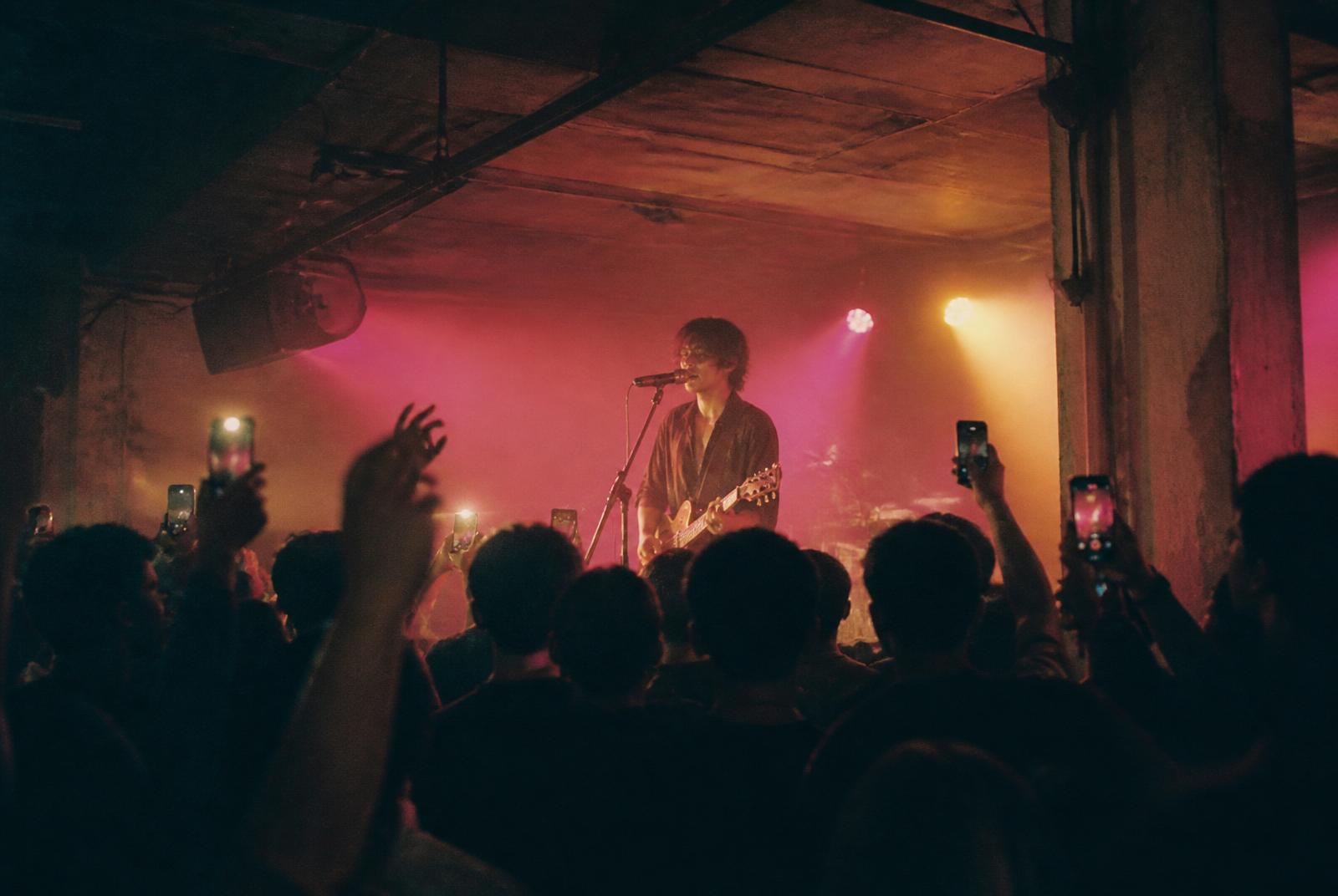
Ten people in a room who lose their minds for your set will do more for your career than ten thousand passive streams. Every core fanbase in music history started in a room.
If you are not playing live yet:
- Open mics, house shows, DIY warehouse nights, coffee shops, art openings, festivals with open stages. Anywhere with a mic and a small crowd.
- Trade shows with other artists in your city. You bring your fans, they bring theirs, everyone leaves with new fans.
- Livestream on a fixed weekly night. Same time, same platform, same energy. It is a residency for people who cannot make it to your city.
The point is not the crowd size. The point is the ritual of standing in front of humans and turning strangers into believers in real time. You cannot fake this skill on the internet. You have to reps into it.
Step 6: Build the top of the funnel, then convert it
Once you have the house, the release rhythm, and the skills, you can start moving strangers through a real funnel:
- Discover you on a short video, a playlist, a friend's post, a support slot.
- Follow you somewhere they already spend time.
- Join your email list, Discord, or SMS for something they actually want.
- Buy — a ticket, merch, a vinyl preorder, a paid membership.
- Tell someone — the moment a fan sends your song to a friend unprompted, you have compounding growth.
Every post, every release, every show should be pushing people one step down that funnel. Most artists spend all their energy on the first step (discovery) and none on the last three (convert, buy, tell). That is why they have big follower counts and empty rooms.
Step 7: Play a five-year game in a one-year world
The internet will keep telling you to go viral. Ignore it. Virality without a fanbase to catch it is a spike on a graph, not a career. Fanbases are built the same way they were in 1974 and 1994 and 2014 — one real human at a time, over years, through consistent work that they can feel is honest.
The good news: five years of quiet, consistent, skill-backed work in 2026 will put you further ahead than 99% of artists, because 99% of artists will quit inside 18 months. All you have to do is not be them.
Pick the person you are making music for. Build the house. Release like a broadcaster. Level up the four skills. Play live. Build the funnel. Show up next month, and the month after, and the month after that.
If you want to compress the skill-building side of this playbook, start the 28-day free Upskillist trial here → (opens in a new tab) — no card up front, real diplomas, self-paced. Pick one course, finish it, and watch what happens to everything else in this article when you actually know how to do it.
The room you want to be discovered in is not going to build itself. Start tonight.